As an Amazon Associate, Modded gets commissions for purchases made through links in this post.
Brazilian jiu-jitsu is physical chess where winning requires knowing the right moves. Picture a new student thrashing on the mats, burning energy in seconds like a novice swimmer. Now picture a seasoned grappler gliding through with flawless technique, conserving strength and dictating pace. Discover how mastering fundamental BJJ techniques turns leverage into your greatest weapon.
The Importance of Efficiency in Grappling
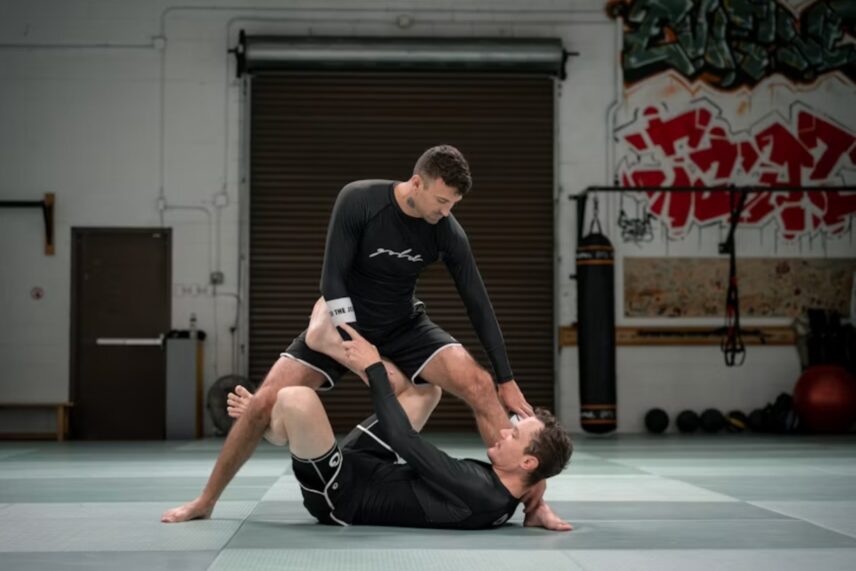
Brazilian jiu jitsu is a grappling-based martial art that started in Brazil from Japanese judo in the early 20th century. The philosophy is simple: a smaller, weaker person can defend themselves against a larger, stronger attacker by using proper technique and leverage.
New grapplers make a predictable mistake. They muscle through every position, trying to bench-press opponents off their chests or crank submissions with pure force. This leads to rapid exhaustion and injury. Mastering fundamental movements early prevents fatigue and strain, allowing you to train smarter and longer.
Mastering Your Hips for Survival
Amateur practitioners face the highest injury rates in BJJ, with around 85.3% of BJJ injuries occurring during practice rather than competition. Most stem from poor technique and relying on strength instead of proper body mechanics.
Hip movement forms the foundation of all BJJ defense and sweeps. Without it, you’ll exhaust yourself trying to bench press opponents off your body. BJJ is highly glycolytic and anaerobic, meaning you burn through your energy reserves fast when grappling from the ground. Your hips power every escape.
1. The Shrimp and Guard Replacement
The shrimp, also called the hip escape, functions as BJJ’s reset button. You’ll use this pattern hundreds of times per session.
Turn onto your side and create a frame with your arms against your opponent’s hips or shoulders to prevent them from flattening you. Plant your feet firmly on the mat, close to your hips. Push off explosively and drive your hips away from your opponent to create space. Bring your knee into that space to block them, allowing you to re-establish your guard.
Make the shrimp your first and last drill of every class.
2. The Bridge and Roll Mount Escape
This escape demonstrates leverage over strength. When someone mounts you, don’t panic and start benching. That gives them a free armbar and wastes energy.
Secure one of your opponent’s arms and the corresponding foot, removing one of their posts. Look over your shoulder in the direction you want to roll. Drive your hips explosively toward the ceiling using your glutes and hamstrings. The momentum will carry you over, reversing the position and landing you inside their guard.
The power comes from your posterior chain, not your chest.
Controlling the Ground Game
Now that you know how to survive on the bottom, learn how to dismantle an opponent’s defense from top position. Top control in brazilian jiu jitsu moves is about pressure, patience and angles.
3. The Knee Slice Pass
Think of this pass as a grappler’s can opener for the guard. It’s methodical, pressure-based and highly effective.
Establish control of their upper body with a cross-face grip and an underhook to pin their shoulders. Drive your shoulder into their jaw or neck to make them uncomfortable. The pressure forces them to focus on your weight rather than your legs. Slowly slide your knee over their thigh and settle your hip to the mat, solidifying side control.
This pass is won with shoulder pressure and hip control, not speed.
4. The Americana Lock
This is the first high-percentage submission every white belt should master from side control. It’s one of the lowest-risk submissions from side control because you maintain a dominant position throughout.
Use your body weight to pin one of your opponent’s arms to the mat, bent at 90 degrees. Create a figure-four grip by grabbing their wrist with one hand and threading your other arm under their elbow to grab your own wrist. Keep their elbow pinned and slowly slide their hand toward their hips as if painting the mat with their knuckles.
The submission comes from patience and control, not jerking.
Neutralizing Size With Smart Submissions
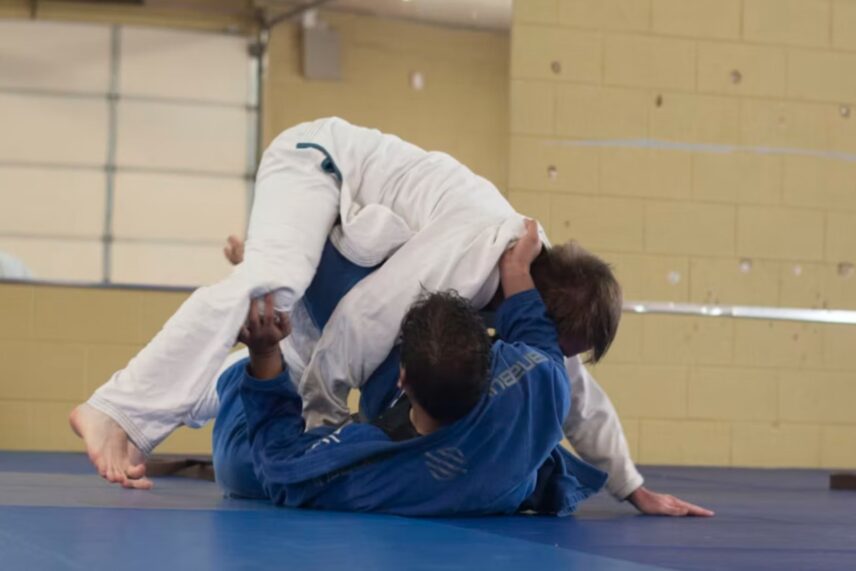
This is where technique connects to BJJ’s core promise: a smaller person can defeat a larger one. The art was created for this purpose, using leverage to overcome size disparities.
This focus on leverage explains why BJJ consistently ranks among premier martial arts for real-world self-defense. The following techniques neutralize size advantages by attacking the neck.
5. The Triangle Choke
The triangle choke is a perfect geometric trap. Your opponent is caught, with their own shoulder cutting off blood flow to their brain.
From your guard, control their posture and isolate one arm while keeping the other outside your legs. Shoot your hips high and lock one leg over their shoulder, placing your ankle behind your opposite knee. Pull their head down and squeeze your knees together. The pressure of your thigh against one side of their neck and their own shoulder against the other cuts off blood flow.
Focus on getting the right angle by pulling on your shin to adjust before locking the figure-four.
6. The Cross Collar Choke
This is the bread-and-butter attack from the closed guard, simple in concept but requiring precision in execution.
Your first hand goes deep into the collar with the thumb inside. Get your knuckles to the back of their neck, near the tag. The second hand comes across to grab the other collar. Use your legs and lats to pull your opponent down, breaking their posture. Finish by pulling your elbows back and rotating your wrists as if revving a motorcycle.
This choke is 90% setup. Without the deep first grip and breaking posture, it will fail.
Building a Complete Grappling Arsenal
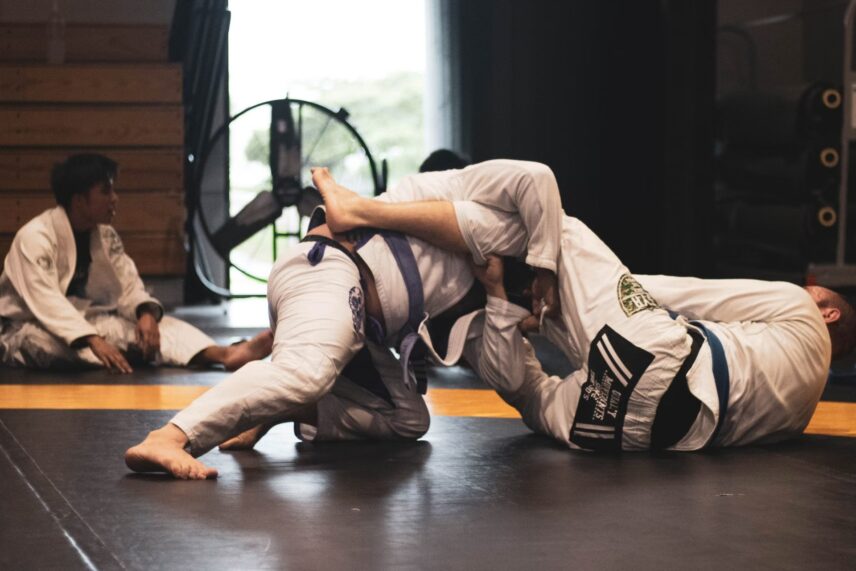
Mastering these BJJ basics builds functional strength, mobility and body awareness that translates to other fitness areas and martial arts.
A pure grappler’s biggest vulnerability is the space before the fight hits the ground. Without striking knowledge, closing the distance can be dangerous. This is why many practitioners cross-train in striking disciplines like Muay Thai, which offers a fully rounded and MMA-ready skillset that complements ground control.
Meanwhile, high-intensity functional movements like hip bridges and explosive drills accelerate your progress and build conditioning for longer rounds.
Roll Smarter and Train for Life
BJJ is not a sport you play but a lifestyle you adopt. The goal isn’t just winning today’s roll but training a decade from now.
Consider these principles for long-term training:
- Leave the ego at the door: Tap early, don’t get angry when caught and be willing to lose a roll to practice new techniques.
- Embrace the boring reps: Shrimping, bridging and basic guard retention drills are the unglamorous work that builds champions.
BJJ is highly scalable. The art is actively used to help rehabilitate injured soldiers by adapting to physical limitations while building mental resilience. The deeper philosophy and discipline seen in martial arts films remind us that the mat teaches lessons far beyond submissions.
Start Your BJJ Journey
Your journey will be filled with plateaus, frustrations and moments where you question whether you’re improving. Push through anyway. The mental toughness required to continue is exactly what BJJ develops. These six BJJ techniques form your foundation, but they’re just the beginning. Now, go train.