As an Amazon Associate, Modded gets commissions for purchases made through links in this post.
You’ve had the thought, maybe during a weird déjà vu moment or after three perfect green lights in a row. “Are we living in a simulation?” This idea has gotten many to question their lives. The idea that we’re living in a hyper-real computer program designed by an advanced civilization or our own future selves has gone from sci-fi stoner talk to TEDx stage-worthy debate. And the strangest part is that some of the smartest people in tech and physics are taking it seriously.
What Is Simulation Theory?
In plain terms, the idea is that your reality — this moment, page, last bad date — might be a highly sophisticated computer simulation run by a more advanced civilization. In other words, you’re Neo stuck in a Matrix, where everything around you is controlled by something bigger and smarter than you, like rats in a science lab.
The Long History of Questioning Reality
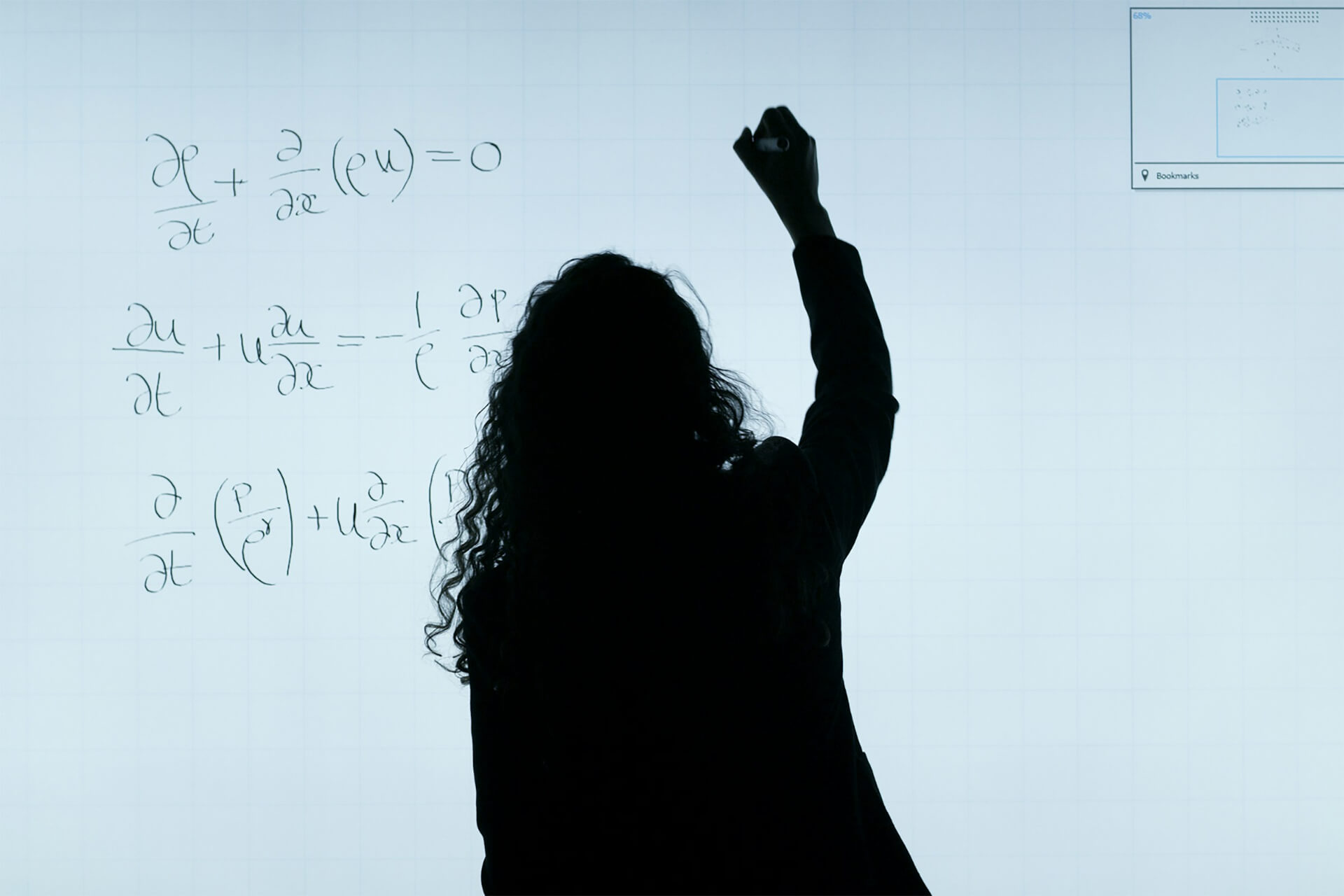
People have been questioning reality for centuries, through philosophy, religion, science, and now tech. Which is real? The scientists, audience, jury and judge are all still out on this — and we may never know what is true.
From Plato to The Matrix
You’re not the first to wonder what is real. Philosophers have been suspicious for centuries. Plato described a world of shadows, while Descartes questioned whether a demon was tricking him into believing a lie as reality. Then the Wachowski Brothers made us question whether “The Matrix” is real, and suddenly, everyone had an existential crisis in leather coats and wondered if they took the blue or red pill.
A Modern Version of Nick Bostrom’s Hypothesis
Oxford philosopher Nick Bostrom turned this sci-fi idea into an academic one. His theory is that if civilizations run realistic simulations, and if they want to, then statistically, you’re most certainly living in one — and you’d never know it.
After all, we’re still arguing today whether the world is round or flat, despite all the technology pointing toward it being spherical — sorry, flat earthers. So until someone can prove without any doubt that we’re in a simulation, it will remain the stuff of movies and science experiments.

Could Your Reality Be an Experiment?
Take a moment to look around. Is anything glitchy? Jokes aside, simulation theory hinges on the idea that future tech — AI, quantum computing and virtual reality — might one day replicate entire conscious worlds — think “The Truman Show” on a more advanced level. The deeper we get into immersive digital experiences, the harder it is to brush that off.
Elon Musk claimed back in 2016 that “there’s a one in billions chance reality is not a simulation.” His reasoning is that video games went from Pong — a simple two-paddle pixel game from the ’70s — to near-photorealism in less than 50 years. He argues that if that progress keeps accelerating, creating simulated realities indistinguishable from base reality becomes inevitable. If so, who’s to say we’re not already inside one? After all, gaming is such a popular habit — is it so hard to imagine that future civilizations might use simulations as their new form of entertainment?
Some scientists even try to identify signs of digital or quantum glitches. Others? They’re not buying it.
The Science World Split
Physicists love a good thought experiment, but not all are on board. There’s no hard evidence, and it’s not yet testable. Some argue it’s more philosophical than science. Still, quantum strangeness, like particles behaving differently when observed, keeps the debate alive.
Pop Culture and the Simulation Spiral
Simulation theory is everywhere, from TikTok glitch montages and The Simpsons from 1989 and their predictions to Reddit threads where people swear their toast disappeared mid-air. It taps into the curiosity that keeps you binge-watching dystopian shows and checking for security cameras in hotel rooms.
Would a Simulation Matter?
Here’s the real kicker — if this is a simulation, it feels real. You’d still need to pay rent, find meaning and remember birthdays. For some, that’s liberating — it means you can define your own purpose. For others, it’s unsettling. Either way, the game goes on.
The “Evidence” of Glitches, Déjà Vu and Mandela Effects
Maybe you’ve had that moment where the same song plays three times in a row, or your coffee shop vanishes from Google Maps. People call these “glitches.” Déjà vu becomes “memory bugs,” and Mandela effects could be a symptom of cross-stimulation confusion. You decide if it’s a sign the world is cracked or that your brain is foggy.
Why Simulation Won’t Die
The concept of false reality scratches an ancient itch — why are we here? Who is behind the curtain? Whether it’s God, aliens or a coder named Kyle, the idea gives structure to uncertainty. When the world feels chaotic, that familiarity is weirdly comforting.
The Case for Letting the Theory Go
Even if simulation theories sound compelling, there’s a reason not to lose yourself in them. Occam’s Razor says the simplest explanation is usually the best — and a “base reality” is much simpler than an “interdimensional computer farm.” Besides, your time’s better spent dealing with real-world stuff like your job, friends and health.
How to Stay Grounded in an Uncertain Reality
Let’s say, for argument’s sake, it’s all a program or experiment. So what? You still get to make choices. You cook your own dinner, move your body for exercise and fitness and connect with people — even the annoying ones. So whether real or not, your experiences feel real to you. That’s what counts.

More Questions About Simulation Theory
Is Simulation Theory a Proven Scientific Theory?
No. It’s a philosophical idea with some scientific support, but it isn’t testable in the traditional sense — and there’s no hard evidence to prove or disprove it.
Why Do People Take Simulation Theory Seriously If There’s No Proof?
It’s logically compelling, and once you accept certain assumptions, like future civilizations running simulations, it becomes statistically likely, as Bostrom’s argument suggests.
Are There Signs We Are Living in a Simulation?
People point to quantum weirdness, déjà vu and unexplained coincidences. But there’s no definitive proof. These “signs” often say more about human perception than about reality.
Would It Change Anything If We Are Simulated?
Probably not. You’d still live your life, have relationships and feel joy and pain. The context changes, but the experience doesn’t.
Can Simulation Theory Be Tested?
Scientists have tried proposing tests like cosmic ray behavior or resolution limits in space-time, but nothing conclusive has emerged. For now, it’s a fun — sometimes unsettling — idea, not a scientific fact.
Could the Experiment Work?
The bottom line is that if this is a simulation, it’s a pretty convincing one. You’ve still got bills, heartbreak, joy, and coffee — and spark plugs to change — all the things that make life feel real. Whether aliens are watching you or just your group chat, your choices still matter. So go live your life like it’s the only one you’ve got. Because even if someone is running the code, you’re the one pressing play.