As an Amazon Associate, Modded gets commissions for purchases made through links in this post.
There’s just something about a vintage motorcycle that modern machines rarely capture. It could be the smell of fuel and oil, the way the engine talks back to you, the fact that every ride feels earned or how they catch the eyes of passersby wherever you park them. Today, these best vintage motorcycles can also be great investments and deeply rewarding machines to ride. If you’re hunting for the coolest classic motorcycles or simply curious about them, here are the most iconic ones.
1. Harley-Davidson Fat Boy
Harley-Davidson has had its fair share of iconic motorbikes over the years, such as the EL “Knucklehead” and the Electra-Glide. However, the Harley-Davidson Fat Boy is perhaps the most recognizable motorcycle the brand has ever produced. The beautiful finish, solid disc wheels, valanced fenders and FL-style front forks give it a presence you cannot ignore.
Powered by a 1,340 cc Evolution V-Twin engine, the original 1990 Fat Boy went on to become one of Harley-Davidson’s bestselling models and a fixture in pop culture. Its most famous appearance came when Arnold Schwarzenegger rode it in “Terminator 2: Judgment Day,” which quickly cemented its status as one of the coolest classic motorcycles.
The bike is still in production today. In 2025, Harley-Davidson marked its 35th anniversary with a limited-edition release capped at just 1,990 motorcycles worldwide.
2. Benelli 750 Sei
If you want the best vintage motorcycle that truly broke the rules, the Benelli 750 Sei is your answer. This was the first production motorcycle to feature a six-cylinder engine. When it launched in 1973, it was considered the most exciting bike available to the public.
Alejandro de Tomaso developed the Sei to stand out, and it did exactly that. You could feel it in the incredibly smooth and responsive engine, and you could see it in the bold, angular styling by Carrozzeria Ghia.
The Benelli 750 Sei’s standard features include a one-piece dual seat, pillion grab rail, round headlight, chromed front fender, wire-spoke wheels and a distinctive three-into-three exhaust with six silencers. Despite its extra cylinders, the bike is relatively narrow because its alternator is mounted behind them. It’s also considered a rare Italian classic due to its extremely limited production numbers.
3. Honda CB750
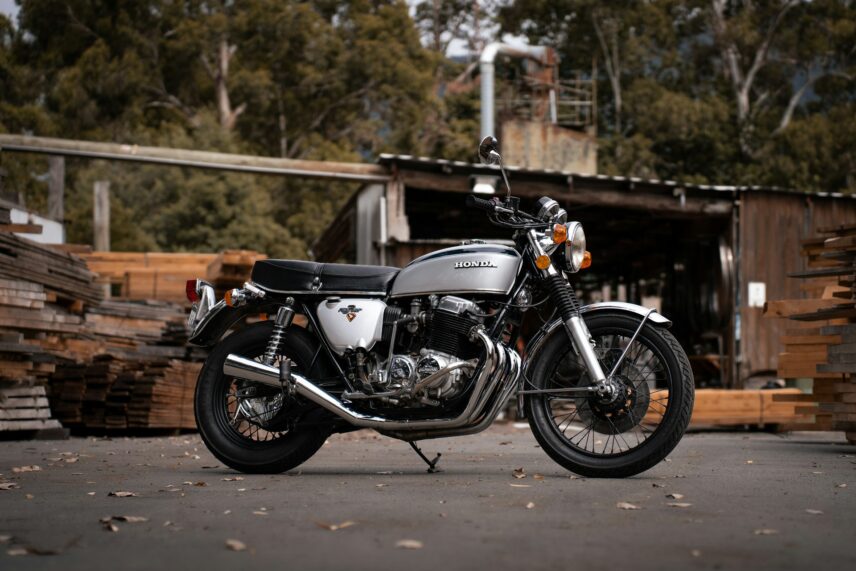
When the Honda CB750 landed in July 1969, it changed what the world could expect from a road bike. Often credited as one of the first superbikes, it paved the way for the dominance of Japanese road motorcycles. It was the first mass-production motorcycle to feature a four-cylinder engine, a disc brake and an electric starter. This combination set a new benchmark for performance and usability.
With the CB750, Honda aimed to become the world’s leading manufacturer in both volume and quality. That was a bold move, considering it was competing directly with established names like Triumph, BMW and Harley-Davidson.
Its four-cylinder, four-muffler layout was deliberately designed so you could instantly associate it with Grand Prix racing performance, while the higher handlebars appealed strongly to American riders. As Honda’s first large-capacity mass-production model, it also introduced technologies that made high-volume production and owner maintenance easier.
4. Ducati 750 GT
Before Ducati became famous for red superbikes, it built elegant, air-cooled twins like the 750 GT. Introduced in 1971, it was the brand’s first motorcycle to use a 90° V-twin engine — a layout that would later become a Ducati signature.
Designed by Fabio Taglione, the 750 GT arrived at a time when motorcycles across Europe were becoming more powerful and more sport-focused. It was Ducati’s response to that trend. With its 784 cc engine, the bike could perform well on the racetrack while remaining usable on the road. Since production numbers were low from the start, it’s a genuinely rare machine and an important chapter in Ducati’s history.
5. Triumph Bonneville T120
The Triumph Bonneville T120 is usually the first image that comes to mind when people think of classic British motorcycles. Although the Bonneville debuted in 1959, it’s the redesigned 1960 version that most riders consider the definitive model. Thanks to its parallel-twin engine designed by Edward Turner, long chrome peashooter mufflers, pancake saddle and signature two-tone paint, the Bonneville created the standard for an entire era.
Based on the T110 Tiger engine but upgraded with twin Amal carburetors and a performance intake cam, the T120 offered a lightweight frame, strong torque and a top speed of 110 mph. It dominated dragstrips and dirt tracks. It was also ridden by famous names like Paul Newman, Steve McQueen and Paul McCartney.
Riding and Caring for the Best Vintage Motorcycles
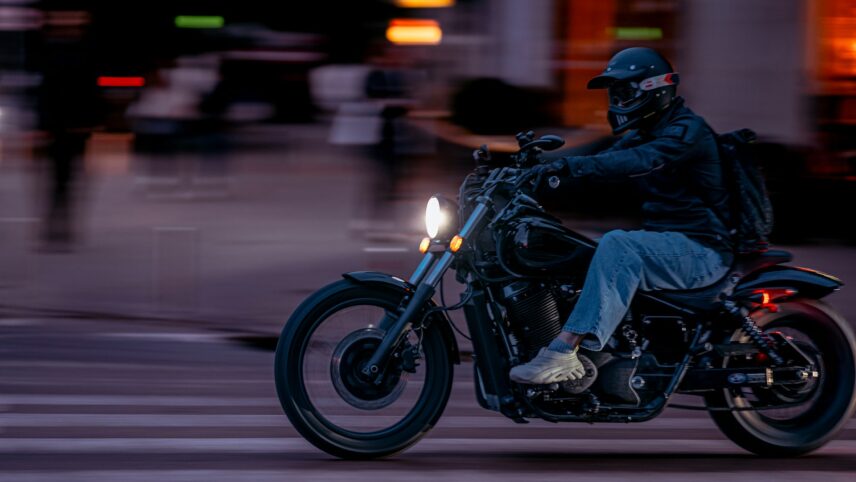
If you own — or are thinking about buying — the coolest classic motorcycles, it’s important to remember that riding and caring for them is a different experience from owning a modern bike. These machines reward attention, but they also demand it.
Before you hit the road, make sure your vintage motorcycle is in top condition. That means regularly checking the brakes, lights and tire pressure. You also need to stay on top of routine maintenance to reduce the risk of mechanical issues mid-ride.
Parts for classic bikes are not always mass-produced anymore, but replacements are usually available if you know where to look. Whenever possible, source parts that were initially made for your model, or work with a specialist workshop whose mechanics are familiar with vintage motorcycles. Plus, since vintage motorcycles handle differently from modern machines, take the time to truly learn your bike.
Once you’re on the road, always put safety first. Motorcyclists are almost 29 times more likely to die in a crash than car occupants, and around 5,000 riders lose their lives each year. Here are some ways you can protect yourself:
- Wear a proper helmet: Even if your state doesn’t have a helmet law, you should still wear one. A full-face helmet offers the best protection and is your first line of defense.
- Choose the proper riding gear: Always wear leather or sturdy protective clothing. Studies showed that those who wear motorcycle jackets are safer from injury compared to those who don’t.
- Make yourself visible: Avoid riding in blind spots and position yourself where other motorists can clearly see you.
- Stay alert to changing road conditions: The Motorcycle Safety Foundation recommends a strategy called search, evaluate, execute. It can help you spot hazards early and respond calmly.
The Coolest Classic Motorcycles, Then and Now
The best vintage motorcycles on this list did more than make headlines in their day. They changed the way bikes were designed, built and ridden. You can still feel their influence every time you see a modern machine borrow cues from the past.