
As an Amazon Associate, Modded gets commissions for purchases made through links in this post.
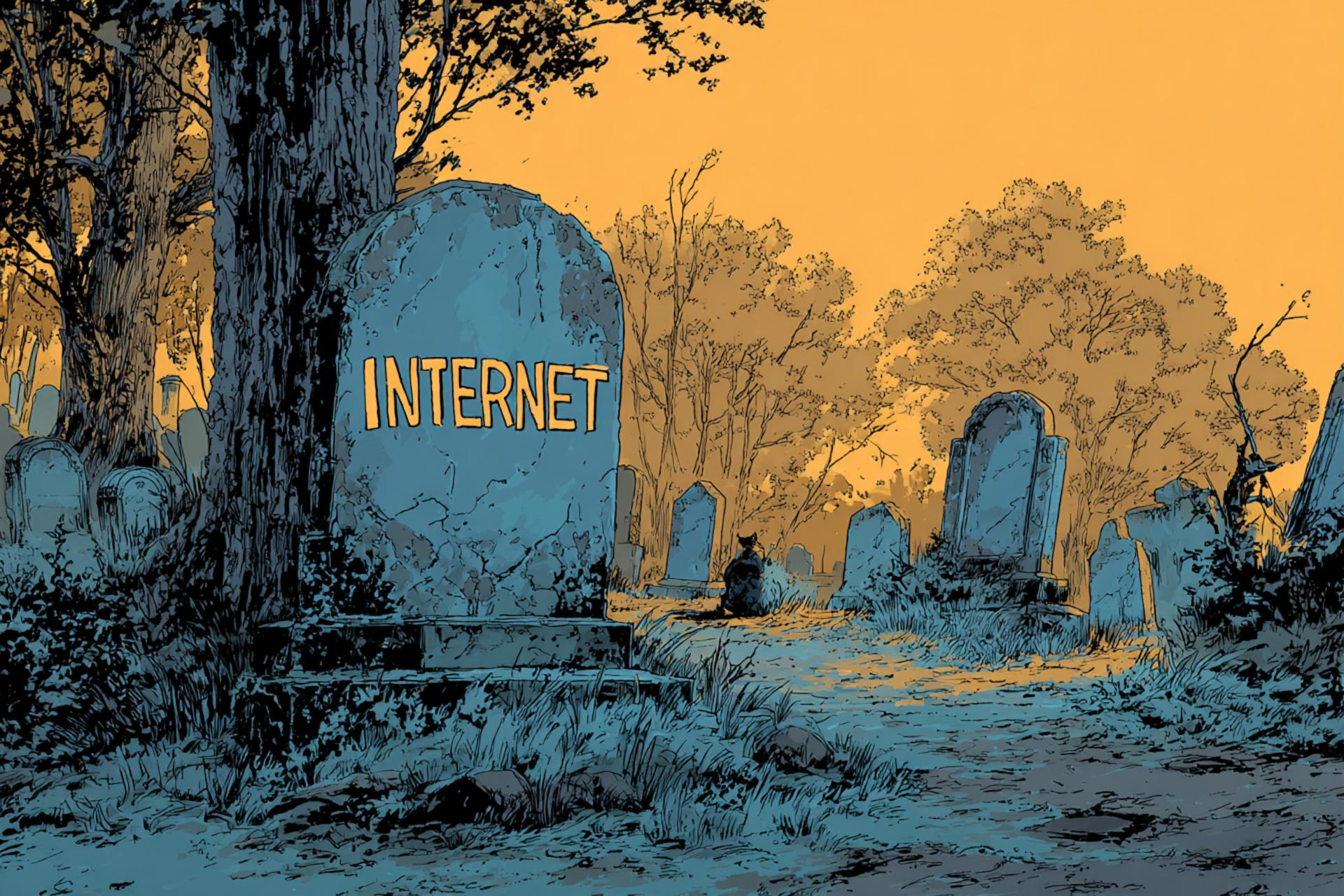
You’ve probably felt it, scrolling through comment sections that read like bots arguing with bots, feeds packed with recycled content and online spaces that somehow feel crowded and empty at the same time. The Dead Internet Theory asks an uncomfortable question — what if much of what you interact with online isn’t human anymore? Here’s what the theory gets right, what it gets wrong and how you can stay human in a rapidly automated cyberspace.
What Is the Dead Internet Theory?
At its core, the Dead Internet Theory suggests that much of what you see, read and interact with online is no longer created by real people. Instead, it’s allegedly dominated by bots, automated systems, AI-generated content and algorithmically recycled posts designed to simulate activity rather than foster genuine interaction.
The theory gained traction in the early 2020s, as users started noticing strange patterns, like comment sections repeating the same phrasing, accounts posting nonstop without any real personality and content that felt technically correct but emotionally empty. The idea isn’t that no humans are online anymore. Instead, it’s that human voices are increasingly buried under layers of automation.
While the theory itself leans conspiratorial when taken literally, it taps into a very real feeling you’ve probably experienced, which is that the internet feels louder, flatter and less authentic than it used to. And that discomfort didn’t come out of nowhere.
Why the Internet Feels Less Human Now

Even if the internet isn’t “dead,” it’s undeniably changed and the data backs that up. Automated traffic now accounts for a massive share of total internet activity, with bots responsible for everything from scraping content to generating comments, likes and even full-length articles. When you factor in generative AI, that synthetic presence multiplies fast.
Social platforms are also optimized for speed and scale, not conversation. Algorithms reward content that triggers quick reactions, which encourages reposting, aggregation and AI-assisted production over original thought. That’s why you’ll often see the same ideas, jokes and takes circulating endlessly with slightly different wording.
Add in comment bots, engagement farms and AI-generated social accounts and it’s no surprise online spaces can feel hollow. You’re not imagining it. You’re navigating an ecosystem where a growing percentage of interactions are designed to look human without actually being human.
Social Media, Monetization and the Death of Conversation

A big reason human interaction feels scarce online comes down to incentives. Social platforms make money from attention, not depth, which means meaningful discussion is often less valuable than high-volume engagement. The faster something spreads, the better, regardless of whether it adds insight.
As a result, long-form forums and community-driven spaces have slowly been pushed aside in favor of short, punchy content that’s easy to automate and endlessly recycle. Nuance doesn’t trend well. Thoughtful disagreement doesn’t scale. But outrage, memes and oversimplified takes? Those perform beautifully.
For you as a user, this creates a feedback loop. The more you’re shown surface-level content, the less likely you are to engage deeply, which then signals the algorithm to serve even more of the same. Over time, real conversation doesn’t disappear. Instead, it just gets deprioritized.
Is the Internet “Dead”? What the Theory Gets Wrong
Despite how convincing the Dead Internet Theory can sound, it falls apart when taken at face value. Humans are still very much online, they’ve just migrated. You can see a similar hunger for connection offline, where experts say card and tabletop game sales have surged since 2020. Online, that same drive is pushing people toward private group chats, niche communities, paid platforms and invite-only spaces, which are thriving precisely because they filter out noise and automation.
What’s really happening isn’t death, but fragmentation. Public-facing platforms feel artificial because they’re optimized for mass consumption, while authentic interaction is happening in smaller, harder-to-find pockets of the web. If anything, human connection has become more intentional.
The theory works best as a metaphor, not a diagnosis. The internet isn’t dead. Rather, it’s running on autopilot. And whether it feels alive or empty depends largely on where you spend your time and how consciously you choose to engage.
What This Means for You
For men especially, the shift toward an automated, engagement-driven internet comes with real consequences. Spaces that once encouraged skill-sharing, mentorship and debate — think forums, comment threads and long-form blogs — have been replaced by fast content that rarely sticks. You’re constantly consuming, but rarely connecting, even though many people interact with colleagues for 40+ hours a week.
This environment can quietly reinforce isolation. When interactions feel artificial or transactional, it’s harder to build trust, learn from others or feel challenged in meaningful ways. This sentiment is reflected even in the world of romance, where as much as 97% of single American adults don’t like the idea of using AI in dating. Add in algorithmic echo chambers and you may find yourself seeing the same opinions repeated back to you, creating a false sense of consensus.
The danger is misinformation and disengagement. When everything feels fake, it’s tempting to check out entirely. But that disengagement is exactly what allows low-effort, automated content to dominate in the first place.
How to Stay Human in an Automated Internet

You don’t need to abandon the internet to reclaim meaningful interaction, though. You just need to be more intentional about how you use it. Start by favoring depth over volume. Seek out long-form content, thoughtful creators and platforms that prioritize discussion instead of dopamine hits.
Engage selectively. Comment less, but say more. Support creators who show their thinking, not just polished outputs. Join smaller communities built around shared interests, where moderation and accountability keep conversations real.
It also helps to develop pattern awareness. If a post feels emotionally manipulative, oddly generic or engineered for outrage, it probably is. Curating your feeds manually, rather than relying entirely on algorithms, gives you surprising control over your online experience.
Automation Isn’t the Villain
It’s easy to blame AI and bots for everything that feels broken online, but automation itself isn’t the real problem. The issue is how platforms deploy it and prioritize scale, speed and monetization over human connection. AI didn’t kill the internet. Instead, it exposed weaknesses that were already there.
Used responsibly, automation can enhance creativity, reduce noise and even improve access to information. For example, cloud gaming platforms often integrate with streaming services like Twitch and YouTube, making it easier for gamers to share gameplay and build communities. But without conscious participation from real users, it fills the vacuum left by disengagement. The more passive people become online, the more synthetic the space feels.
In other words, the internet reflects how it’s used. If you want it to feel more alive, human presence still matters, yours included.
The Internet Isn’t Dead — It’s On Autopilot
The Dead Internet Theory resonates because it captures a feeling many people struggle to articulate. Online spaces don’t feel empty because humans are gone, they feel empty because authentic interaction is harder to find and easier to ignore. The good news is that nothing irreversible has happened. Human connection hasn’t disappeared. Rather, it’s just been buried under layers of automation and noise.

