

As an Amazon Associate, Modded gets commissions for purchases made through links in this post.
Falling asleep can be difficult for some, and sometimes it’s hard all of the time. Fortunately, there are things you can try to help you fall asleep quickly. This means putting down the phone and stopping that doomscrolling, as staring at your device isn’t doing you any favors.
1. The Military Method
The military sleep method is a two-minute relaxation technique designed to help service members fall asleep quickly in high-stress environments.
Popularized in the 1981 book Relax and Win, the routine combines body scanning, deep breathing and mental visualization to activate the body’s parasympathetic or rest-and-digest nervous system. This can be a part of your nighttime routine, where you put on soothing music or take a shower, before you start doing the military method:
- Relax your face: Close your eyes, breathe deeply and release tension in your forehead, cheeks and jaw. Let your eyes feel heavy and sink into your head.
- Drop your shoulders and arms: Let your shoulders drop as low as possible. Release tension down your right arm, starting with the biceps, forearm, hand and fingers, then repeat for your left arm. Feel your body slowly relax and decompress.
- Breathe and relax your chest: Take a slow, deep breath and as you exhale, feel your chest and stomach sink and relax.
- Work down your lower body: Relax your lower half, moving from your right thigh, knee, calf, ankle and foot to your toes. Repeat the exact same sequence for your left leg.
- Clear your mind: Spend roughly 10 seconds pushing out stressful thoughts. You can visualize a calm setting, such as lying in a warm canoe on a lake or resting in a dark hammock, or mentally repeat the phrase “don’t think” over and over.
2. Progressive Muscle Relaxation
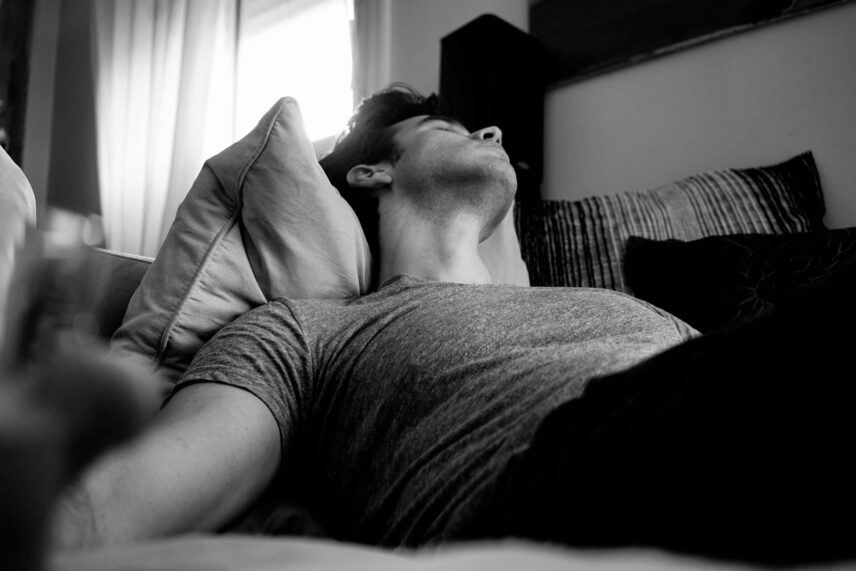
Progressive Muscle Relaxation (PMR) is a technique in which you tense and then release different muscle groups to help calm your body and mind for sleep. Developed in the 1920s, PMR operates on the principle that physical relaxation leads naturally to mental calmness.
Tensing and releasing muscles can help activate your parasympathetic nervous system and may lower your heart rate and stress levels. To do this method, you work through your body in a sequence, either from your feet up to your head, or from your head down to your feet:
- Get comfortable: Lie flat on your back in bed. Support your head with a pillow and place another pillow under your knees to ease your lower back. Let your arms rest slightly apart with palms facing up. Keep your phone away in another room.
- Breathe deeply: Take several slow breaths through your nose, and exhale with a long sigh to release initial stress.
- Tense the muscle: Choose a muscle group. Inhale and gently contract or tense that specific muscle group for about five to 10 seconds. Do not strain or cause pain.
- Release and relax: Exhale, and suddenly and completely release the tension. Notice the warm, heavy feeling of relaxation as the muscle lets go.
- Rest: Stay in this relaxed state for 10 seconds before moving to the next muscle group.
- Progress through the body: Move sequentially through your body parts, such as your feet, calves, thighs, stomach, hands and arms, shoulders and face.
- Breathe and Drift: Once you finish the sequence, keep your eyes closed and focus entirely on your natural breathing until you fall asleep.
3. Guided Imagery
The guided imagery method for sleep is a relaxation technique where you picture a calm, peaceful setting using all your senses to quiet racing thoughts and help your body fall asleep.
To do this method, lie down in bed and get comfortable. Take a few slow, easy breaths to let go of the day’s stress and tension. Pick a quiet, safe place that feels relaxing to you, like a secluded beach, a mountain lake or a quiet forest. Build the mental picture slowly. Notice what you see, what you hear, how the air feels on your skin and any nice scents. When your mind wanders, bring your focus back to your peaceful scene without judgment.
Guided imagery can lower stress and replace anxious thoughts with calm, helping you sleep.
4. Meditation
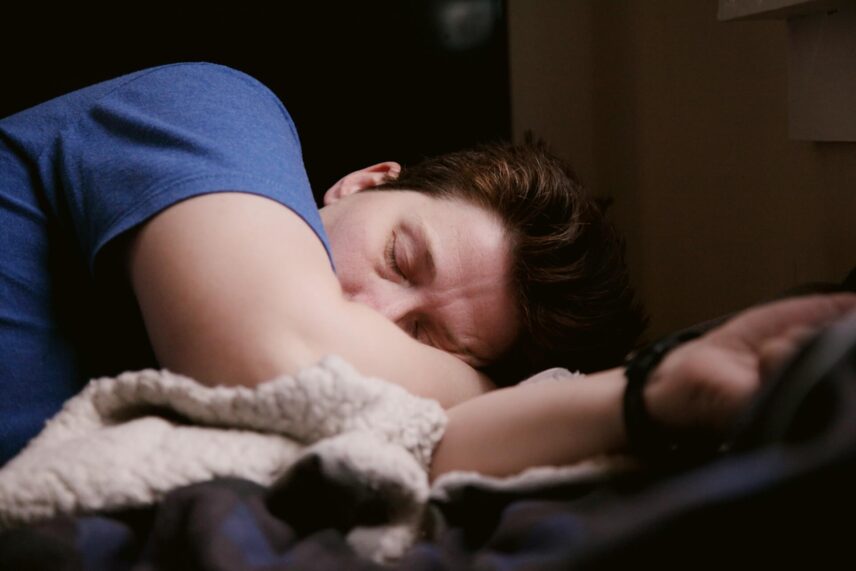
One commonly recommended meditation method for falling asleep is the body scan meditation combined with slow breathing. It works by shifting your focus away from racing thoughts and toward physical sensations, which slow your heart rate and signal your nervous system to relax.
To start meditating, get comfortable. You can sit on a chair with your feet flat on the floor, or cross-legged on a cushion on the ground. Sit up straight but remain relaxed. Imagine a string pulling the crown of your head toward the sky. Relax your shoulders. Place your hands comfortably on your knees or in your lap. Close your eyes, or keep them slightly open, looking loosely at the floor a few feet in front of you.
Then, breathe naturally. Focus on your breath. If your mind wanders, that’s fine. Let those thoughts wash over you. Try to keep your mind in meditation as you fall asleep. It’s important to stick to this schedule, as it can trigger your mind into sleepiness.
5. 4-7-8 Breathing Technique
The 4-7-8 breathing technique is a rhythmic breath exercise popularized by Dr. Andrew Weil that acts as a natural tranquilizer for the nervous system. Here’s how you do it:
- Position yourself: Sit with your back straight or lie down comfortably in bed. Place the tip of your tongue against the ridge of tissue right behind your upper front teeth and keep it there the entire time. Keep putting your tongue back if you move it.
- Empty your lungs: Exhale through your mouth, making a whooshing sound. Inhale for four seconds. Close your mouth and breathe in through your nose for a count of four. Hold your breath for a count of seven, then exhale completely for eight seconds.
- Repeat: That is one cycle. Do this for a total of four breath cycles when trying to sleep.
If you’re a fan of mouth taping, consider putting the mouth tape on after doing any of the exercises on this list. However, if you have sleep apnea, mouth tape can restrict airflow and possibly worsen sleep. It’s best to speak to your doctor before trying mouth tape.
These Techniques Could Help You Sleep
If you’re having issues sleeping, these techniques could help you get a restful sleep. However, if you’re still struggling, speak to your doctor. You could have an underlying issue, like insomnia or sleep apnea, that may prevent you from getting to sleep or staying asleep.


