As an Amazon Associate, Modded gets commissions for purchases made through links in this post.
Few sporting roles carry the immense psychological weight of an NFL quarterback. Rather than merely throwing a football, you are acting as the CEO of a billion-dollar franchise between the white lines, making split-second decisions while dodging oncoming defensive ends. Identifying football’s best quarterbacks of all time means looking past box scores.
This countdown considers Super Bowl rings, era-adjusted passing efficiency, legendary fourth-quarter comebacks, intangibles and unmatched iron-man durability to celebrate the ultimate gridiron titans who truly mastered the pocket.
13. Sammy Baugh (1937-1952)
Before Sammy Baugh arrived in the nation’s capital, football was an unyielding war of bruising trenches and conservative ground scrums. Baugh single-handedly weaponized the forward pass, transforming aerial strikes into a systematic offensive philosophy rather than an act of sheer desperation.
Operating as the ultimate iron-man athlete, “Slinging Sammy” conquered all three gridiron phases, orchestrating championships while simultaneously excelling as a shutdown defensive safety and a generational punter. His astonishing multi-phase dominance shattered traditional playbooks, laying the conceptual foundation that shaped modern passing architecture forever.
- Franchises: Washington Redskins (1937-1952)
- Career passing yards: 21,886
- Career passing touchdowns: 187 (against 203 INTs, 56.5% completion rate)
- Accolades: 2x NFL Champion (1937, 1942), 6x Pro Bowl, 4x First-team All-Pro (1937, 1940, 1942-1943), 1943 Triple Crown (led the NFL in passing, punting and defensive interceptions)
12. Bart Starr (1956-1971)
Bart Starr served as the surgical, unflappable field general who orchestrated Vince Lombardi’s relentless Green Bay dynasty. Rather than chasing flashy regular-season totals, he operated with pinpoint precision, protecting the football with peerless discipline when winter weather turned brutal.
Starr’s icy composure under pressure peaked during the frozen drama of the Ice Bowl of 1967, where his legendary goal-line sneak sealed the championship game. In an era shaped by some of the best running backs of all time, Starr countered opposing ground games by setting an extraordinary playoff efficiency benchmark that cemented his legacy as football’s ultimate big-game winner.
- Franchises: Green Bay Packers (1956-1971)
- Career passing yards: 24,718
- Career passing touchdowns: 152 (138 INTs, 57.4% completion rate)
- Accolades: 5x NFL Champion, 2x Super Bowl Champion (I, II), Super Bowl I and II MVP, 1966 AP NFL Most Valuable Player, 4x Pro Bowl, 1x First-team All-Pro (1966), 9-1 postseason record (104.8 playoff passer rating)
11. Ben Roethlisberger (2004-2021)
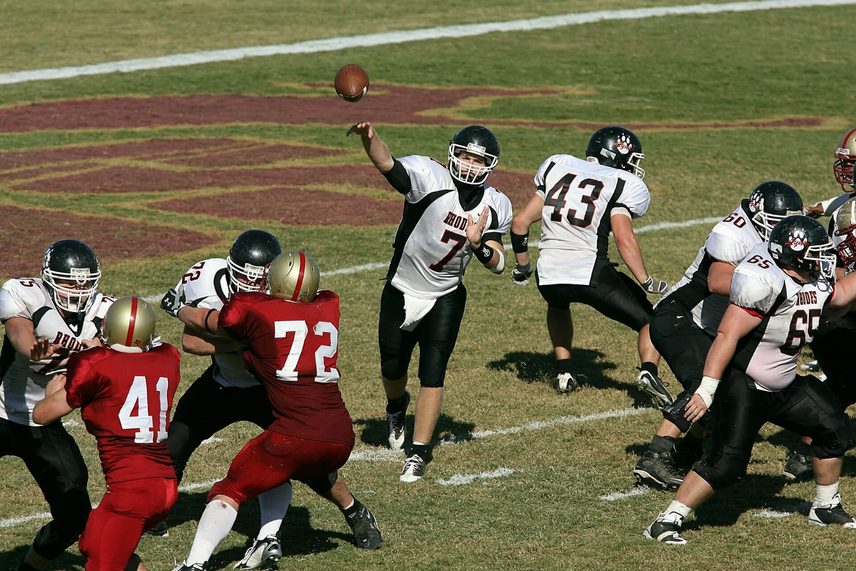
Standing 6-foot-5-inches tall and weighing north of 240 pounds, Ben Roethlisberger redefined pocket resilience with a bruising backyard football style. Shrugging off unblocked edge rushers who rivaled the strongest NFL players today in sheer force, “Big Ben” routinely extended broken plays when initial protection collapsed.
Roethlisberger’s rare blend of physical power, balance and ice-cold composure under intense duress enabled legendary game-winning strikes, most famously his pinpoint corner touchdown pass to Santonio Holmes, clinching a dramatic Super Bowl victory in 2009.
- Franchises: Pittsburgh Steelers (2004-2021)
- Career passing yards: 64,088
- Career passing touchdowns: 418 (211 INTs, 64.4% completion rate)
- Accolades: 2x Super Bowl Champion (XL, XLIII), 6x Pro Bowl, 2004 AP NFL Offensive Rookie of the Year, 41 fourth-quarter comebacks, 53 game-winning drives
10. Roger Staubach (1969-1979)
After fulfilling a four-year military commitment as a naval officer in Vietnam, Roger Staubach entered professional football as a mature rookie. The celebrated 1963 Heisman Trophy winner immediately revitalized the Dallas Cowboys team with electrifying scrambles and pinpoint accuracy outside the pocket.
Known affectionately across the gridiron as “Captain Comeback,” Staubach commanded frantic late-game rallies with remarkable poise under intense duress. His daring improvisational style popularized the original “Hail Mary” touchdown heave while steering his franchise to two dominant world titles with his fearless leadership.
- Franchises: Dallas Cowboys (1969-1979)
- Career passing yards: 22,700
- Career passing touchdowns: 153 (plus 2,264 rushing yards and 20 rushing TDs)
- Accolades: 2x Super Bowl Champion (VI, XII), Super Bowl VI MVP, 6x Pro Bowl, 15 fourth-quarter comebacks, 23 game-winning drives (regular season and playoffs)
9. Patrick Mahomes (2017-Present)
Patrick Mahomes has bent football physics to his will since taking over under center. Blending sidearm angles, no-look strikes and unflappable late-game heroics, he engineered a dominant Kansas City dynasty before turning thirty. Securing his future among the highest-paid NFL players today validated his unprecedented postseason brilliance while transforming league economics.
Furthermore, Mahomes is recognized alongside iconic global sports marketing figures, expanding his cultural impact far beyond the gridiron sidelines. Whether scrambling away from pressure or executing surgical drives, “Showtime” has established a transcendent standard that fundamentally redefined the modern passing game.
- Franchises: Kansas City Chiefs (2017-Present)
- Career passing yards: 38,324 (plus 5,814 postseason passing yards)
- Career passing touchdowns: 286 (against 89 INTs plus 46 postseason passing TDs, 2,765 regular-season rushing yards and 20 rushing TDs)
- Accolades: 3x Super Bowl Champion (LIV, LVII, LVIII), 3x Super Bowl MVP, 2x AP NFL Most Valuable Player (2018, 2022), 6x Pro Bowl, 2x First-team All-Pro (2018, 2022), 21 fourth-quarter comebacks, 26 game-winning drives
8. Dan Marino (1983-1999)
Dan Marino arguably possessed the quickest, purest throwing motion the sport has ever witnessed, releasing passes long before opposing pass rushers could close the distance. Decades before modern rules protected perimeter receivers and passers from aggressive defensive contact, he orchestrated a revolutionary aerial assault that shattered existing benchmarks and completely redefined expectations for the best NFL quarterbacks.
Widely revered and often recognized as the best quarterback not to win a Super Bowl, he elevated his offense through unmatched arm talent, razor-sharp anticipation and fearless pocket command, proving that transcendent passing brilliance could dominate defenses in any era.
- Franchises: Miami Dolphins (1983-1999)
- Career passing yards: 61,361
- Career passing touchdowns: 420 (252 INTs)
- Accolades: 1984 AP NFL MVP, 1984 AP NFL Offensive Player of the Year, 1983 AP Offensive Rookie of the Year, 9x Pro Bowl, 3x First-team All-Pro (1984-1986), 33 fourth-quarter comebacks, 47 game-winning drives
7. Drew Brees (2001-2020)
Overcoming a devastating shoulder injury that jeopardized his career, Drew Brees forged one of football’s most inspiring second acts. Teaming up with Sean Payton, the undersized field general revitalized a reeling community while transforming his offense into an unstoppable aerial machine.
As one of many of Purdue’s famous Cradle of Quarterbacks, Brees dismantled defensive secondaries with historic completion efficiency and strategic ball placement. His unmatched consistency across almost two decades proved that cerebral preparation, relentless work ethic and tactical throwing accuracy could conquer raw physical size at the highest level.
- Franchises: San Diego Chargers (2001-2005), New Orleans Saints (2006-2020)
- Career passing yards: 80,358
- Career passing touchdowns: 571 (243 INTs, 67.7% completion rate)
- Accolades: Super Bowl XLIV Champion and MVP, 13x Pro Bowl, 1x First-team All-Pro (2006), 4x Second-team All-Pro, 2x AP NFL Offensive Player of the Year (2008, 2011), 7x NFL passing yards leader, 36 fourth-quarter comebacks, 53 game-winning drives
6. Aaron Rodgers (2005-Present)
When evaluating sheer mechanics, ball placement and pocket artistry, Aaron Rodgers operates in a stratosphere of his own. Throwing with effortless flick-of-the-wrist torque from impossible arm angles, he’s revolutionized backfield navigation while maintaining the most disciplined turnover avoidance in modern gridiron history.
Rodgers’ ability to deliver strikes into suffocating coverage without committing catastrophic mistakes has produced multiple league MVP awards and unmatched late-game miracles, including legendary desperation Hail Mary passes. At the age of 42, his combined supreme technical refinement and cold-blooded confidence continue as a towering benchmark for contemporary passers after more than two decades of elite professional competition.
- Franchises: Green Bay Packers (2005-2022), New York Jets (2023-2024), Pittsburgh Steelers (2025-Present)
- Career passing yards: 68,288
- Career passing touchdowns: 542 (against just 129 career INTs, 65.0% completion rate)
- Accolades: Super Bowl XLV Champion and MVP, 4x AP NFL MVP (2011, 2014, 2020-2021), 10x Pro Bowl, 4x First-team All-Pro (2011, 2014, 2020-2021), 27 fourth-quarter comebacks, 39 game-winning drives
5. John Elway (1983-1998)
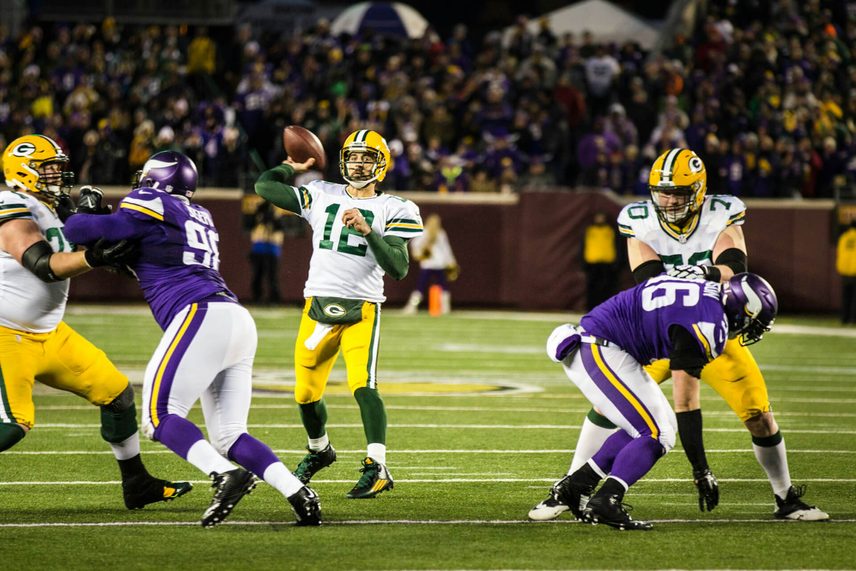
John Elway embodied the ultimate prototype quarterback, pairing a generational rocket arm with bruising mobility and fearless improvisational instincts. Long celebrated for his rare competitive grit, Elway routinely hoisted underdog rosters on his shoulders to engineer legendary late-game comebacks like “The Drive,” a 98-yard continuous drive that resulted in a Broncos touchdown to tie the 1986 AFC Championship game up with 39 seconds remaining.
Elway’s refusal to surrender under intense defensive pressure transformed seemingly impossible deficits into iconic triumphs. After carrying his franchise through decades of high-stakes postseason heartbreak, Elway achieved poetic justice by capping his storied career with consecutive Super Bowl rings.
- Franchises: Denver Broncos (1983-1998)
- Career passing yards: 51,475
- Career passing touchdowns: 300 (plus 3,407 rushing yards and 33 rushing TDs)
- Accolades: 2x Super Bowl Champion (XXXII, XXXIII), Super Bowl XXXIII MVP, 1987 AP NFL MVP, 9x Pro Bowl, 3x Second-team All-Pro, 31 regular-season fourth-quarter comebacks (35 including playoffs), 40 game-winning drives (46 including playoffs)
4. Brett Favre (1991-2010)
Brett Favre played professional football with the boundless exuberance of a kid enjoying backyard sandlot scrums. Without missing a beat, Buckhead Brett fired passes with reckless courage, threading tight windows and shrugging off bone-jarring hits. His astonishing physical resilience earned him consecutive MVP honors, and his uninterrupted starting streak was among the most mind-blowing stats in NFL history, given the violent collisions of the position.
Favre embraced chaos, celebrated touchdowns with boyish leaps, much like some of the top touchdown celebrations of all time, and restored championship glory to Green Bay through iron-man grit and infectious competitive energy.
- Franchises: Atlanta Falcons (1991), Green Bay Packers (1992-2007), New York Jets (2008), Minnesota Vikings (2009-2010)
- Career passing yards: 71,838
- Career passing touchdowns: 508 (336 INTs, 62.0% completion rate)
- Accolades: Super Bowl XXXI Champion, 3x consecutive AP NFL MVP (1995-1997), 11x Pro Bowl, 3x First-team All-Pro (1995-1997), 3x Second-team All-Pro, NFL record 297 consecutive regular-season starts (321 including playoffs), 28 fourth-quarter comebacks, 43 game-winning drives
3. Joe Montana (1979-1994)
Before modern passing explosions altered historical NFL perspectives, Joe Montana stood as football’s undisputed standard of championship poise. Operating Bill Walsh’s West Coast offense with surgical rhythm, “Joe Cool” possessed an unflappable pulse when trophies hung in the balance.
Consistently ranking high among the best football players of all time because of his postseason perfection, Montana famously pointed out celebrities in stadium crowds before engineering iconic game-winning drives down the field. He never panicked, never surrendered a turnover in the big game and defined clutchness by walking away undefeated on football’s grandest stage.
- Franchises: San Francisco 49ers (1979-1992), Kansas City Chiefs (1993-1994)
- Career passing yards: 40,551 (plus 5,772 postseason passing yards)
- Career passing touchdowns: 273 (plus 45 postseason passing TDs, 1,676 rushing yards, and 20 rushing TDs)
- Accolades: 4x Super Bowl Champion (XVI, XIX, XXIII, XXIV), 3x Super Bowl MVP (XVI, XIX, XXIV), 2x AP NFL MVP (1989-1990), 8x Pro Bowl, 3x First-team All-Pro (1987, 1989-1990), 26 fourth-quarter comebacks, 28 game-winning drives
2. Peyton Manning (1998-2015)
Peyton Manning fundamentally transformed offensive football into a fast-paced chess match played out at the scrimmage line. Acting as head coach, coordinator and passer all in one, the celebrated University of Tennessee alumnus dismantled rival defenses in real NFL time through theatrical hand signals, run plays and his iconic “Omaha” audibles.
Manning’s photographic memory and relentless preparation yielded regular-season records that rewrote history, while his unparalleled field command guided two franchises to World Championship crowns. Manning elevated quarterback intelligence to an unprecedented art form, revolutionizing the sport forever.
- Franchises: Indianapolis Colts (1998-2011), Denver Broncos (2012-2015)
- Career passing yards: 71,940
- Career passing touchdowns: 539 (against 251 INTs, 65.3% completion rate)
- Accolades: 2x Super Bowl Champion (XLI, 50), Super Bowl XLI MVP, 5x AP NFL MVP (2003-2004, 2008-2009, 2013), 14x Pro Bowl, 7x First-team All-Pro (2003-2005, 2008-2009, 2012-2013), 43 fourth-quarter comebacks, 54 game-winning drives
1. Tom Brady (2000-2022)
Tom Brady authored the most dominant dynasty in American sports, conquering multiple eras through extreme competitive drive and peerless execution. He honed his mental resilience under renowned Michigan leadership coach Greg Harden before arriving in the pros completely overlooked and going on to rewrite every conceivable standard of longevity and postseason mastery.
Standing comfortably among the greatest athletes of all time in international sports culture, Brady captured more Super Bowls than any individual franchise in history across iconic chapters in New England and Tampa Bay, cementing his coronation as football’s undisputed pinnacle.
- Franchises: New England Patriots (2000-2019), Tampa Bay Buccaneers (2020-2022)
- Career passing yards: 89,214 (102,614 including playoffs)
- Career passing touchdowns: 649 (737 including playoffs, 212 INTs, 64.3% completion rate)
- Accolades: 7x Super Bowl Champion (XXXVI, XXXVIII, XXXIX, XLIX, LI, LIII, LV), 5x Super Bowl MVP, 3x AP NFL MVP (2007, 2010, 2017), 15x Pro Bowl, 3x First-team All-Pro (2007, 2010, 2017), 3x Second-team All-Pro, 251 regular-season wins (35 playoff wins), 46 fourth-quarter comebacks, 58 game-winning drives
Will Anyone Ever Challenge Brady’s Throne?
From the bruising trench warfare of Sammy Baugh and Bart Starr to the high-flying aerial dynasties of Patrick Mahomes and Tom Brady, the quarterback position remains the ultimate director’s position in sports. Tom Brady sits comfortably atop the mountain of championship rings at present, but modern pretenders like Josh Allen and Jordan Love continue rewriting what you thought wasn’t possible under center. Will anybody surpass Brady on the Mount Rushmore of field generals? Only time will tell.