As an Amazon Associate, Modded gets commissions for purchases made through links in this post.
You’ve probably heard of Elon Musk’s Neuralink, the so-called “brain chip” that sounds straight out of a sci-fi flick. But if you’re wondering what a brain-computer interface actually is, beyond the headlines and hype, this guide will break it down clearly. No doomsday predictions, no ethical debates. Just the tech, the potential, and what’s real right now.
What Is a Brain-Computer Interface?
A brain-computer interface (BCI) is exactly what it sounds like: a system that allows direct communication between the brain and an external device. Instead of typing or speaking, a BCI lets you control devices using your thoughts — no wand-waving required — just neural activity.
The interface typically works by detecting electrical signals from your brain and translating them into commands a computer can understand. This isn’t about “reading your mind.” It’s about interpreting brainwaves to enable actions like moving a cursor or restoring lost functions like sight or mobility.

What’s the Purpose of a Brain Chip?
It’s medical meets mechanical. Think prosthetics for the nervous system. And down the road? It could go full Iron Man with enhanced cognition and hands-free computing. AI technology may upgrade to include dietary analysis and nutrient tracking, but in its current form, a brain chip aims to:
- Restore function to people with neurological disorders, paralysis or sensory loss
- Enable communication for those who can’t speak or move
- Augment brain function in the future, possibly boosting memory or focus
What’s the Deal With Neuralink?
Elon Musk’s Neuralink has become the poster child for BCIs. In January 2024, the company made headlines when it successfully implanted its chip in a human, Noland Arbaugh, for the first time. According to the latest Neuralink human trials update, the patient can control a computer cursor to play chess and Sid Meier’s Civilization VI using thoughts alone — an early but significant milestone.
The Neuralink chip, called “the N1 Implant,” is a small, coin-sized device implanted directly into the brain. It connects via ultra-fine threads thinner than a hair and targets areas that control movement with a function the researchers call “telepathy.” Right now, Neuralink is focusing on people with severe spinal cord injuries or ALS. Musk claims the long-term goal is to “merge with AI,” but for now, it’s about proving the tech works in real-world human applications.
What Are the Challenges Facing BCI Technology?
Despite the buzz, getting a brain chip to work is ridiculously complex. The brain has roughly 86 billion neurons, and no two people’s neural activity is identical, making calibration tricky. We’re still early in the game. But the progress is real — and it’s speeding up.
Other hurdles include:
- Signal clarity: Brain signals are faint and easily distorted by “noise” from surrounding electrical impulses and magnetic fields.
- Longevity: Implants must last for years without degrading, as you can’t continually open the human brain like a coin purse.
- Safety: Surgery and long-term implantation come with obvious risks, not to mention costs.
- Data processing: Translating neural data into usable output requires serious computing power and AI technology, which is fine for one subject but limits resources for multiple implant processing. The technology will eventually help to integrate computer output into the physical world and spaces.
What Can Brain Chips Do Now?
We’re not at mind-reading or instant language uploads, but the technology is helping people regain independence. That’s huge. Today’s most promising brain chips are designed for assistive tech, and they’re already proving useful in:
- Controlling robotic limbs or cursors
- Restoring partial vision through retinal or cortical implants
- Enabling silent communication with thought-to-text systems
- Reducing symptoms of conditions like Parkinson’s with deep brain stimulation
The 5 Companies Leading the BCI Race
Here’s who’s driving the field forward — and what they’re building.
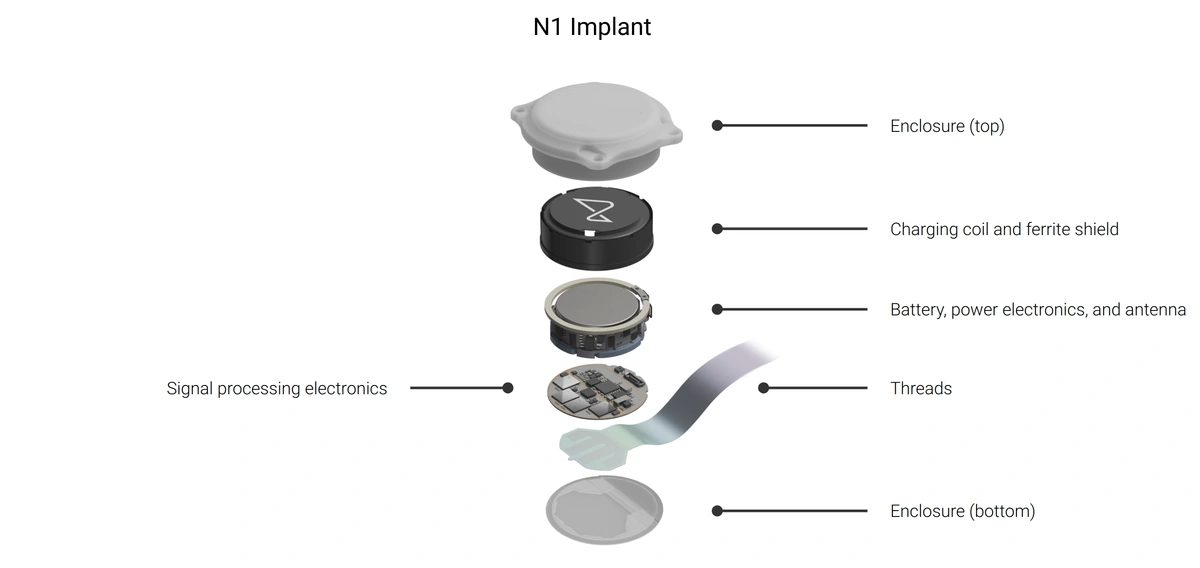
Image source: Neuralink Prime Study
1. Neuralink
Neuralink, a U.S. company, aims for full brain-computer interfaces that could eventually link your thoughts to your phone, computer or smart home. The tech is flashy, but it’s delivered on its early goals so far.
- Flagship device: N1 Implant
- Focus: High-bandwidth implantable chips
- Progress: Human trials are underway — cursor control is already possible
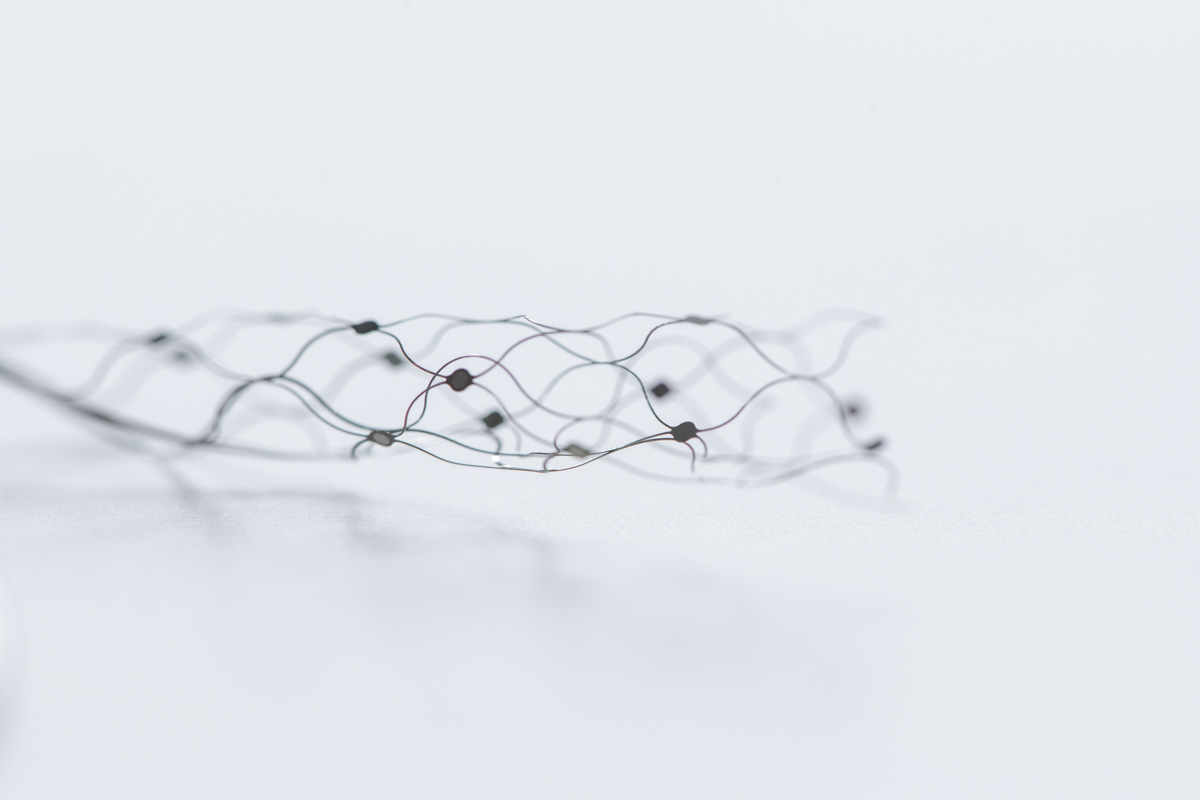
Image source: Synchron Stentrode
2. Synchron
Synchron, a U.S. and Australian company, designed a device implanted like a stent, through blood vessels, skipping open-brain surgery. ALS patients have already used it to send emails and texts with their thoughts, thanks to the Chiral™ AI interface.
- Flagship device: Stentrode
- Focus: Minimally invasive brain chips
- Progress: One of the first FDA-approved feasibility studies for BCI implants in 2021
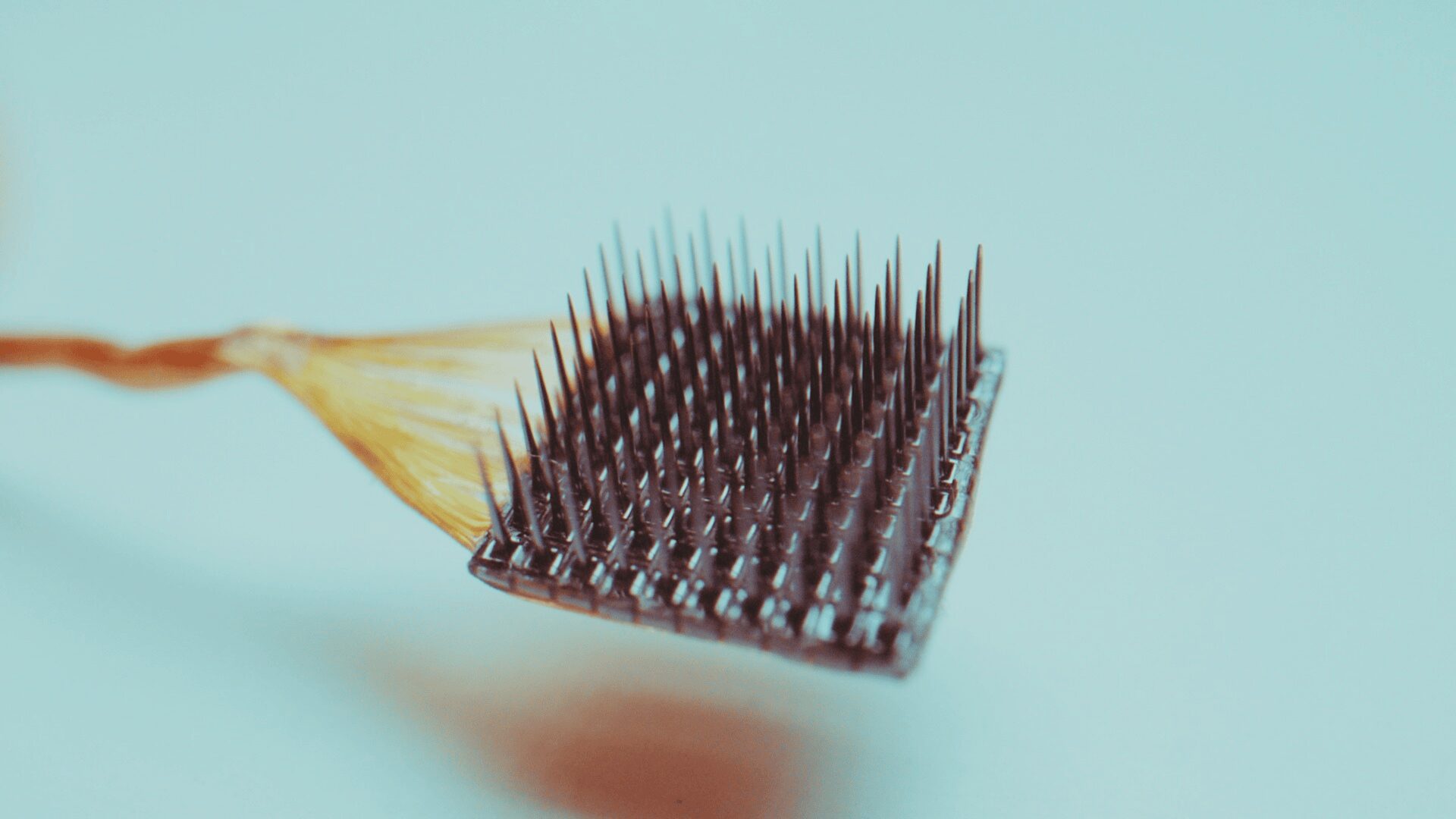
Image Source: Blackrock Neurotech NeuroPort Array
3. Blackrock Neurotech
Blackrock’s chips have helped U.S. patients control robotic limbs and interact with computers. They’re the OGs of BCI — solid tech with real-world results. The company has over 19 years of human studies and thousands of studies to back its devices.
- Flagship device: NeuroPort Array
- Focus: Long-term implantables for paralysis and neurological conditions
- Progress: Continuing microelectrode brain-machine interface human trials at the University of Pittsburgh

Image source: BrainGate2 Neural Interface System
4. BrainGate
With backing from major universities and hospitals, BrainGate is a U.S.-based research consortium focusing on making BCI technology medically viable and scalable for broader use.
- Flagship platform: BrainGate2 Neural Interface System
- Focus: Academic and clinical BCI development
- Progress: Continuing human trials through research partners, requiring a 13-month participation agreement for patients

Image source: Precision Neuroscience Layer 7 Cortical Interface
5. Precision Neuroscience
Precision Neuroscience, co-founded by Benjamin Rapaport, a Neuralink co-founder, aims to make BCI adoption faster and safer. Their thin-film surface implant is designed to be implanted and removed without major brain surgery.
- Flagship device: Layer 7 Cortical Interface
- Focus: Safer, removable BCI technology
- Progress: Preclinical testing stage via various medical institutions
Future Potential of Brain Chips
Some advances are still years off, and not all the applications may be feasible. But the devices are built, continuously refined and tested in real brains. If the tech continues to scale, BCIs could:
- Treat mental health disorders by modulating brain circuits
- Improve memory recall or learning through targeted stimulation
- Let users control devices in smart homes or vehicles with thought
- Enable immersive augmented and virtual reality through direct neural input
- Replace keyboards and controllers for ultra-fast communication
- Integrate with autonomous vehicles or robot taxis to allow people with physical impairment to drive with their minds
More Brain Chip Questions
What Is a Brain Chip Used for Today?
Most current applications focus on helping people with disabilities, such as those with paralysis or ALS, regain control over devices, communication or movement. Scientists can also use these chips in medical treatments like deep brain stimulation for Parkinson’s.
Is Neuralink the Only Company Working on Brain-Computer Interfaces?
While Neuralink — and Elon Musk — gets most of the media attention, companies like Synchron, Blackrock Neurotech, BrainGate and Precision Neuroscience are also making significant strides, often with less invasive approaches and more clinical data backing them.
Can Brain Chips Make You Smarter or Faster?
Not yet. The tech isn’t at the point where it can enhance cognitive function in healthy people. For now, brain chips are about restoring lost functions, not boosting superpowers. That said, future upgrades could push into augmentation territory.
So, What’s a Brain Chip Really Capable Of?
Right now? It’s all about helping people move, communicate and interact with the world using only their thoughts. In the future? It could potentially transform how we interface with machines entirely.
And if you think this sounds like a Black Mirror episode waiting to happen, don’t worry. We’ll save the philosophy chat for another day. For now, the takeaway is this — brain chips are real, they’re working and the race to make them practical is already well underway.