As an Amazon Associate, Modded gets commissions for purchases made through links in this post.
Having your own drag strip, for many drivers, is a dream come true. You can go tear up that quarter-mile anytime you like without worrying about paying entry fees. Plus, you can make some money inviting other local racers to take advantage of your own track. If your dream is to build your own drag strip, what do you need to keep in mind? Read this guide before you cut the ribbon and drop that checkered flag on opening day.
Key Features of a Drag Strip
Drag strips are typically 1,320 feet for organized racing events, although the National Hot Rod Association (NHRA) has tracks that are just 1,000 feet. Some tracks are also 1/8th mile (1056 feet). In any case, they take up a lot of space. If you want your drag strip to look official, you need to include the following features:
- Water Box: This slightly depressed part of the track is where vehicles start their burn-outs to heat up their tires and improve traction. You have to keep the water box wet so the burn-outs don’t damage other vehicle components. Plus, the tire residue is easier to clean up.
- Shutdown Area: At the other end of the track, the shutdown area is a long stretch of pavement where the racers can safely decelerate after crossing the finish line. Most NHRA shutdown areas are 2,000 to 3,000 feet long and have sand pits for maximum safety.
- Return Lanes: These additional lanes allow the racers to leave the main track and drive into the pit area or loop their vehicles back around to the starting line.
- Pit Area: The pit area is one of the main attractions, where fans can watch highly skilled mechanics work on the race cars up close.
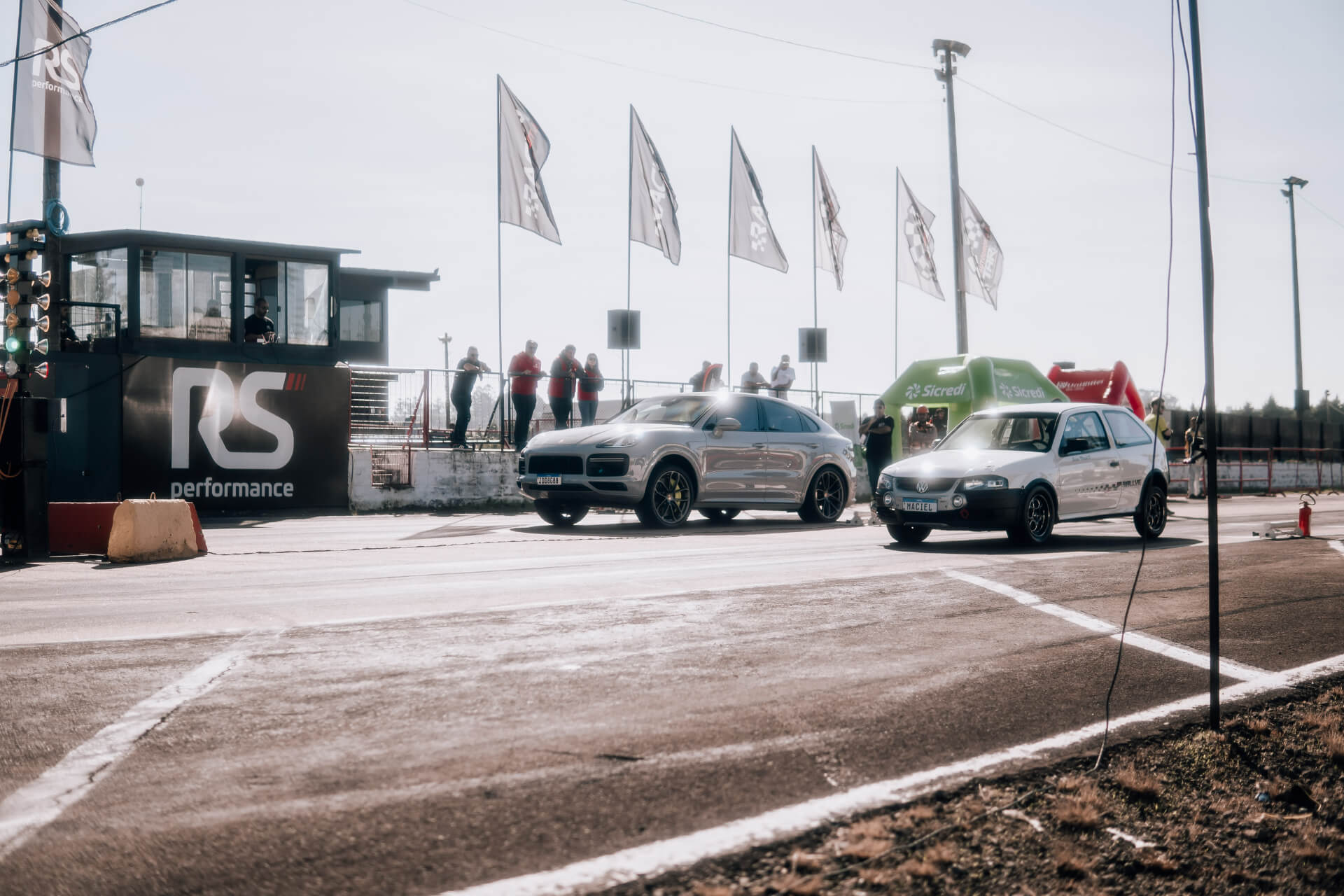
- Countdown Lights: Every drag strip needs a bright set of countdown lights, also known as “Christmas trees” for their vertical design.
- Fencing with tire walls: Adequate fencing with tire walls around the base is critical for the safety of drag strips and other race tracks. It keeps everything in the track and protecting bystanders from flying debris.
- Lighting: You also need sufficient lighting if you want your drag strip to be fully operational at night.
There are many other features you might want to include. For examas a parking area, bleachers, storage buildings, announcer’s booth and personal decorations. In any case, your drag strip is going to be a serious construction project. Now let’s get into the logistics of planning and building your own drag strip.
Zoning and Policies
The first thing you need to consider before building a drag strip is the issue of zoning and any local policies that might be standing in your way. Areas that are zoned for residential use — even if they haven’t been developed yet — may be off-limits for a commercial construction project like a drag strip.
Local policies like those concerning sound and air pollution, will also need to be considered before you can break ground. Drag strips are inherently noisy, so if you’ve got neighbors close by, they probably won’t want to hear your races.
Construction
Step two, once you’ve found the ideal location and purchased or leased the land, is getting started on construction. Consider the type of track you want to build. Do you want a quarter-mile asphalt strip or a dirt track? Are you going to use asphalt, concrete or some combination of the two in your construction? How close are you to local quarries or concrete plants to be able to source materials?
Concrete is one of the most versatile and durable road materials and will likely be more cost-effective for your drag strip build than asphalt, at least at the beginning. You can expect the cost of a two-lane track to be about $100,000 per mile, or $200,000 per mile for a four-lane track. The wider, the better.
Equipment
The construction equipment will be a huge expense to build your own drag strip. It’s going to require a variety of equipment to pave the track and build the surrounding infrastructure. Here are some essential pieces of heavy machinery you will need:
- Concrete or asphalt pavers
- Mixers
- Compactors
- Drum rollers
- Excavators
- Bulldozers
- Skid steer loaders
- Boom lifts
- Forklifts
- Utility vehicles
- Towable tower lights
You also need to consider the long-term maintenance of your drag strip. Keeping the track in good racing condition will be a constant effort. You can’t let a single pothole go unchecked, or else it could cause a tire blowout during the race and lead to an avoidable crash. Cleaning up after the races will be another big responsibility.
Insurance
Liability insurance is going to be one of your biggest costs when it comes to setting up a drag strip. Even if you have every driver sign a waiver, you will still be required to maintain liability insurance with premium prices for underlying coverage. One drag racing team alone can have insurance that costs up to $150,000, including $5,000 a year for specialized race cars and $200 for track-day coverage.
This policy isn’t just to protect the drivers who utilize your drag strip — it’s to protect you from costly legal or medical fees in the event of an accident. Your insurance rate will depend on the type of motorsport, vehicle classes and your track’s medical history. Since your drag strip is brand new, you will have to prove that you can maintain a safe racing environment.
Overall Cost
The cost of building a drag strip will vary depending on where you live and what sort of permits are required. On average, a fully functioning drag strip will probably cost you anywhere from $1,000,000 to $4,000,000 to start.
You’ll be in this for the long haul — even with sponsorships from racing events and product manufacturers, it will likely take you a long time to recoup your money. Thankfully, a well-built drag strip has a shelf-life of decades, if not longer. Some of the most well-known drag strips in the U.S. were built back in the ‘50s and ‘60s.
Build Your Own Drag Strip
If you take all precautions and do it right the first time, a drag strip can be an excellent lifelong investment. Take the time to do your research first, though. Don’t skip any steps, cross all of your T’s and dot all of your I’s. Then, your track will serve you well for years to come.