As an Amazon Associate, Modded gets commissions for purchases made through links in this post.
Technology develops quickly. In 10 years, your car might drop you at your destination and park itself nearby. It sounds futuristic, but much of the technology is already in development.
In the future, parking is likely to become less about painted lines and parking meters and more about software, sensors, connected vehicles, automation and flexible urban infrastructure. Here’s what that future parking could look like.
1. Smart Curbs Replace Traditional Street Spots
The curb is about to become one of the smartest pieces of real estate in a city. Today, a curbside space might be solely dedicated to parking. When you leave with your car, that same space could have several jobs throughout the day. It might serve as a loading zone, a rideshare pickup point or an autonomous vehicle drop-off zone.
Digital maps, sensors, regulations and real-time data can determine how cities should use curb space. Alexandria, Virginia, is already moving in this direction. Its Smart Curb Solutions initiative is digitally charting curb areas, parking restrictions and loading areas. It communicates which curbs are currently available, so you don’t have to search for a parking space.
2. Legacy Vehicles Keep Physical Garages Alive

Meta description: Empty parking lot with bright orange safety bollards, a white sedan and a concrete wall.
A vehicle on the road has a lifespan of 15-plus years on average. The transition to a fully autonomous fleet of vehicles and to zero-parking-garage infrastructure will take decades. Millions of conventional, human-driven vehicles will remain on the road alongside increasingly automated cars.
However, the purpose of garages may evolve. They might eventually become charging facilities, logistics hubs, delivery staging areas or mixed-use transportation centers.
3. Connected Cars Communicate With City Grids
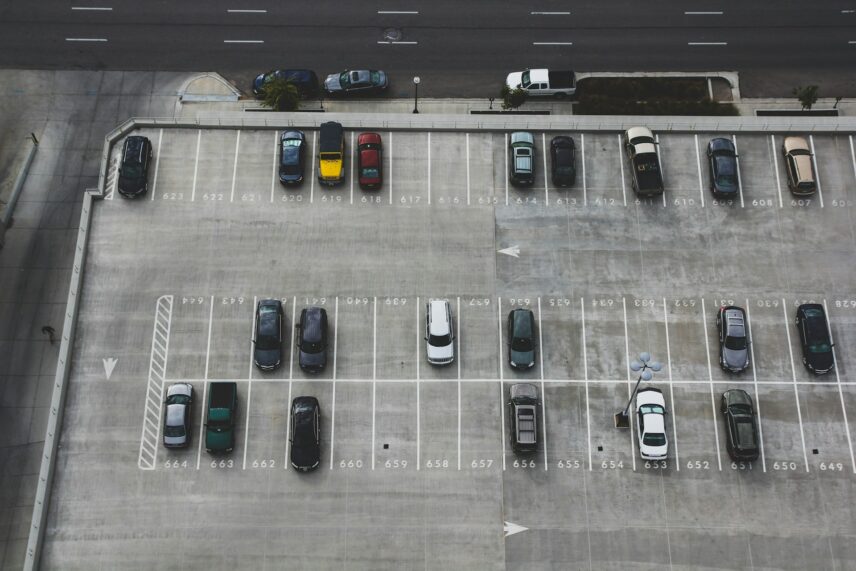
Meta description: Aerial view of a parking garage with cars in marked spaces, beside a multilane road.
In the future, parked cars will understand the surrounding infrastructure. Connected vehicles can already “see” their surroundings and exchange information with external systems. Some modern cars can assist with or even perform parking automatically. One of the technologies expected to become increasingly important is vehicle-to-vehicle (V2V) connectivity.
V2V allows vehicles to communicate with one another, sharing information that can help them anticipate hazards and avoid collisions. In 10 years, there may be technology that allows cars to communicate with parking facilities to find the nearest available space, automating the parking process. They might also be able to track traffic signals, curb zones and charging stations.
4. Fog Computing Powers Indoor Autonomous Routing
It is harder for modern cars to navigate multilevel parking garages than an open road. That is where fog computing technologies could become particularly useful. Fog computing places processing and computing resources closer to the devices that need them, instead of sending every request back to a distant cloud server. In smart parking, this creates an intermediate layer between vehicles, sensors and cloud systems.
Research describes using fog nodes as an intermediary layer to record vehicle tracking data and support location awareness within parking facilities.
5. Automated Valets Stack Vehicles
Robotic platforms could autonomously move vehicles into a compact storage system and retrieve them at the driver’s request, transforming parking entirely. Automated parking systems can also use lifts, conveyors and tightly arranged racks to store vehicles far more efficiently than conventional parking layouts. Finding your vehicle later becomes the software’s job rather than a test of your memory.
6. Wireless Charging Pads Eliminate Clunky Cables
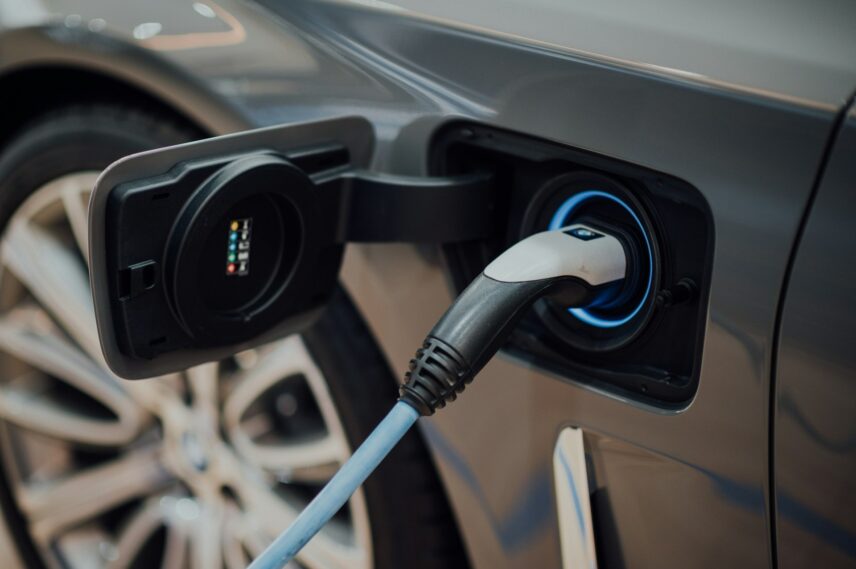
Meta description: Close-up of an electric car charging with a blue cable plugged into an open port, with a sleek blue-silver vehicle and wheel in the background.
Select luxury electric vehicles, such as the Lamborghini Terzo Millenio, have self-healing infrastructure to repair small cracks and chips. In the future, charging could become part of the parking surface itself. A wireless charging pad may be embedded into the parking area and begin transferring energy. When the battery reaches the desired level, charging stops automatically. Parking and charging would become one integrated operation rather than two separate errands.
7. Changing Urban Mobility Hubs
Nobody knows exactly what urban mobility will look like 10 years from now. Autonomous vehicles may advance faster than expected. Alternatively, legal red tape may delay meaningful advancements. Future-ready parking and transportation infrastructure should be designed so that spaces can adapt to changing demand.
A parking area might serve commuters during the day, deliveries in the evening and EV charging overnight. Developers and city planners might also prioritize digital integration. Parking facilities need systems that can communicate with vehicles, navigation platforms and curb-management networks.
Ready for the Next Era of Urban Transit
Ten years from now, parking may feel less like an annoying chore and more like an invisible part of the transportation system. Your car could find its own space on its own. Curbs could change their purpose based on real-time demand and software could coordinate the whole experience before you even arrive. Wireless pads could charge EVs while they’re parked. Future parking infrastructure will reflect how citizens move through the city.