As an Amazon Associate, Modded gets commissions for purchases made through links in this post.
Parking garages are shrinking, streets are getting tighter and car doors haven’t changed much in decades. Hyundai might have a solution, and it’s borrowed straight from the subway. A newly revealed patent imagines car doors that slide open instead of swinging out, and surprisingly, it makes a lot of sense.
The Patent That Got Everyone Talking
Hyundai recently filed a patent for a system that swaps traditional swinging car doors for sliding ones, similar to what you’d see on a subway train. Instead of opening outward, the doors move along the side of the vehicle on guided rails. It’s important to note that this is a patent, not a confirmed production feature. Automakers often patent ideas early to protect innovation, test reactions and explore what future mobility could look like.
How Subway-Style Doors Would Work on a Car
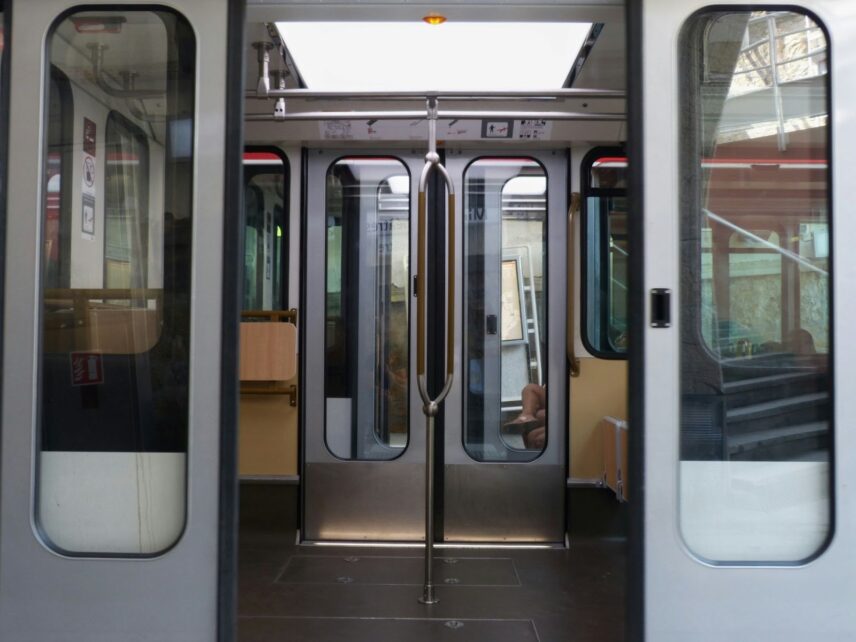
According to the patent, sensors would detect obstacles, ensuring the door doesn’t open into traffic, walls, or pedestrians. The system would likely be motorized, making the motion smooth and controlled. Think less “clunky van door” and more refined, automated movement that feels intentional, modern and very much in line with how public transport handles high-traffic environments.
Why This Actually Makes Sense in the Real World

Subway-style doors on a car sound excessive until you think about everyday driving realities. While other automotive innovations focus on futuristic top speeds — like a maglev test car that reached over 142 mph — Hyundai’s idea solves a universal problem. To combat intense urban traffic, cities like New York have implemented congestion pricing, which has already reduced travel times on bridges and tunnels by up to 30%.
Tight parking garages, narrow urban bays and crowded city streets make traditional doors a constant headache. Sliding doors eliminate the need for clearance space, reducing door dings and awkward exits.
Safety, Accessibility, and the Bigger Design Play
Beyond convenience, sliding doors could offer serious safety and accessibility benefits. Controlled door movement reduces the risk of doors swinging into cyclists or passing cars. It also makes entering and exiting easier for passengers with limited mobility, kids or tight seating configurations. More importantly, the patent signals a shift in how cars are being designed — less like static machines and more like adaptable spaces built around human movement, comfort and real-world behavior.
Will You Actually See This on the Road?
As intriguing as the concept is, not every patent becomes a production feature. Automakers file hundreds of patents each year, many of which serve as design experiments or future safeguards. That said, sliding doors could realistically appear first in electric vehicles, autonomous shuttles or urban-focused models where space efficiency matters most.
Mind the Gap
Hyundai’s subway-inspired door patent proves that innovation doesn’t always mean reinventing the wheel. Sometimes it’s about rethinking the door. Whether or not it hits the road, the idea shows how cars are evolving to fit city life rather than fight it.