As an Amazon Associate, Modded gets commissions for purchases made through links in this post.
E-bikes gliding effortlessly up hills and cyclists checking stats on their handlebar-mounted smart devices are becoming an increasingly familiar sight. Features like GPS navigation, integrated lighting systems and electronic gear shifting take the experience further, turning the humble bicycle into an indispensable commute option for many. Considering these innovations, self-driving bicycles are not a sudden leap. They’re the next logical destination on this evolutionary path — building on concepts like electrical assistance and smart navigation.
What Is a Self-Driving Bicycle?
A self-driving bike uses a system of sensors, artificial intelligence and motors to balance, navigate and propel itself. It moves without a rider or with the rider acting as a passenger.
Like driverless cars, autonomous bicycles can have different levels of autonomy — from simple self-balancing while stationary to fully autonomous navigation from point A to point B. This technology is mostly in the research and development phase.
The Technology Powering Autonomous Rides
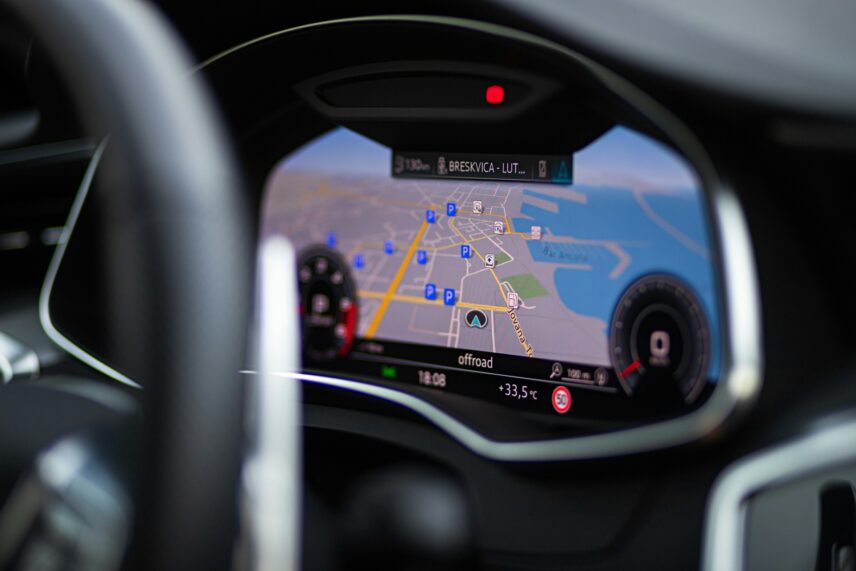
A self-driving bicycle works on coordinated technologies, usually including the following:
- AI brain: This is the central processing unit that takes all the sensory input, makes decisions and sends commands to motors and actuators. It runs complex algorithms for pathfinding and collision avoidance.
- Sensory system: LiDAR technology and cameras serve as the “eyes” of the bike, creating a 3D map of its surroundings and identifying obstacles, pedestrians and other vehicles. Meanwhile, GPS and inertia measurement units work as its “inner ears,” telling the bike where it is in the world, which direction it’s heading and its current orientation and balance.
The MIT Model’s Solution for the Balance Problem
Maintaining stability is among the most ingenious challenges of designing a self-driving bicycle. The Massachusetts Institute of Technology (MIT) Media Lab City Science group’s solution offers the best of both worlds.
The team’s prototype rides like a normal bike when a person is on it, but for autonomous tasks like returning to a dock, it splits its rear wheel to stay stable while traveling. It turns into a tricycle by separating two linear actuators and rejoining the two rear wheels as needed.
Self-Driving Bikes for Greener Urban Commuting
Driverless bicycles, which will likely be powered by electricity, can improve urban life and sustainability. Consider how high-end electric models can cover 70-100 miles on a single battery while helping commuters save on gas, insurance, parking and maintenance. Their electrical powertrain also generates zero direct emissions, which reduces their environmental impact.
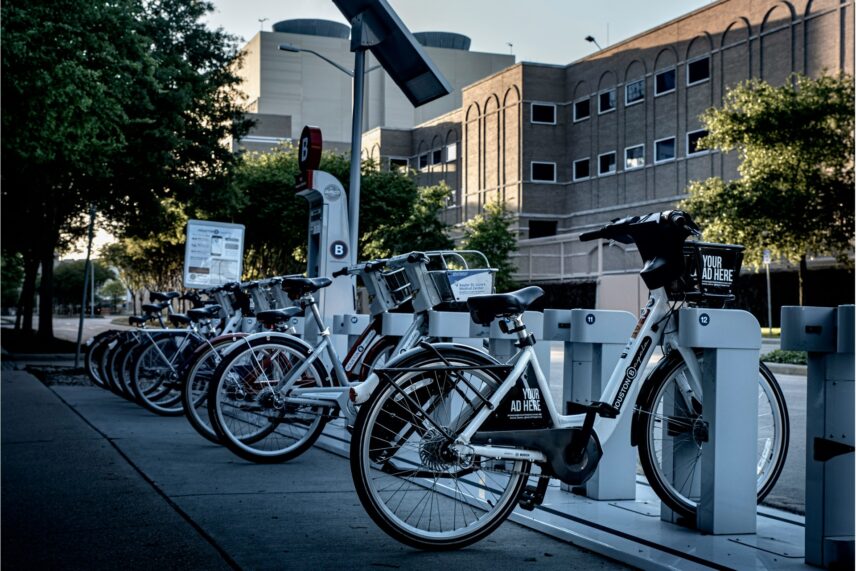
Autonomy itself also offers a green advantage. Autonomous bike-sharing is significantly more efficient than current models, as the system can automatically route bikes to areas of high demand. Its carbon dioxide equivalent emissions per kilometer traveled would be 58% lower than in dockless systems and 33.1% lower compared to station-based systems.
Beyond the Commute — Autonomous Bikes as Safety Tools
To make car safety systems truly effective, engineers must test them against the most dangerous and unpredictable situations they’re designed to prevent. These factors include vulnerable road users like cyclists. Asking a human test rider to intentionally swerve in front of a moving car to test its automatic emergency braking is neither safe nor ethical.
To work around this challenge, Chalmers University of Technology created the perfect stand-in — a fully autonomous robotic bicycle. A sophisticated guidance system drives the bike as it carries a soft dummy designed to have the same visual and radar signature as a human cyclist.
Engineers can program the bicycle to follow an exact path, speed and trajectory. They can also factor in human error, making the bike replicate common and dangerous human behaviors, such as swerving to avoid a pothole, failing to signal and wobbling unpredictably.
Hurdles on the Road to an Autonomous Future
Driverless bicycles must overcome the following hurdles to progress toward mass production and widespread use.
Safety and Regulation
In 2021, cyclists accounted for around 2.2% of overall traffic fatalities, underlining the need for safety measures. Autonomous bikes must also consider complex legal scenarios. For example, if one causes an accident, who is liable — the owner, manufacturer or software developer?
Engineers must also ensure their bicycles can navigate unpredictable road quality, construction zones and faded lane markings. This is why, regardless of the bike’s intelligence, wearing a helmet with a durable shell and integrated lighting would likely remain a nonnegotiable part of rider safety in the future.
Cost and Public Acceptance
The high-tech sensors needed for driverless navigation are extremely expensive, which would make the first consumer models a luxury item. There’s also the challenge of public trust. Manufacturers must build up trust so that people will rely on a two-wheeled robot on crowded streets and bike paths. This will likely take a long period of demonstrated safety and reliability.
Frequently Asked Questions
Here are the answers to common questions about autonomous bikes.
Q: Are There Self-Driving Bicycles?
A: Yes, they exist, but not in a way that you can go out and buy one today. Autonomous bikes are in their prototype stage, functioning within the controlled environments of universities, corporate research and development labs and specialized test tracks. They’re similar to concept cars at auto shows. They’re real, functional demonstrations of future technology, meant to test ideas and push boundaries, but they’re not ready for mass production or public roads.
Q: Is the Google Self-Driving Bike Real?
A: No, the Google autonomous bicycle was a convincing April Fool’s Day joke in 2016. The viral video was created by Google’s Netherlands office, which is part of a community famous for its cycling culture. The concept was so well-produced that many people questioned whether it was real. While it’s a prank, Google’s bicycle was instrumental in bringing the idea to the public’s attention.
Q: Do Electric Bikes Drive Themselves?
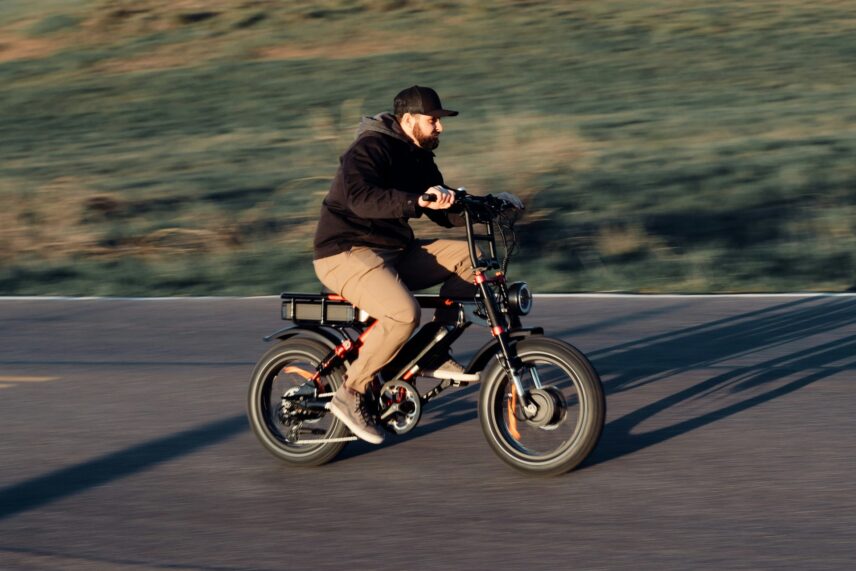
A: No, they don’t. E-bikes augment the rider’s power. Their motor adds force to pedaling, making it easier to climb hills, fight wind and travel further. It’s like having a constant, powerful tailwind. In contrast, a self-driving bicycle replaces the driver’s control. Its onboard AI and sensors handle balancing, steering, navigating and other complex tasks.
The Road Ahead for Autonomous Bikes
Self-driving bicycles still have many legislative, financial and social hurdles to overcome before they become a common sight in public streets. While the road ahead is long, the potential to create smarter, safer and more sustainable cities makes it a journey well worth taking.