As an Amazon Associate, Modded gets commissions for purchases made through links in this post.
You may have noticed that the tires on some cars, especially racecars, tilt inward or outward. This is known as the camber angle, and while the change may seem small, it has a significant impact on handling, stability and tire life. For the everyday driver, an incorrect camber angle is often a sign of a problem. Here’s a guide to understanding what that tilt means and what may be causing it.
What’s Camber Angle?
Camber affects your tire’s tilt, which is visible to the naked eye. However, you can also measure it with numbers. Mathematics comes into play, so it’s time to recall your high school geometry. An outward tilt could have a positive camber.
For example, a right camber of 0.5° would mean your car pulls hard to the right. Negative means it’s pulling in the opposite direction. Imagine a suspension with -0.1° left camber and -0.3° right camber — the car would pull slightly to the left as it drifts toward the side with the more positive angle.
Vertical wheels typically have a 0° angle, which means they’re perpendicular to the road. If you get a wheel alignment, which should occur every 6,000 miles, the technician can tell you how the camber angle has changed.
Potential Causes of a Tilted Tire
If your tire tilts outward, you have positive camber. Engineers may deliberately design the suspension geometry this way to make the vehicle easier to drive around. This setting comes in handy when driving old cars, such as a 1967 Chevy Impala or a 1965 Ford Mustang. You could also see an outward tilt on heavy-duty trucks when they carry less cargo.
Modern cars aren’t supposed to have a noticeable outward tilt. If yours does, you may have a problem. A neutral camber angle is necessary for stability, fuel efficiency and tire life. A positive camber angle in a new car could mean a few things.
Worn Suspension
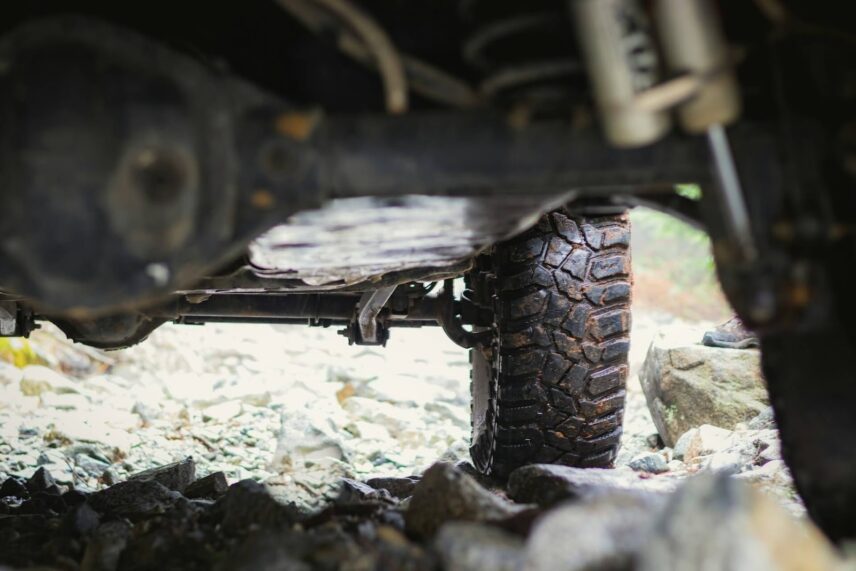
Check your suspension for worn parts and pieces. The wheel bearing takes a lot of wear after you drive thousands of miles. An outward tilt occurs when the bearing struggles to hold the wheel hub assembly tightly, causing your tire to move out of its perfectly vertical position.
The ball joints are another critical suspension component to inspect. This small part connects the suspension and steering systems, letting the wheel turn right or left. A loose ball joint becomes a big problem. Constant movement and internal leaks can decrease lubrication and accelerate wear.
Incorrect Alignment
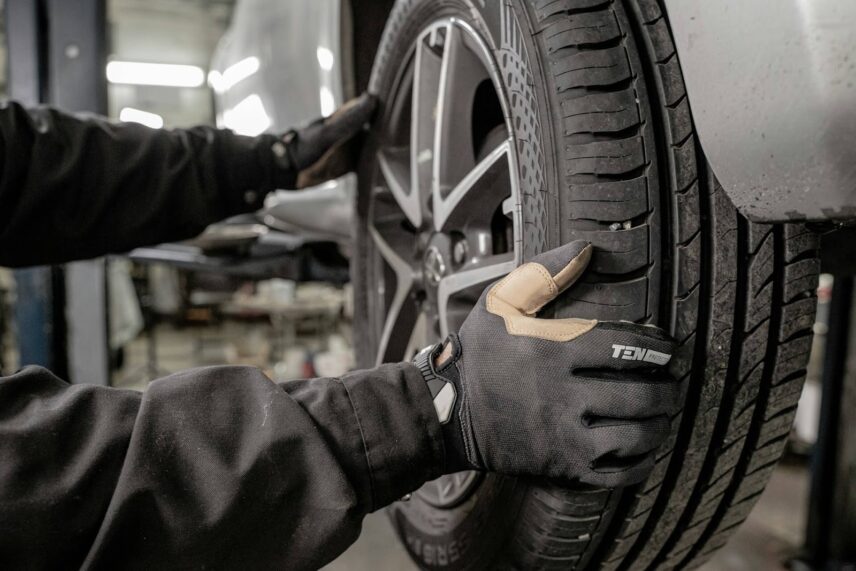
Wheel alignment must be precise. Once the tire is changed, it’s essential to properly tighten everything, including bolts and nuts.
The alignment rack is another potential source of problems, as incorrect calibration can affect a technician’s measurement. Experts say misalignment can affect suspension behavior, especially when both tires have excessive camber. If the front suspension is under tension, it could cause parts to wear more quickly. It’s essential to check parts regularly, whether during service appointments or tire rotations.
Impact Damage
Cars are heavy because they need to absorb impact, but a minor hit can still change the geometric structure of your vehicle. Deep potholes or a full-on accident can affect the alignment and create an outward tilt.
Sudden and violent forces can overwhelm the structure and bend your suspension’s foundation. Check your car’s multiple control arms. While these parts are strong, they can succumb if you hit a curb. Wrecks mean following the steps to take after collisions, like contacting emergency services and exchanging information, but camber inspection should be a priority later.
The Difference in Motorsports
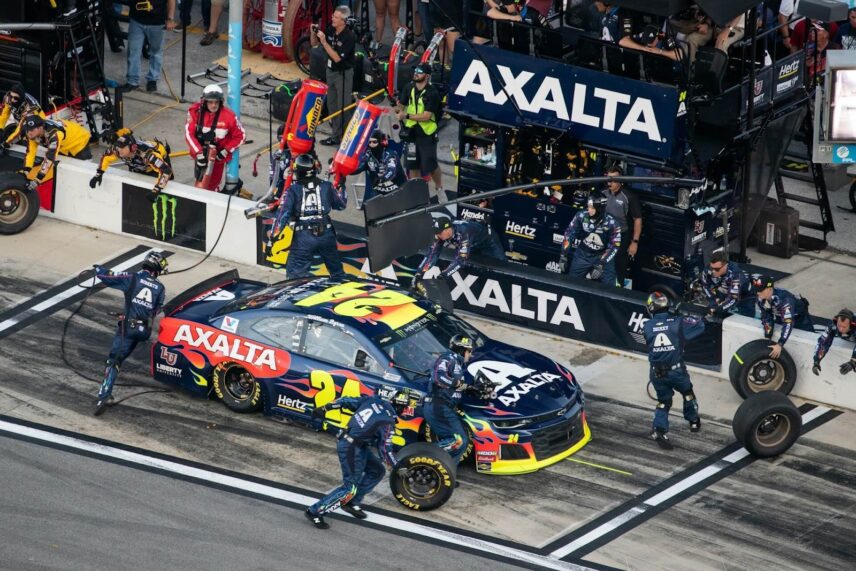
While you need a neutral camber angle for your passenger car, motorsports teams approach it differently. NASCAR is a good example, as teams want negative camber and tires pointed toward the engine. Crews must consider how g-forces make the body roll to the right. In response, they’ll preset the car to optimize grip.
Understanding Camber Angle and Your Car
Racecars manipulate camber to gain performance advantages. Thankfully, it’s much simpler for your passenger car. Your goal should be to have a vertical wheel and a neutral camber angle. If yours is unbalanced, it’s a sign you need an inspection.