As an Amazon Associate, Modded gets commissions for purchases made through links in this post.
Disability Pride Month is about celebrating identity, challenging outdated assumptions and acknowledging that disability is a natural part of human diversity. Every July, the observance also commemorates the Americans with Disabilities Act, which became law on July 26, 1990. Sports offer some of the clearest examples of how talent, determination and innovation can reshape public perceptions. Today’s elite athletes with disabilities aren’t simply inspiring because they overcome obstacles. They’re redefining what peak athletic performance looks like while advocating for greater accessibility, equal opportunity and representation.
1. Tatyana McFadden (Wheelchair Racing)
Few athletes have transformed Paralympic sport like Tatyana McFadden. Born with spina bifida and adopted from a Russian orphanage, she became one of the most decorated wheelchair racers in history.
Beyond winning numerous Paralympic medals and major marathons, including Boston, New York, Chicago and London, McFadden successfully advocated for equal athletic opportunities in schools through landmark legal action. Her influence extends beyond racing because she helped expand access for future generations of adaptive athletes.
2. Oksana Masters (Multi-Sport Paralympian)
Oksana Masters may be the definition of versatility. She has earned Paralympic medals across rowing, cycling, cross-country skiing and biathlon, making her one of the few athletes to excel in both Summer and Winter Games.
Born in Ukraine with limb differences caused by radiation exposure, Masters has become one of Team USA’s most recognizable Paralympians. Her continued success heading into the Milano Cortina 2026 Winter Paralympics reinforces that elite athleticism isn’t confined to one discipline or one definition of ability.
Multi-sport athletes are rare and as professional sports increasingly demand intense specialization to reach the highest levels, the era of elite multi-sport athletes is likely coming to an end, making Oksana Masters’ legacy even more relevant.
3. Markus Rehm (Para Long Jump)
Known as the “Blade Jumper,” Germany’s Markus Rehm has dominated para long jump for years while sparking international conversations about inclusion. Rehm expressed his desire to compete alongside Olympic athletes, prompting debates about technology, fairness and classification in elite competition.
Regardless of where those discussions land, his performances continue pushing the boundaries of what’s possible in track and field while encouraging broader conversations about accessibility in sports.
4. Jessica Long (Para Swimming)

Jessica Long has collected 31 Paralympic medals during an extraordinary swimming career. Born in Siberia with fibular hemimelia before being adopted by an American family, she underwent double leg amputation as a child.
Long has since become one of the greatest swimmers in Paralympic history while openly discussing disability representation, mental health and adoption. Her story helped introduce many mainstream audiences to Paralympic competition through national advertising campaigns and media appearances.
5. Steve Serio (Wheelchair Basketball)
Being a good basketball player requires a combination of skill, athleticism and vision, characteristics that have led Steve Serio to success. As co-captain of Team USA’s wheelchair basketball team, Serio has become one of the sport’s most respected leaders. After sustaining a spinal cord injury as a child, Serio found confidence through adaptive sports.
Today, he advocates for accessibility, youth participation and greater visibility for wheelchair basketball. His leadership has helped elevate the sport’s profile while demonstrating that disability can strengthen leadership rather than limit it.
6. Beatrice “Bebe” Vio (Wheelchair Fencing)
Italian wheelchair fencer Beatrice Vio has become an international symbol of resilience after losing all four limbs following meningitis as a child. Her success has come in an incredibly demanding sport; modern fencing is a fast-paced, physical, and strategic game. In fact, saber fencing is the second-fastest sport at the Olympics — only the bullet in shooting events is faster. Her Paralympic gold medals, however, are only part of her legacy.
Vio regularly speaks about disability inclusion, accessible design and equal opportunities for young people. She has also worked with organizations across Europe to promote inclusive communities through sport and education.
7. Brenna Huckaby (Para Snowboarding)
Brenna Huckaby has repeatedly challenged expectations in adaptive snowboarding. After losing her leg to bone cancer, she became a Paralympic champion and later fought successfully for the opportunity to compete despite classification disputes before the Beijing Winter Games.
Huckaby also broke barriers in representation by becoming the first Paralympian featured in the Sports Illustrated Swimsuit Issue, expanding public awareness beyond competition alone.
8. Lauren Rowles (Para Rowing)

Great Britain’s Lauren Rowles made history by becoming the first and only para rower to win three Paralympic gold medals. Rowles has also become a leading advocate for disability pride and LGBTQ+ visibility.
She frequently speaks about learning to embrace both identities, encouraging others to view difference as a strength instead of something to hide. Her message reflects the broader purpose of Disability Pride Month by celebrating authenticity alongside athletic achievement.
9. Ellie Challis (Para Swimming)
British swimmer Ellie Challis became a quadruple amputee after contracting meningitis as an child. She has since emerged as one of the world’s leading para swimmers. Beyond earning international medals, Challis actively promotes adaptive sport for children and regularly discusses body confidence and disability awareness.
Challis’ growing profile illustrates how younger Paralympians are helping reshape public attitudes from an early age.
10. Declan Farmer (Para Ice Hockey)
Declan Farmer has dominated para ice hockey for more than a decade, helping Team USA remain among the world’s elite programs. Widely considered one of the greatest players in the sport’s history, Farmer has inspired a new generation of adaptive hockey athletes while demonstrating the speed, skill and intensity of para ice hockey.
His continued excellence heading into the 2026 Winter Paralympics keeps adaptive winter sports in the global spotlight.
How These Athletes Continue Breaking Barriers
What connects these athletes isn’t simply medal counts. Each has influenced how disability is perceived in schools, workplaces, sports organizations and popular culture. Research from the U.S. Centers for Disease Control and Prevention estimates that more than one in four American adults lives with a disability, underscoring why representation matters across every aspect of society.
Greater visibility in sports helps normalize disability while encouraging participation, improving physical activity and creating stronger communities. Barriers often result from inaccessible environments rather than individual impairments. That shift in thinking has influenced everything from adaptive equipment to stadium accessibility and youth sports programming.
Why Disability Pride Month Matters in Sports
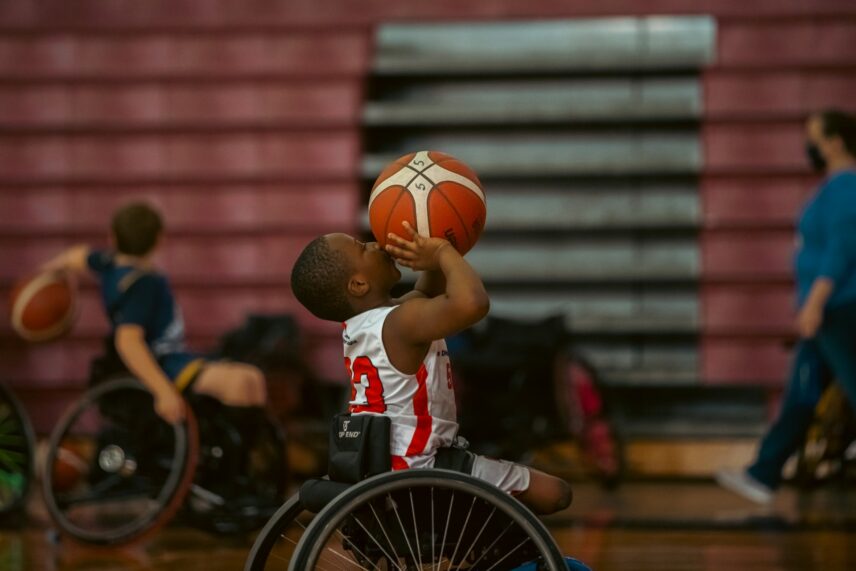
The Olympics keep evolving, from including breakdance as a sport in the 2024 edition to rule changes for some disciplines like weightlifting. As these competitions continue to grow, the impact of adaptive sports grows as well.
The Paris 2024 Paralympic Games were a massive broadcasting success, shattering previous viewership records. Audiences worldwide consumed a record 763.3 million hours of live coverage, an 83% increase from the Tokyo 2020 Games. This success was also marked by more countries and platforms broadcasting the event than ever before, along with the largest-ever live audiences for the Opening and Closing Ceremonies.
Organizations, including the International Paralympic Committee, continue emphasizing that greater media coverage helps improve inclusion while encouraging more people with disabilities to participate in sports.
Disability Pride Month also reminds you that many barriers athletes face aren’t physical. Access to facilities, funding, coaching and media attention often determines opportunity just as much as athletic ability. The athletes above have challenged those barriers while changing how millions view disability.
What You Can Learn From These Athletes’ Success
The biggest takeaway isn’t that these athletes “overcame” disability. Instead, they succeeded because they developed extraordinary skills while advocating for environments where talent could thrive. These athletes offer an important reminder — inclusion benefits everyone. When organizations invest in accessible facilities, adaptive programs and equal media coverage, they create opportunities that allow more athletes to compete at their highest level. As Disability Pride Month continues to grow, these barrier-breaking competitors prove that the future of sports is more inclusive and more exciting than ever.