As an Amazon Associate, Modded gets commissions for purchases made through links in this post.
Forget the idea that music production requires an expensive set up. Your creativity will be more than enough. In fact, you already own the most important tools inside your home. A standard computer and a basic pair of headphones give you everything you need to build great music. Here’s how you can start crafting sounds without spending a fortune.
How to Set Up a Home Studio
Getting started with music production requires far less gear than most people think. Focus on mastering these core essentials first.
Your Computer Is Already a Capable Studio
Most standard computers released for the last five years will have the power necessary to make professional-sounding tracks. Modern laptops and desktops can handle multi-track recordings, digital synthesizers and audio effects quickly.
However, if you want to be sure your computer can handle mixing, look at the CPU, RAM and storage. As a rule, your computer should have an Intel Core i5 CPU to start. For RAM, 16GB DDR4/DDR5 is the minimum. A 1TB hard drive can give you enough space to store your tracks without clogging your desktop or laptop. If you want to upgrade a tiny bit, get a USB audio interface, as these are widely compatible.
Choosing Your First Free Software
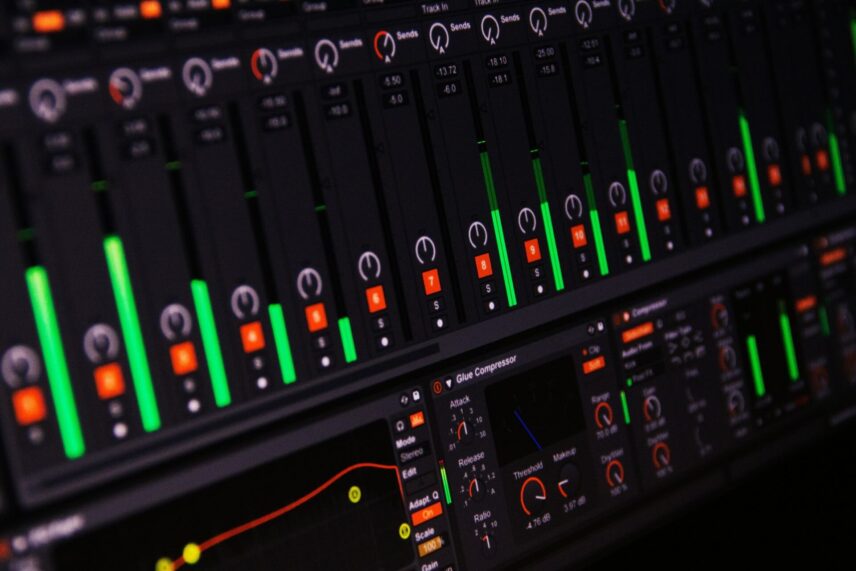
A Digital Audio Workstation (DAW) is like your central recording studio and primary creative workspace. There are plenty of free options that exist for every major operating system.
Consider getting one of these as your first software:
- GarageBand: A lightweight workstation that Apple includes with every Mac.
- Cakewalk: A comprehensive audio suite that runs on PC.
Choosing an accessible DAW is important, as you’re trying to break into an uncertain industry, especially with generative AI. Creators face revenue losses of up to 24% by 2028, but this stat can be encouraging. The more AI floods the market, the more human content will hold value.
How to Make Your First Track and the Skills You Need
Starting a new hobby means trial and error, but the important thing is actually trying. With all creative passions, you’ll need to learn by doing. Music is no exception.
The 4-Bar Loop Challenge
The 4-bar loop challenge is a popular music production exercise in which artists force themselves to write, mix and finalize a song starting with a four-measure segment. A measure is also a “bar” and represents the number of beats in a time signature. For example, in 4/4 time, one measure equals four beats. So, four measures are four segments played in a sequence.
4/4 time is the most common measure in music, and most of your favorite songs likely include it.
Here’s how it works:
- Open your DAW, select a project tempo, like 120 or 140 BPM, then highlight 4 bars and turn on the “loop” button. This ensures the track repeats indefinitely.
- Add the sample melody, the rhythm or drums, the bassline, then vocals.
- Keep evolving the track by altering the end of the 4th bar, adding a low-pass or high-pass auto-filter or varying the volume of the drums or bass.
Have fun with it. This is a new experience, and perfection can stay in its corner. While it’s possible to make $100,000 a year on Spotify, as 13,800 artists did in 2025, money comes later.
Skills to Focus on and What to Ignore
Beginners can sometimes overwhelm themselves by studying professional engineering techniques too early. Instead of doing that, focus on the fundamentals.
Here’s what you should learn:
- Mastering your DAW by playing around with the options
- Basic music theory, such as major and minor scales and chord production
- Song structure, such as knowing the difference between an intro and a chorus
- Rhythm and timing, and figuring out how to lock these elements together
- Understanding what makes a great preset and how to fix poor-sounding instruments
Try not to spend too much time on over-processing, integrating third-party plug-ins, endless tweaking, mixing and mastering and the need to be original. You’ll find your own style eventually, but to do that, you need to master the basics.
Finding Your Reason Why and Sticking With It
Some hobbies come and go, but if you want to stay long-term, it’s important to find your “why.” Maybe it’s to make money, or maybe it’s to have fun. Maybe it’s to join a community.
Mental Health Benefits of Music and Hobbies
Music does wonders for mental health, and you probably knew that, considering music makes you happy enough to pursue it. Whether you’re doing a physical workout or staying up late to remix a track, music can increase endurance and make you feel less fatigued.
A great thing about music is that it puts you in the present moment or even helps you associate memories with a track. Maybe you want to be creative to make yourself or others feel better. That’s a noble pursuit, especially in a world full of stressful moments.
Join a New Wave of Independent Creators
Starting a home studio connects your work with a wide cultural movement. In the years after COVID lockdowns, many music events were canceled due to lower sales and attendance. But even though this happened, the scene still inspires.
That’s because music brings people together. Modern production tools help you bypass industry gatekeepers to reach worldwide audiences. Building original songs puts creators at the forefront of a currently thriving and self-reliant global community.
Exploring Your Next Steps in the Music Scene
Having a goal is important because it keeps you motivated. If you want to keep this as a hobby, great! But if you intend to turn this into something more, here’s what you can do.
Another Path: How to Start DJing
DJing has a lower barrier of entry compared to music production because it focuses more on mixing and playing existing tracks than creating them from scratch. With that said, DJing is still an art. As with music production, you can go the self-taught route or purchase a course from a qualified instructor. It’s a minimalist way to get into live music performance without needing complex software or being in a band.
When You Are Ready to Upgrade Your Gear
A basic set up can handle your production needs for months or even years. During this time, you should focus on building skills and becoming more resilient so you can get back up after making mistakes. Upgrading becomes relevant only when you’ve mastered the fundamentals and outgrown your tools. You’ll know when that time comes.
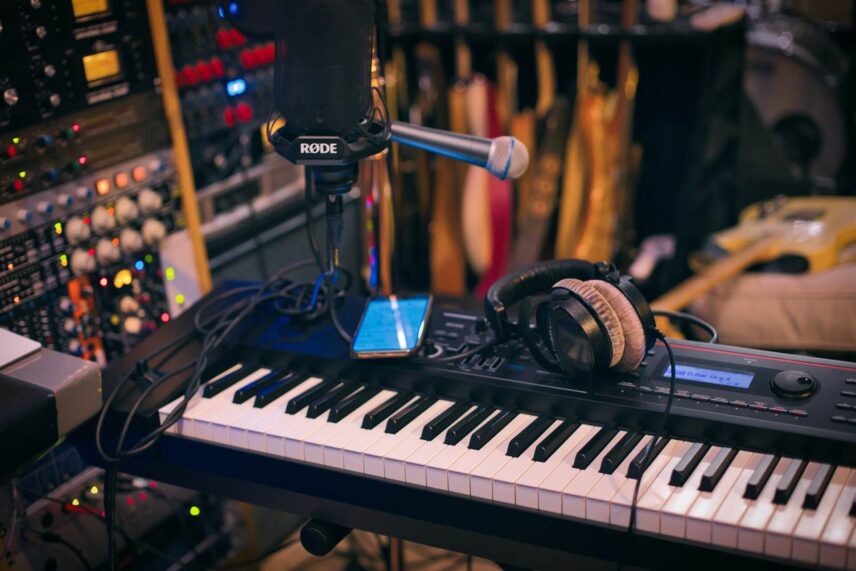
Usually, the first tool you’ll buy to extend your set up will be a synthesizer. A portable one, like the Dubreq Stylophone, is cheaper but produces high-quality sounds. A chorus pedal and a better microphone can be important if you plan to sing on your tracks.
Create Your First Song With Tools From Your Home
Great music benefits from raw creativity, not necessarily expensive gear. If you have a desktop computer or a laptop, you can start producing incredible music. Just open a free DAW, lay down a basic beat and build your first four-bar loop.