As an Amazon Associate, Modded gets commissions for purchases made through links in this post.
Week 1 is where fantasy football seasons quietly begin to change. The draft gave you a roster, but the waiver wire gives you a chance to beat your league mates before they react. Every year, a handful of players emerge from the opening weekend with expanded roles, unexpected target shares or goal-line work that was not obvious in August. If you wait until Week 3 to act, those players are already on someone else’s roster. The smartest fantasy managers treat Week 1 waivers as an investment, not a cleanup task.
NFL Fantasy Waiver Wire: What Makes a Week 1 Pickup Worth Your Claim?
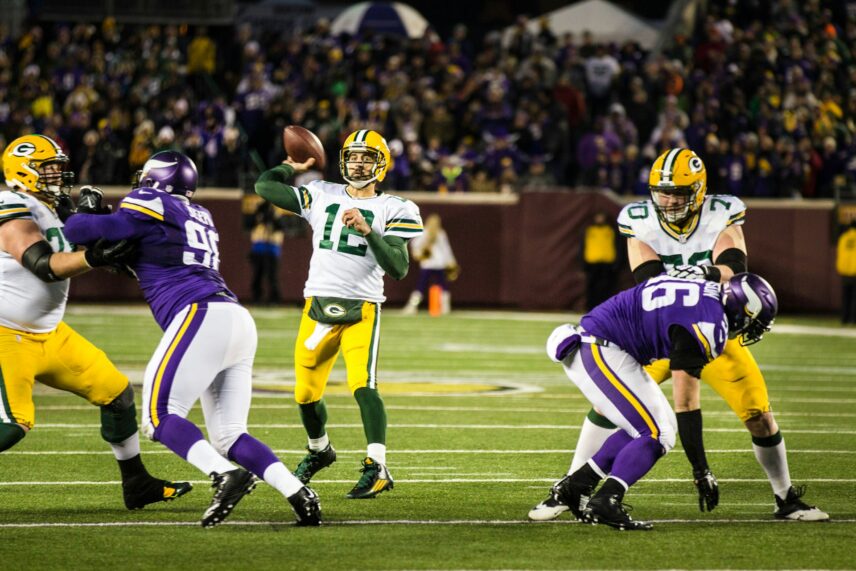
The biggest mistake fantasy managers make in Week 1 is overreacting to touchdowns. A receiver who catches two passes for 70 yards and a touchdown may look exciting, but a player who saw eight targets and ran routes on nearly every dropback is usually the better long-term bet. If you stay informed, plan strategically and remember to be adaptable, you can leverage the waiver wire to build a competitive team.
A useful rule is to prioritize players who check at least two of these boxes:
- Meaningful snap share
- Strong target or carry share
- Involvement near the goal line
- A clear path to maintaining that role
To understand the upcoming season, you first need to know about all the changes that occurred during the offseason. Also, PFF’s review of league-winning waiver pickups from recent seasons found that many breakout additions gained value because injuries or depth-chart changes created lasting opportunity rather than one-week production spikes.
Best Waiver Wire Pickup Fantasy Football: Week 1 Waiver Wire Rankings

These rankings focus on players who are commonly available in standard fantasy formats after Week 1 and who project to provide rest-of-season value rather than just a one-week fill-in.
| Rank | Tier | Player Type | Why You Should Add Him |
| 1 | Priority Claim | Breakout running back (15+ touches) | Immediate workload and goal-line usage create league-winning upside |
| 2 | Priority Claim | Starting wide receiver (8+ targets) | Strong target volume suggests a sustainable weekly role |
| 3 | Priority Claim | Injury replacement starter | Clear path to starter-level touches and snaps while the injured player is out |
| 4 | Strong Addition | Explosive rookie wide receiver | Full-time routes point to a rapidly growing role and breakout potential |
| 5 | Strong Addition | Passing-down running back | Valuable receiving work in a productive offense provides a stable floor |
| 6 | Strong Addition | Tight end with 6+ targets | Reliable target involvement at a shallow fantasy position |
| 7 | Bench Stash | Backup running back with standalone usage | Immediate depth value with significant upside if the starter misses time |
| 8 | Bench Stash | Deep-threat wide receiver with rising snap share | Increasing playing time can lead to future starter value and big-play weeks |
| 9 | Bench Stash | Mobile quarterback | Rushing production raises both floor and ceiling in fantasy scoring |
| Suggested FAAB approach | |
| Player Type | Recommended FAAB Range |
| True breakout running back | 20-35% |
| Committee running back with upside | 10-20% |
| High-target wide receiver | 8-15% |
| Tight end streamer | 1-5% |
| Bench stash / upside add | 1-8% |
It is useful to follow the current strongest NFL players like Jalen Hurts and Saquon Barkley to start making the best decisions.
Running Backs Deserve Most of Your Budget

If your league uses FAAB, Week 1 is the time to spend on running backs. The replacement level at the position falls quickly once injuries begin to accumulate. A back who unexpectedly controls the red-zone work can become a season-long starter overnight. A practical range is 20-35% of your FAAB for a true breakout runner and 10-20% for a committee back with upside.
Saving 90% of your budget for later often leaves you with money but no impact players. Historical waiver hits such as late-round and undrafted running backs frequently emerged in the opening weeks, rewarding managers who acted before the market fully adjusted.
Wide Receiver Targets to Prioritize
For wide receivers, focus on target share rather than fantasy points. A receiver who earns 22-25% of his team’s targets is far more likely to sustain value than one who scores on limited usage. Early-season target concentration can reveal coaching intent before defenses adjust.
Preliminary 2026 receiver tier discussions also highlight how quickly depth charts can shift once meaningful games begin, particularly for younger players competing for secondary roles. That is why a receiver who jumps from rotational usage in August to near every-down usage in Week 1 deserves immediate attention.
Tight Ends and Quarterbacks Can Wait
Unless a tight end suddenly commands elite target volume, you do not need to use the No. 1 waiver claim on the position. Streaming remains viable in many leagues. The same principle applies to quarterbacks in standard one-quarterback formats.
The exception is a quarterback who combines efficient passing with significant rushing usage. Even 40 rushing yards per game adds the equivalent of an extra passing touchdown every five weeks, which creates a meaningful fantasy floor. There are other rare exceptions of players that even break records, such as Jerry Rice, who retired with a record-breaking 22,895 receiving yards, putting him nearly 5,400 yards ahead of the next closest player. However, you don’t see those things every day.
How to Avoid the Classic Week 1 Trap
Imagine Receiver A scores 18 fantasy points on three targets while Receiver B scores 11 points on nine targets. Most leagues will chase Receiver A. The sharper move is usually Receiver B because the underlying usage is much more repeatable.
Before submitting a claim, ask yourself three questions. Did the player’s role increase? Can that role continue next week? Would you still want him if the touchdown were removed from the stat line? If the answer is yes to all three, the player is probably worth adding.
A Realistic Week 1 Game Plan
The 2025 season was filled with surprising outcomes and standout individual performances. Based on these ocurrances, spend 10 minutes reviewing snap counts and targets on Monday night, rank your top three targets before waivers open and submit bids early. Waiting until the last minute often leads to emotional decisions based on highlights instead of usage.
For a typical 12-team league, a balanced approach is to place your strongest claim on a breakout running back, a secondary claim on a high-target receiver and a low-cost claim on a tight end or upside stash. This structure protects your roster while still giving you access to league-changing upside.
The Edge That Wins Leagues
Comparing your priorities with consensus rankings can help identify where you are being either too aggressive or too conservative. Use consensus as a checkpoint, not as a substitute for your own evaluation. The managers who consistently reach the playoffs usually treat the waiver wire as a weekly skill rather than an emergency button. Week 1 offers the cleanest opportunity because information is still uneven across your league. Act quickly, trust usage over touchdowns and be willing to spend meaningful resources on players whose roles truly changed.