As an Amazon Associate, Modded gets commissions for purchases made through links in this post.
Pickleball looks simple at first, but its learning curve surprises many beginners. Timing, positioning and touch matter more than raw athleticism, so players who rely only on power often struggle early. The good news is that smart practice and strong fundamentals can help almost anyone improve their game quickly. Learn how to improve your pickleball skills fast with these eight tips.
1. Master Court Positioning Before Fancy Shots
One of the fastest ways to get better at pickleball is learning where to stand. Beginners often focus on highlight-reel winners rather than on positioning, but strong foundational skills win more rallies than flashy shots.
After serving, stay behind the baseline until the return bounces because of the two-bounce rule. Once possible, move toward the kitchen line quickly and under control. Most advanced players dominate rallies from this area because it gives them better angles and reaction time.
Many newcomers stay stuck near the baseline, which forces them into defensive shots. Others rush recklessly into the kitchen and get caught off-balance. The goal is to keep your movement under control to avoid finding yourself in awkward and difficult positions.
To improve positioning:
- Practice split-stepping before your opponent hits.
- Keep your paddle up at chest height.
- Shuffle instead of crossing your feet.
- Recover to the ready position after every shot.
Footwork drills with cones, ladder drills and side shuffles can dramatically improve reaction speed and balance.
2. Don’t Swing Too Hard
Many describe pickleball as tennis on a smaller court, a good oversimplification when explaining the sport to the uninitiated. However, playing pickleball as you would tennis is a rookie mistake. A good pickleball tip beginners must learn is that control matters far more than power.
Soft shots, especially dinks and resets, are essential skills. Players who consistently keep the ball low force opponents into awkward returns. Several coaching guides emphasize that placement and patience beat brute force in most rallies.
To build control:
- Shorten your backswing.
- Relax your grip pressure.
- Focus on smooth contact instead of speed.
- Aim for depth and accuracy first.
Wall drills are excellent for improving touch. Hit controlled forehands and backhands against a wall while maintaining rhythm. Concentrate on one skill per practice session instead of trying to fix everything at once.
3. Develop a Reliable Third-Shot Drop
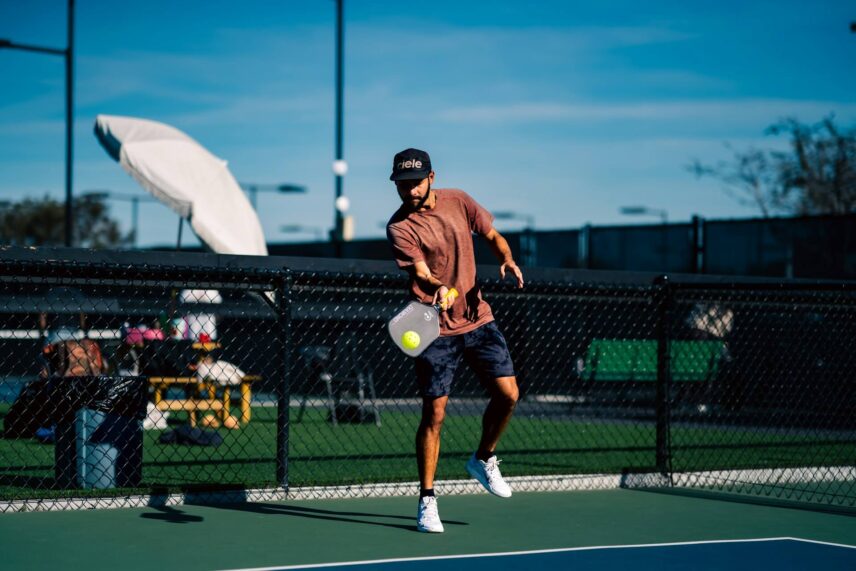
If you want to know how to be good at pickleball, learn the third-shot drop early.
This shot happens after the serve and return. Instead of blasting the ball, the serving team hits a soft arc that lands in the opponent’s kitchen area. That allows the serving team to move forward safely and neutralize aggressive opponents.
Many consider the third-shot drop one of the most important shots in modern pickleball strategy. Practice this skill by:
- Starting at the baseline.
- Aiming for a soft, looping trajectory.
- Landing the ball just over the net.
- Gradually increasing consistency before adding spin.
Beginners usually hit drops too hard because they panic under pressure. Slow down and prioritize height and placement.
4. Improve Your Serve and Return Depth
You don’t need a powerful serve to be good at pickleball, but you do need a smart one.
Deep serves and returns push opponents backward and buy time for better court positioning. Multiple coaching resources stress that short serves and shallow returns immediately hand control to the opposing team.
A strong beginner serve should:
- Land deep near the baseline.
- Clear the net comfortably.
- Target the opponent’s backhand when possible.
- Prioritize consistency over power.
Returns should also travel deep enough to allow you time to approach the kitchen line.
Many new players become overly cautious and simply try to get the ball in. While avoiding errors is important, passive shots often leave opponents with easy attacks.
5. Train Your Hand Speed and Reactions
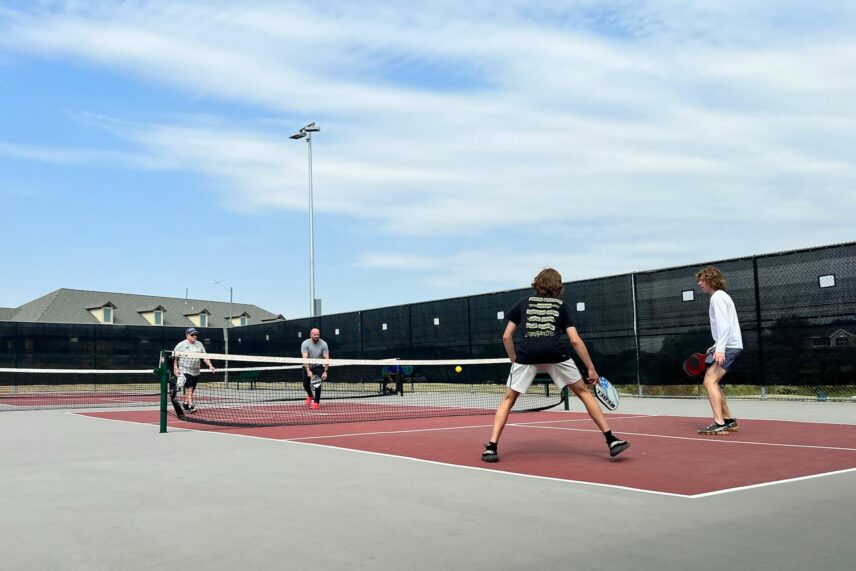
Fast exchanges at the kitchen line separate intermediate players from beginners. Quick hands and fast reactions become increasingly important as competition improves. Reaction drills can help dramatically:
- Volleying against a wall at close range
- Practicing rapid-fire exchanges with a partner
- Using minipickleball games inside the kitchen area
- Trying ball machine training if available
Strength and conditioning matter. Complementary workouts can improve athleticism and injury resistance. Helpful exercises include:
- 10- to 15-minute sessions of heel raises for lower-body stability
- Planks for core control
- Resistance-band shoulder exercises
- Jump rope for foot speed
- Interval cardio training for endurance
- Bulgarian split squats, which involve placing one foot on a ledge behind you and bending your knee at 90 degrees while holding dumbbells, for balance
Pickleball involves repetitive movements, which is why mobility and balance training are just as important as strength training.
6. Drill More Than You Play Recreational Games
Many beginners plateau because they only play casual games without focused practice.
Repetition builds muscle memory far faster than random gameplay.
Drilling separates beginners from intermediate competitors. Effective beginner drills include:
- Cross-court dink rallies
- Third-shot drop repetitions
- Serve-and-return targets
- Transition-zone resets
- Volley exchanges at the kitchen line
Drills are helpful, but overdoing them increases the risk of injury. Orthopedic sports medicine specialist Brian Cole at Rush recommends drills that only take about 15 minutes, preceded by a 10-minute warmup.
7. Learn to Stay Mentally Calm
Beginners often unravel after a few mistakes. They rush shots, overhit and lose confidence.
Pickleball rewards patience. Long rallies are normal and consistency frequently beats aggression. Good mental habits include:
- Resetting after every point
- Avoiding negative self-talk
- Focusing on shot selection instead of winners
- Playing percentages rather than risky shots
Many experienced players say emotional control becomes more important as skill levels rise. Introspection plays a vital role, and postgame meditation can be a game-changer. It can help you reflect on what went wrong and identify areas you can personally improve on to perform better next time.
8. Study Strategy Instead of Only Technique
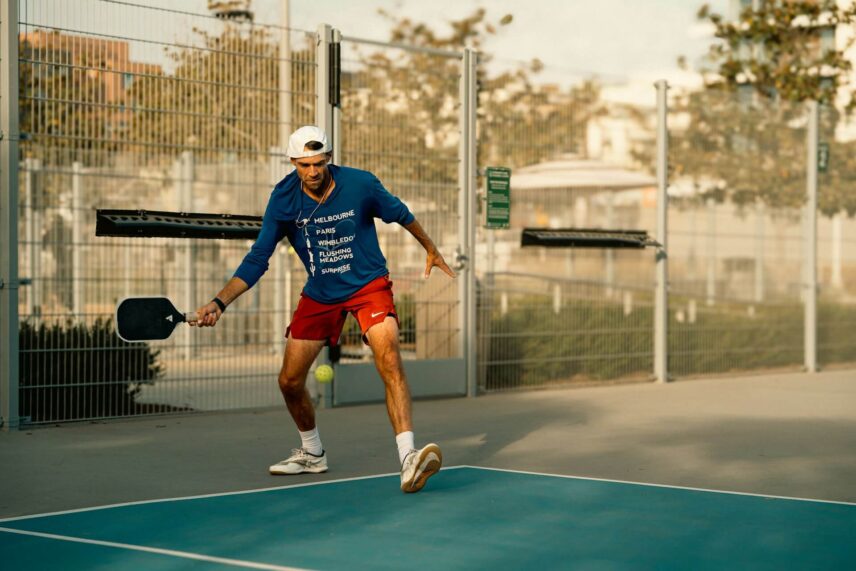
Beginners often obsess over mechanics while ignoring strategy. These smart decision-making wins games:
- Targeting the weaker opponent
- Incorporating backhands
- Using angles rather than pure pace
- Not attacking from poor positions
- Resetting difficult balls instead of forcing winners
One significant breakthrough for many players is realizing that pickleball is often a game of patience and setup rather than nonstop attacking. Watching high-level matches can help you recognize patterns and positioning decisions.
Start to Get Better at Pickleball
To know how to get really good at pickleball is to understand the merits of smart practice, disciplined positioning and consistent fundamentals. Focus on control, movement and strategy before chasing power. Beginners should follow these pickleball tips to develop confidence and competitive skills much faster than they expect.