As an Amazon Associate, Modded gets commissions for purchases made through links in this post.
Teqball is a young sport whose global rise has been rapid. Combining soccer technique with table-based gameplay, it has attracted elite footballers and freestyle athletes worldwide. Which nations have ruled this emerging game so far? Here are the top five countries in teqball, and discover how the United States stacks up against them.
5. Serbia

Serbia’s exceptionalism in global sports extends into this game. This Balkan country has developed some of the sport’s most dominant male players. Serbian athletes are synonymous with explosive movement, physical strength and excellent aerial control.
This Southeastern European nation owes its success to its football culture. Many players have backgrounds in futsal, freestyle football or technical youth academies, which translate perfectly to teqball. They frequently outlast opponents during long, high-intensity matches, thanks to Serbia’s emphasis on physical conditioning.
Two Serbian legends stand above the rest — Nikola Mitro and Bogdan Marojević. Together, they formed one of the most feared doubles partnerships in teqball history. Their chemistry and athleticism transformed Serbia into a championship-level nation almost immediately. Because of its strong pipeline of male talent, Serbia should remain near the top of the medal standings for years to come.
4. Brazil

Brazil’s influence on the sport feels inevitable. The only nation to qualify for every FIFA World Cup since 1930, its football culture already emphasizes flair, juggling and technical precision. That technical base gives Brazil a permanent competitive advantage.
No wonder it has produced some of the most entertaining athletes to watch. The Brazilians bring unbridled creativity into competitive matches. Their ability to improvise under pressure makes them dangerous in doubles and mixed formats.
Natalia Guitler is Brazil’s biggest icon in this domain. A former footvolley and freestyle football specialist who became one of the sport’s earliest global stars, Guitler has helped legitimize women’s teqball internationally and inspired more South American participation.
Another notable Brazilian competitor is Rafaella Fontes, who has collected medals at world championship events. Brazil’s continued success comes from its enormous grassroots football infrastructure. Young athletes grow up mastering ball control long before they encounter a teqball table.
3. Romania

Romania’s emergence as a powerhouse reflects its deep love for the beautiful game and rapidly improving sports infrastructure.
The Land of Dracula benefits from its proximity to Hungary, the birthplace of the sport. That geographic advantage has allowed Romanian players to compete frequently against elite talent since the game’s earliest years.
Romanian athletes often receive high praise for adaptability. They can switch between aggressive attacks and defensive rallies depending on their opponent.
One of the country’s standout stars is Kinga Barabasi, who has become a fixture on continental and world championship podiums. Her versatility across multiple formats has helped Romania remain consistently competitive.
Romania’s continued investment in youth development suggests its medal totals will keep growing.
2. Thailand
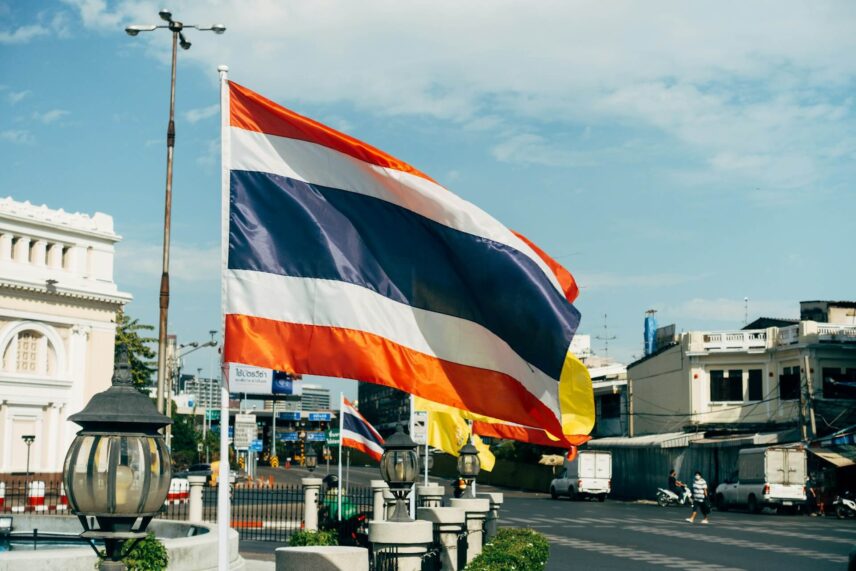
Thailand is the sport’s modern titan. While European countries dominated teqball’s early years, the Land of Smiles had the last laugh in the more recent editions.
Siam’s supremacy extends beyond a single category. Its representatives perform outstandingly well in mixed doubles and men’s events, particularly in Asian competitions. The Southeast Asian kingdom has surged forward through elite women’s competition and rapid national development programs.
Hosting the 2023 World Championships in Bangkok significantly boosted the sport’s domestic popularity, a feather in the cap of the event organizer, the Teqball Association of Thailand.
Jutatip Kuntatong and Suphawadi Wongkhamchan are some of the biggest Thai stars in the game. Both have accumulated multiple world championship gold medals and helped establish the country as the global standard in women’s teqball.
The Thais have earned a reputation for lightning-fast reflexes and creative angles. Their style often overwhelms opponents who rely purely on power. At the moment, Thailand is arguably the sport’s most complete modern program.
1. Hungary

Hungary built the sport’s competitive structure, coaching standards, and developmental philosophy.
The Hungarians have enjoyed institutional support, such as access to elite coaching and organized competition. As pioneers, they enjoyed a technical advantage over other national players in the early days of the game.
Several players helped cement this Central European country’s dominance, including Apor Györgydeák, Ádám Blázsovics and Csaba Bányik. With their accolades, these legends were defining figures of the sport’s first decade.
Hungary continues to produce younger talent capable of going toe-to-toe with Thailand’s newer generation. Even as global competition intensifies, it remains the benchmark every emerging nation tries to reach.
Where Does the United States Stand?
The U.S. has competed in several world championships. The country has won some, but it’s a behemoth in the sport, at least not yet. By 2025, it had produced only one world champion, Carolyn Ann Greco, the reigning women’s singles champion in the Bangkok games in 2023.
Soccer nations tend to excel in teqball tournaments. Although what most people in the States consider a football is a pigskin, the Americans have done well in international association soccer.
The American sports culture already produces world-class athletes with skills vital in teqball. This niche sport may not reach the level of popularity of pickleball as a recreational physical activity, but there’s no reason why the Americans shouldn’t have bigger medal hauls in future tournaments.
Frequently Asked Questions
Here are the answers to common questions about the teqball.
Q: What is teqball?
A: Teqball is a sport played on a curved table that combines elements of table tennis, freestyle football and volleyball. Players use soccer-style touches to return the ball without using their hands. The game’s name is a portmanteau, a combination of the words technique and ball.
Q: What is the teqball origin story?
A: Teqball’s origin story traces back to Hungary in 2014, when former football player Gábor Borsányi and his collaborators developed the sport to improve soccer training through technical repetition and controlled ball movement.
Q: What is a teqball table?
A: A teqball table is a specially curved playing surface designed to create unpredictable ball rebounds. The curved shape keeps rallies flowing and encourages creative ball control techniques.
Q: What are the official teqball rules?
A: Teqball rules prohibit hand use and require players to alternate body parts during rallies. The first player or team to reach 12 points wins the set, provided that the lead is at least two points. Players must avoid touching the table or interfering with opponents during play.
Q: How do you play teqball?
A: You can play teqball as long as you have basic ball control skills, understand the sport’s rules and have access to its signature curved table. If you want to know how to play teqball for the first time, the main objective is to return the ball over the net-like center section using up to three touches. Any part of your body can touch the ball, except for your hands and arms.
Will Challengers Supplant Teqball‘s Kings and Queens Soon?
Teqball is a toddler by world standards, and it’s growing fast. Great sporting nations, such as the U.S., could challenge those ahead of the curve if the game becomes more accessible to the public through better government and commercial support.