As an Amazon Associate, Modded gets commissions for purchases made through links in this post.
In the debate of Switch vs. Switch 2, deciding whether to keep your current Nintendo Switch or upgrade to the new model comes down to cost, specs and overall value. Compare both consoles side by side, explore hardware improvements, check backward compatibility and decide if the Switch 2 truly delivers an upgrade worth your money.
Nintendo Switch vs. Switch 2
If you’re deciding whether to upgrade or stick with your original Switch, here’s the rundown. The Switch 2 introduces significant hardware enhancements, including an improved screen, increased power, 4K output and expanded storage. The launch price jumps by about $150.
Frequent gamers, fans of high-resolution visuals or those planning to play future titles optimized for the new hardware will likely find the upgrade worthwhile. Casual players or owners of recent models, like the OLED, might be better off waiting for discounts or bundles. These key Switch 2 differences compared with the original console include screen size to 4K output and storage capacity.
Your existing game library carries over, which is a plus. Still, consider accessories, extra storage and battery expectations. In short, the Switch 2 is ideal for dedicated gamers seeking the best Nintendo hybrid experience currently available. However, many players can still enjoy great gaming on their current Switch. If your usage is moderate, waiting for discounts or bundles can be a wise and rewarding choice.

Understanding the Price and What You Will Pay
When thinking about upgrading, it’s helpful to consider the full value of the investment, including more than the console’s price. The Switch 2 launches at $449.99, a substantial increase from the original Switch’s $299 debut. That’s roughly $150 more and in Europe or Spain, VAT, import fees and currency differences could push the effective cost even higher.
Early Switch 2 sales indicate strong interest from dedicated gamers. It has sold over 5 million units in its first month, making it Nintendo’s fastest-selling console to date. Beyond the console itself, upgrading to the Switch 2 could involve more than just the system — it may also include additional components. To fully enjoy its new features, you might need new or extra accessories.
This could include the updated Joy‑Con 2 controllers, which offer improved responsiveness. You may also want a higher-speed microSD card, as the Switch 2 supports microSD Express for faster load times. Other potential additions are a new dock or even a compatible camera, depending on how you plan to use the console. For example, a Joy‑Con 2 pair costs around $94.99, the Switch 2 camera $54.99 and a dock set $119.99.
Switch 2 Hardware Upgrades That Make a Difference
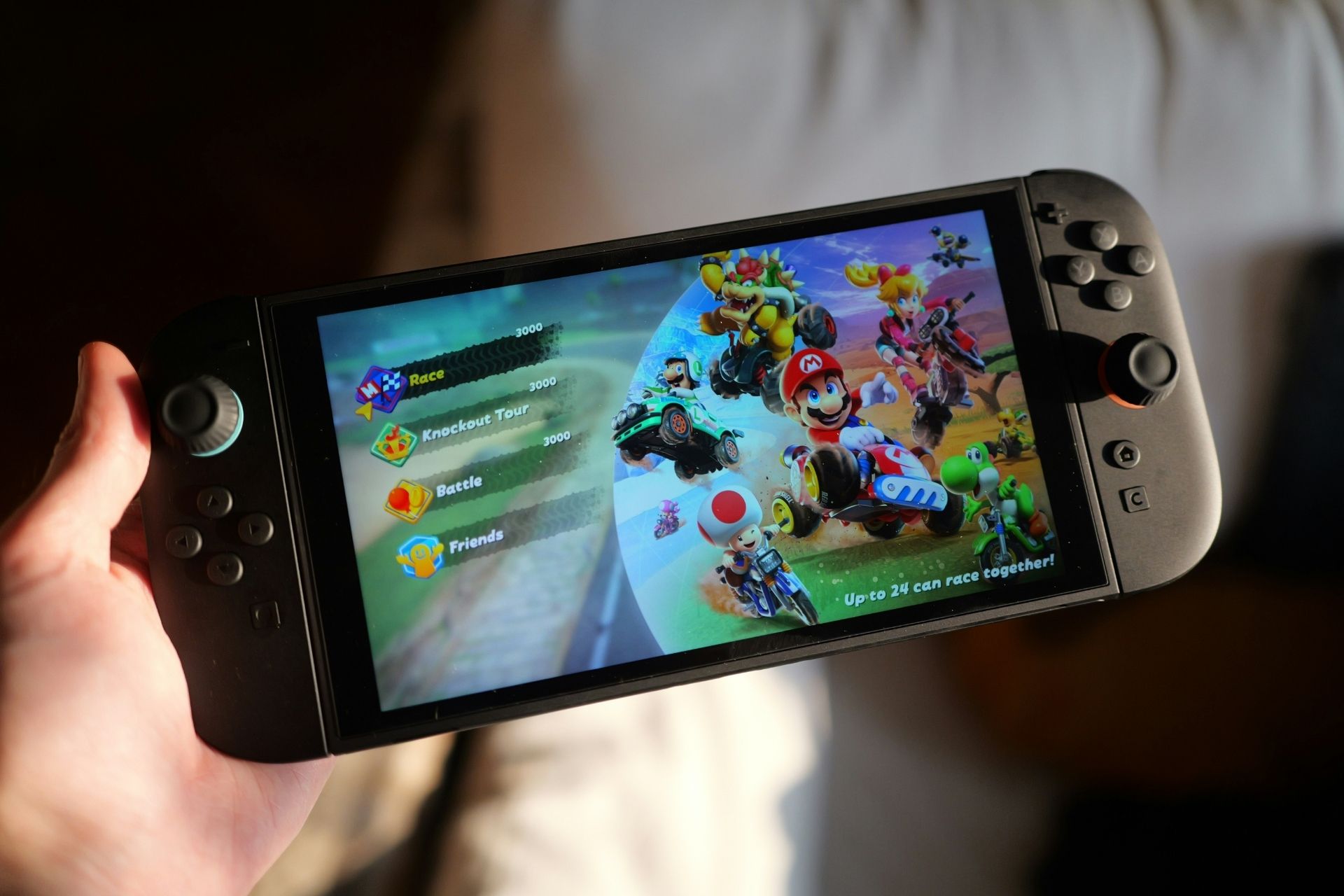
The real differentiators of the Switch 2 lie in its upgraded hardware. It features a custom Nvidia CPU/GPU for higher performance, a 7.9-inch screen with 1080p resolution, a 120 Hz refresh rate and HDR support, plus 256 GB of internal storage. In docked mode, it outputs to 4K TVs and connects faster with Wi-Fi 6 and the latest Bluetooth. Nintendo redesigned the Joy-Con controllers to improve durability and add stronger magnetic attachment, enhancing both handheld and docked gameplay.
These upgrades matter in several ways. Visual fidelity and resolution improve the TV and handheld experience, while faster internal storage and upgraded hardware reduce load times and lag. Future-proofing is another benefit, with higher refresh rates, more storage and better connectivity supporting upcoming games.
However, battery life remains limited, ranging from 2 to 6.5 hours and not all titles will immediately take advantage of the 120 Hz or 4K capabilities. Owners of the original Switch OLED may notice more minor improvements. Still, the Switch 2 delivers a smoother, more responsive and immersive gaming experience overall.

Keeping Your Games with Backward Compatibility
The Nintendo Switch’s flexible design and popular titles — such as Animal Crossing, Mario Kart 8 Deluxe and Breath of the Wild — drove its success. Over the course of two generations, these factors contributed to the console selling 139 million units.
Donkey Kong Bananza is among the first games announced for the Nintendo Switch 2, which has generated excitement among longtime fans and arcade enthusiasts. The Switch 2 supports both physical and digital titles from the original console, ensuring your collection remains valuable and complete.
Some accessories or motion-based peripherals offer limited functionality, but developers can enhance many games with patches or optional “Switch 2 Edition” upgrades. These updates give you the opportunity to enjoy your favorite titles with new features, including smoother performance and 120 Hz gameplay.
Exploring New and Old Titles
Upgrading opens the door to both old and new games. Launch titles include hits like “Mario Kart World.” Future releases will likely take full advantage of the Switch 2’s hardware. Most of your library stays compatible, protecting your investment.
Frequent players of older games get extra value. Those focused on new releases benefit from improved performance, visuals and features. The Switch 2 makes gaming smoother, sharper and more exciting overall.
The Nintendo Switch library offers something for every type of gamer. From classic hits to brand-new releases, there’s a game to suit every play style. Whether revisiting old favorites or exploring new titles, the Switch 2 makes it easy to dive in and keep gaming exciting.
Understanding if the Switch 2 Is Worth the Upgrade
If you own an extensive library of original Switch games, upgrading costs less because many titles carry over. However, if publishers release enhanced or “Switch 2 Edition” versions, purchasing them adds to the expense. You may want extra storage to get the most out of the Switch 2. Its 256 GB internal memory is a significant upgrade, though high-speed microSD Express cards can be an additional investment.
Whether the extra cost is “worth it” depends on how you play. Hardcore gamers — especially those who play on TV in higher resolutions or want the latest features — may find the upgrade worthwhile. Casual players, handheld users or owners of the Switch OLED (2021) may not justify spending over $150 right now.
Future game support is another factor — upgrading early could ensure compatibility with upcoming major titles. The Switch 2 is an excellent choice if you want to take full advantage of its new hardware and features. For others, waiting for price drops or bundles could be a smarter option.
Comparing Switch vs Switch 2
These are key Switch 2 specs, showing how the upgraded hardware, screen, storage and connectivity compare to the original Nintendo Switch.
| Feature | Nintendo Switch | Nintendo Switch 2 |
| Launch Price | $299 | $449.99 |
| Screen | 6.2‑inch (OLED — 7‑inch) | 7.9‑inch, 1080p, 120 Hz, HDR |
| CPU/GPU | Standard custom Nvidia | Upgraded custom Nvidia, higher performance |
| Internal Storage | 32 GB | 256 GB |
| Docked Mode | Up to 1080p | 4K output |
| Connectivity | Wi‑Fi 5, Bluetooth 4.1 | Wi‑Fi 6, latest Bluetooth |
| Joy‑Con Controllers | Standard | Redesigned, magnetic attachment, improved durability |
| Battery Life | 2.5–6.5 hours | 2–6.5 hours |
| Backward Compatibility | All original games | Most original games (physical and digital) |
| Accessories | Standard | Some old accessories work — new Joy‑Con 2, dock, camera optional |
| Game Library | Existing plus new titles | Existing plus new titles, optimized for Switch 2 |
| Best For | Casual and handheld gamers | Dedicated gamers, future-proofing, high-resolution play |
Is the Switch 2 Worth the Upgrade? Upgrades, Value and Gaming Future
In the Switch vs. Switch 2 debate, the Nintendo Switch 2 brings major upgrades in performance, visuals and features. It targets dedicated gamers who want the best experience. The new hardware delivers 4K output, faster storage and a larger screen for smoother play. Casual players or recent Switch owners may find the price high and the battery life limited. Still, the Switch 2 provides a more immersive and future-ready way to play.