As an Amazon Associate, Modded gets commissions for purchases made through links in this post.
When Elliot Handler and his company, Mattel, introduced Hot Wheels in 1968, the new brand of scale model cars became the primary competitor of Matchbox. Mattel eventually purchased Tyco Toys, the owner of Matchbox, and Hot Wheels grew steadily from being children’s toys to being popular among adult collectors. The most valuable Hot Wheels cars command thousands, even hundreds of thousands of dollars, among enthusiastic fans.
10 Most Valuable Hot Wheels Cars for Collectors
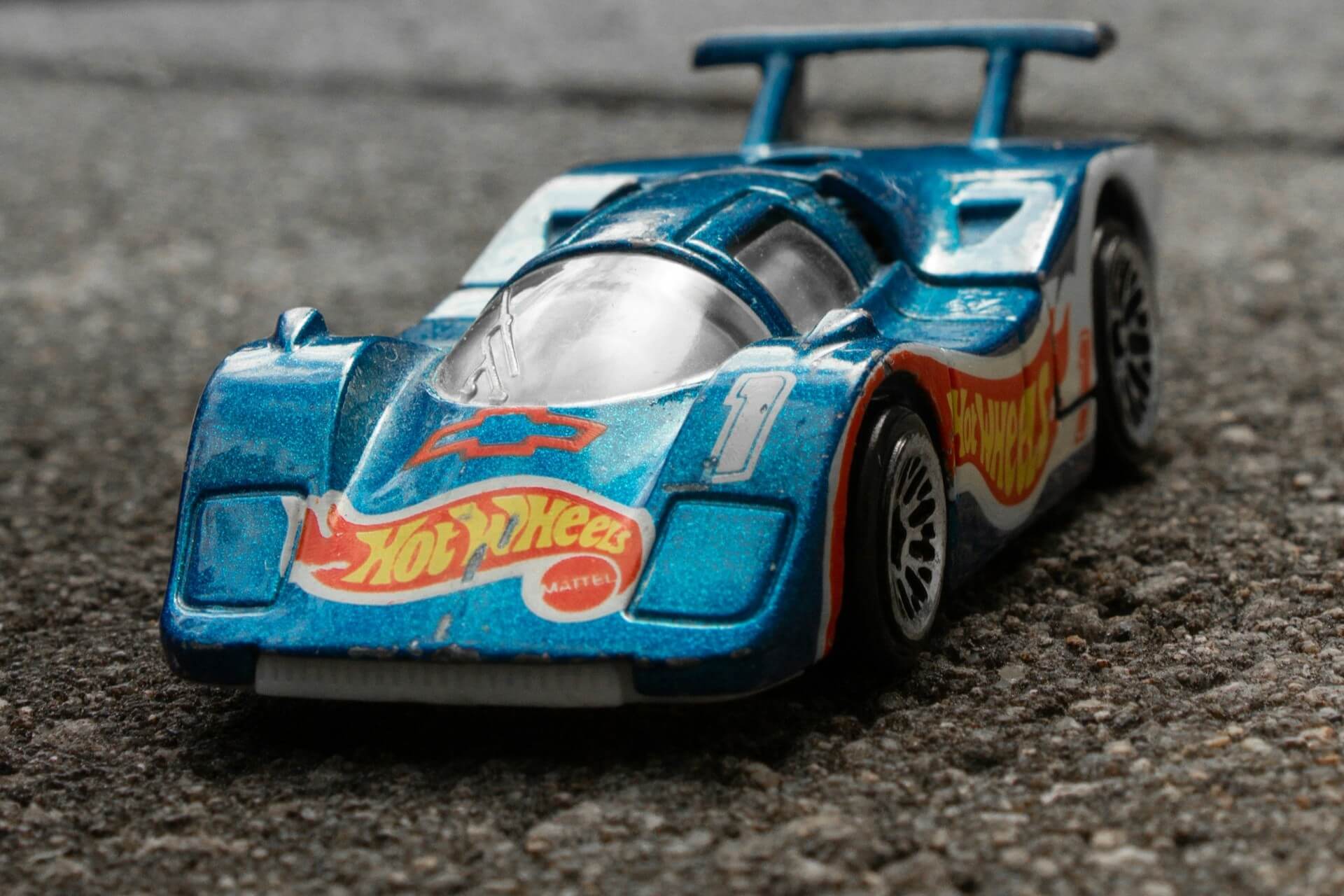
Rare Hot Wheels cars can surface anytime from unexpected places selling collectibles, such as lighthouses. Unless someone discovers something mind-blowingly one-of-a-kind, here are the most coveted Hot Wheels creations.
1. 1969 Pink Rear-Loading Beach Bomb Prototype
Estimated value: $150,000-$200,000-plus
Serious Hot Wheels collectors consider this little van, with surfboards sticking out of its rear window, as the holy grail. There may only be two prototypes in existence. Because of the surfboard-in-the-back design, the van was unstable on Hot Wheels tracks, leading Mattel to rework the model. This change made the prototype incredibly attractive to collectors.
2. 1968 White Enamel Camaro Prototype
Estimated value: $50,000-$70,000
The White Enamel Camaro was one of the earliest Hot Wheels cars ever produced. Mattel tested paint finishes and detailing by producing prototypes before mass production. As a result, these models are few and never made it to store shelves.
3. 1968 Over Chrome Mustang
Estimated value: $40,000-$50,000
The Strawberry Over Chrome Mustang is the rarest Hot Wheels car ever. It was only for advertising purposes, and only two models of it ever saw the light of day. The only known surviving model surfaced in a mobile home upon the owner’s death, and someone subsequently purchased the trailer at an estate sale. No one knows how it ended up in the trailer park, lending more mystique to it.
4. 1968 Over Chrome Camaro
Estimated value: $25,000-$30,000
Only 20 Hot Wheels cars with this special antifreeze-over-chrome finish are known to exist. This rare Camaro only appeared in commercials. Today, it’s a collector’s dream.
5. 1969 Brown Custom Charger
Estimated value: $13,000-$20,000
The Custom Charger — considered by many enthusiasts to be a prototype rather than a series production model — was manufactured between 1969 and 1971. The most sought-after variant is the brown one, thanks to its distinctive paint.
6. 1971 Purple Olds 442
Estimated value: $12,000-$15,000
Many Hot Wheels collectors consider the Purple Olds 442, which was manufactured exclusively in Mattel’s Hong Kong facility in 1971, to be the rarest of all production Redline cars. The thin red stripe on the sides of Purple Olds 442 tires remains one of the toughest color variants to acquire today.
7. 1969 Mad Maverick
Estimated value: $10,000-$15,000
The Mighty Maverick was originally Mad Maverick. Mattel cast the name into the baseplate but had to change course due to a copyright issue with the rival toy maker Johnny Lightning. The move made the original Mad Maverick cars incredibly desirable among collectors.
8. 1970 Red Baron with White Interior
Estimated value: $10,000-$12,000
The beloved Red Baron has seen on-and-off production for decades, making it a common Hot Wheels car. However, in an industry where color often determines Hot Wheels cars value, the Red Baron with a white interior is extremely rare.
9. 1969 Blue Rodger Dodger
Estimated value: $8,000-$10,000
The number of Blue Rodger Dodger from the Redline era was exceptionally limited, and fewer still are those in excellent condition today, earning it a place in the hearts of loyal collectors.
10. 1970 Snake & Mongoose Drag Set (Original)
Estimated value: $3,000-$5,000
These cars may not burn fuel, but they do have serious ties with the real world. The 1970 drag racing set honors real racing legends Don “The Snake” Prudhomme and Tom “Mongoose” McEwen. Today, the set is a prized collector’s item, especially if in pristine packaging.
What Hot Wheels Cars Are Worth the Money
New to the world of collecting rare and valuable Hot Wheels cars? Here are some key categories to consider if you want to ensure you’re spending your hard-earned money on the right Hot Wheels.
Redline Era Cars (1968-1977)
These early cars with their signature red-striped wheels are the cornerstone of the collector’s market. Many of the most valuable models emerged from this era due to their age and limited surviving quantities.
Rare Color Variants

Collectors evaluate the rarity of color variants, as Mattel experimented heavily with them during the early years of Hot Wheels. Some finishes, such as browns, purples, magentas and deep blues, were produced in limited quantities, and they often command top dollar today.
Prototypes and Preproduction Models
Any Hot Wheels prototype that never reached stores is almost guaranteed to have high value. For instance, the preproduction models for color-changing Hot Wheels, toys that have been a massive part of many people’s childhoods, would have a place in the displays of collectors of tomorrow. Some of these models were produced in such low quantities — as low as one or two — that they would often appear on “most valuable” lists.
Error Cars
Misprints and manufacturing errors, such as incorrect bases or bases that required changes in later batches, like the Mad Maverick, mismatched parts or uncommon interior colors, can increase value.
Mint or Graded Cars
Hot Wheels in like-new condition, especially those professionally graded and early-era cars still in their unopened original packaging, often fetch prices many times higher than their well-played counterparts.
Criteria That Drive a Hot Wheels Car’s Value

Here are the primary factors that determine why some Hot Wheels cars are worth more than others.
- Scarcity: The fewer units produced, or the fewer that exist today in good condition, the higher the value. The rarest cars are prototypes and models from the Redline era. Additionally, thousands reside permanently in museums, making even fewer available for sale.
- Interest: A model’s popularity among collectors, its cultural relevance and its place in Hot Wheels history influence market demand.
- Condition and grading: Mint condition and highly graded Hot Wheels cars are worth more. Collectors use professional grading services to evaluate models.
- Authenticity: Collectors are willing to pay top dollar for highly coveted Hot Wheels cars because of their unique origins and the stories behind them. Convincing replicas can’t fetch tens or hundreds of dollars, not thousands — a rule that applies to Rolexes, baseball cards and other collectible items.
- Historical significance: Cars tied to real-life motorsports, notable Hot Wheels designers or early experimental runs tend to see elevated long-term value.
- Traceability: Record transparency inspires buyer’s confidence, which is why collectible Hot Wheels cars with a proven auction history typically retain their value better.
Build Your Collection of the Rarest Hot Wheels Cars
Hot Wheels collecting is more than a nostalgic hobby — it’s a thriving market filled with rare treasures and fascinating history. From ultrarare prototypes to sought-after variations, the most valuable Hot Wheels cars illustrate how small die-cast toys can become prized possessions.