As an Amazon Associate, Modded gets commissions for purchases made through links in this post.
In an era of fleeting distractions and the threat of losing critical skills due to technology dependency, many people are hungry for challenges that sharpen their intellect and hone their decision-making ability. The best strategy games offer just that. These games are mental gymnasiums, demanding everything from lightning-fast reflexes to impressive patience.
A Genre Breakdown of Strategy Games
Strategy games represent a broad category, with many subsets, each offering a unique way to test your cognitive skills.
- Real-time strategy (RTS): In RTS games, the clock is always ticking, whether you’re gathering resources, building your forces or outmaneuvering your opponent. It’s a demanding genre that rewards multitasking, quick adaptation and decisive action under pressure.
- Turn-based strategy (TBS): TBS games strip away the pressure of the clock, allowing for meticulous planning and deliberate moves. Every decision carries consequences that can ripple across the entire game. This is the genre of players who love to think 10 steps ahead.
- Explore, expand, exploit, exterminate (4X): These games are grand in scope, often spanning centuries or galaxies. 4X games are epic, long-term undertakings for the empire builders.
- Grand strategy: A cousin to 4X, grand strategy games feature deep and complex models of politics, economics, social dynamics and warfare. Your goal is to navigate the intricate web of the living, breathing world, managing everything from trade policy to royal succession.
- Tabletop strategy: Sales for card and tabletop games have increased since 2020, as people crave more face-to-face connections. These games can encompass all of the genres above. They offer deep economic simulations, asymmetric warfare and more, proving that the classic format can still innovate.
Whether you command legions on a screen or across a table, these eight titles — four video games and four tabletop games — represent the pinnacle of strategic thinking.
1. XCOM 2
In XCOM 2, the stakes are as high as they get with the survival of humanity in your hands. This TBS game puts you in command of a small squad of elite soldiers fighting an alien occupation. Each decision is tense — do you take a 75% shot and risk missing, leaving your soldiers exposed? Do you spend your limited resources on better armor or more powerful weapons? The game is famous for its difficulty, teaching you to make hard calls and live with the consequences.
2. StarCraft II
Royalty in the world of competitive RTS, StarCraft II is an AI-based game and a masterclass in balance, depth and sheer mechanical skill. Whether you command the Terrans, the Zerg or the Protoss, the game is a test of your ability to manage an economy while controlling your army in battles. It’s a game of feints, bluffs and tactical brilliance where a well-placed psionic storm can seal the game. Winning requires not just a plan, but the speed and precision to execute it under pressure.
3. Civilization VI
The Civilization series is a quintessential 4X game. In Civilization VI, you guide a historical civilization from a single nomadic tribe to a globe-spanning empire. The path to victory is yours to choose — will you conquer the world through military might, achieve cultural dominance through art and music, advance by using science to conquer the stars or build a global religious following? The game is a masterpiece of long-term planning, forcing players to balance short-term needs with centuries-spanning goals.
4. Crusader Kings III
Many strategy games have you playing as a faceless nation, but Crusader Kings III differs by having you play as a ruler, a family or a dynasty. It’s the pinnacle of grand strategy, where your schemes, marriages and murders are as crucial as your armies. Whether you’re arranging a politically advantageous marriage for your heir or plotting to overthrow your liege lord, it’s an often hilarious story generator that forces you to think about power in terms of territory as well as bloodlines and personal relationships.
5. Catan
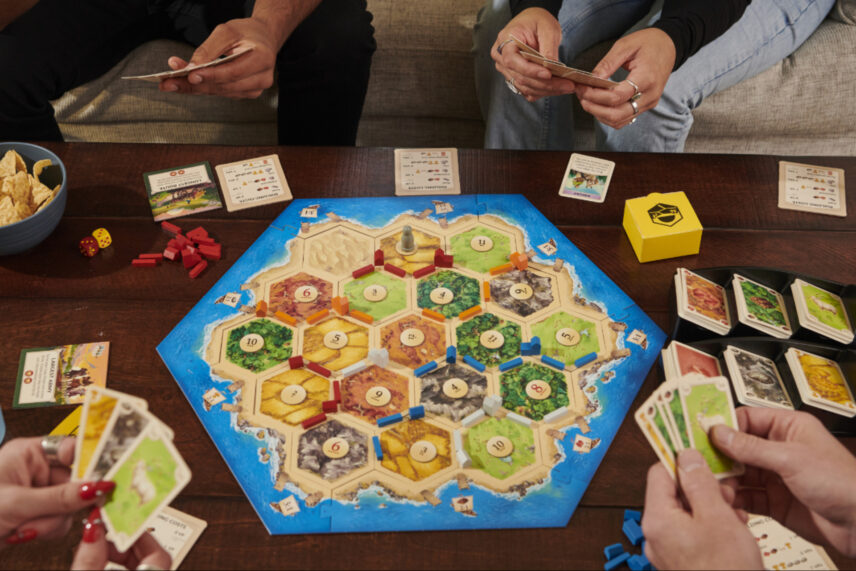
Catan opened many people’s eyes to the world of modern tabletop strategy, so it’s no wonder it’s such a well-loved game — perfect for playing with friends after hosting dinner at your place. Players compete to gain power on the island of Catan with settlements, cities and roads. The heart of the game lies in its trading mechanics. You’ll barter and negotiate with your opponents to acquire the resources you lack, forcing you into temporary alliances. Every game is a puzzle of managing probabilities, planning your expansion and knowing what to offer your rival to get that one resource you need to win.
6. Root
Don’t let the charming woodland creatures fool you — Root is a cutthroat game of asymmetric warfare. Each player commands a faction with different rules and conditions for victory. The Marquise de Cat seeks to build a robust industrial engine, and the Eyrie Dynasties must expand under a strict decree. The Woodland Alliance sparks rebellions from the shadows, while the Vagabond plays all sides against each other. Root is a chaotic puzzle where you must master your own strategy and disrupt your opponents’ entirely different strategies.
7. Go
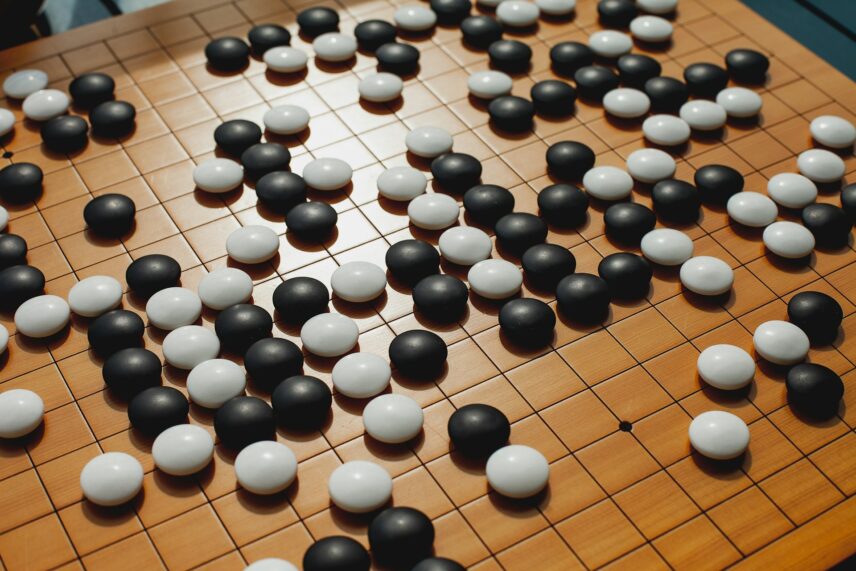
Go is an ancient game — it originated in China over 3,000 years ago and is deceptively simple. Players take turns placing black or white stones on a grid, attempting to surround territory and capture their opponent’s stones. While you can learn the rules in minutes, Go is arguably one of the most strategically complex games ever invented. It teaches a more fluid and intuitive kind of thinking compared to Chess, focusing on influence, territory and the flow of power across the board.
8. Pandemic
Pandemic offers a refreshing twist to games about defeating your opponents — you must all work together to avoid losing. In this cooperative game, players are members of a disease-control team fighting to stop four deadly plagues from consuming the globe. Each player has a unique role, like the Medic or the Scientist, and everyone must coordinate their actions to succeed. Pandemic is a race against time that tests your team’s skills in crisis management, prioritization and problem-solving.
What Cognitive Skills Do Strategy Games Sharpen?

Beyond the thrill of victory, tabletop and PC strategy games are powerful tools for exercising your mental muscles.
- Critical thinking and problem-solving: Strategy games force you to analyze situations, identify the core challenges and formulate multistep plans to achieve your goals.
- Decision-making under pressure: Being forced to make tough calls with incomplete information trains you to weigh risk and reward and to stay calm and logical when the pressure is on.
- Planning and foresight: Thinking several moves ahead helps you anticipate your opponent’s actions and see the long-term consequences of your decisions. This improves your ability to be proactive rather than reactive.
- Resource management: Many strategy games involve allocating limited resources. You learn to optimize what you have, make trade-offs and invest wisely.
- Adaptability: Research shows that video games can increase your neuroplasticity, which helps you adapt to different contexts. When an unexpected move ruins your strategy, you must be able to formulate a new plan on the fly.
A Workout for Your Brain
These games offer more than entertainment. They are an opportunity to engage in a struggle of wits, to learn from your failures and to savor the satisfaction of a well-executed plan coming to fruition. So, build that army, plot that betrayal, plan that perfect move and test your mind. You may find that the skills you practice on the digital and analog battlefields serve you well in the real world.