
As an Amazon Associate, Modded gets commissions for purchases made through links in this post.
Embarking on a hiking adventure requires a clear understanding of the trail difficulty rating system to ensure safety and enjoyment. The hiking difficulty scale is a standardized system that helps hikers assess the challenge level of various trails. Discover which trail level you feel most comfortable walking and how to choose an appropriate national trail that matches your endurance and skill set.
- What Is the Hiking Difficulty Scale, and Why Do You Need It?
- Common Hiking Difficulty Levels
- Detailed Trail Difficulty Examples and Descriptions
- Stepping Up Your Hiking Challenges
- 3 Best Trail Hiking Apps for Hiking Scales

What Is the Hiking Difficulty Scale, and Why Do You Need It?
The hiking difficulty scale evaluates trails based on factors like distance, elevation gain, terrain and technical challenges. Various organizations have their own rating systems to categorize hikes, aiding adventurers — like yourself — in selecting the trails that match their fitness and experience levels.
Hiking is about a safe, enjoyable adventure. If you tackle a hike that’s way beyond your current level, you may get injured and won’t enjoy it. Use the scale to ensure you are “punching in your weight class” and make the most of each trail opportunity.
Common Hiking Difficulty Levels
Rating systems may vary, but a widely recognized trail difficulty rating system includes five hiking difficulty levels: Easiest, moderate, moderately strenuous, strenuous and very strenuous. The table below can help you understand what’s involved in each trail class.
| Difficulty Level | Numerical Rating | Distance (miles) | Elevation Gain (feet) | Description |
| Easiest | <50 | <3 | Minimal | Suitable for anyone who enjoys walking on level ground with a slight incline. |
| Moderate | 50-100 | 3-5 | Moderate | Suitable for novice hikers seeking a bit of a challenge with moderate inclines. |
| Moderately Strenuous | 100-150 | 5-8 | Significant | Challenging for unconditioned individuals over steep inclines at a steady pace. |
| Strenuous | 150-200 | 7-10 | High | Challenges most hikers over longer and steeper trails. |
| Very Strenuous | >200 | >8 | Very high | Only for well-conditioned hikers with longer, steeper trails that include rock scrambles. |
**Adapted from the National Park Service’s guidelines on determining hiking difficulty.
Detailed Trail Difficulty Examples and Descriptions
Knowing what lies ahead on the trail can help you prepare with the right equipment. Self-assess your fitness levels, so your hike makes memories and not pain. These five levels of the hiking scale can guide your hiking planning.
1. Easiest
These hikes are generally suited for all ages and fitness levels. The trails are mostly flat with a slight incline and are typically less than 3 miles long. They are enjoyable routes that are easily done in a short amount of time.
Trail example and tip:
- Congaree National Park, South Carolina: The Boardwalk Loop Trail offers a 2.6-mile elevated boardwalk through a serene forest, providing an easy and accessible hiking experience.
- Prepare for your hike: Despite it being an easy trail, you should still prepare for the path by carrying sufficient water and wearing comfortable footwear to ensure a pain-free walk.
2. Moderate
A moderate hike offers some challenges, usually featuring moderate inclines and possibly some steeper sections. These trails usually range from 3-5 miles in length. Doing this type of hike gives you a sense of achievement without needing to be incredibly fit or strong. A moderate or second-level route can easily fit into a morning.
Trail example and tip:
- Yosemite National Park, California: The Mirror Lake Trail is a 2-mile roundtrip hike with a gentle elevation gain, offering picturesque views of the lake and surrounding cliffs.
- Consider maps and equipment: Familiarize yourself with the route map and invest in quality poles for added stability on inclines and to test the water depth of muddy streams before crossing.
3. Moderately Strenuous
If you’re a couch potato, this hike may be a strain. You should have a moderate fitness level as it includes steady, often steep inclines over distances of 5-8 miles. Expect to work up a mild sweat on this one, so take enough water and electrolytes with you.
Trail example and tip:
- Grand Teton National Park, Wyoming: The Jenny Loop Trail spans 7.1 miles round trip and includes significant elevation gain, leading hikers through diverse terrain while offering stunning alpine views.
- Hit the gym before you walk the trail: Prepare for this hiking level with some gym time. Include cardiovascular exercises and strength training to develop endurance and fitness for steeper terrains.

4. Strenuous
Expect longer, challenging distances with a strenuous hike that meanders over steep terrain. You’ll need good physical health and fitness with sound preparation and the right hiking equipment. Tackling a challenging route with the wrong equipment and with poor fitness could cause problems like shin splints, which can lead to cramping and ruin your day.
Trail example and tip:
- Grand Canyon National Park, Arizona: The Bright Angel Havasupai Gardens 9-mile roundtrip hike features an elevation change of nearly 3,040 feet, offering views of the canyon.
- Plan hiking times: Consider the hiking time and start earlier to avoid excess sun exposure. Also pack essentials like high-energy snacks, extra water and a first-aid kit.
5. Very Strenuous
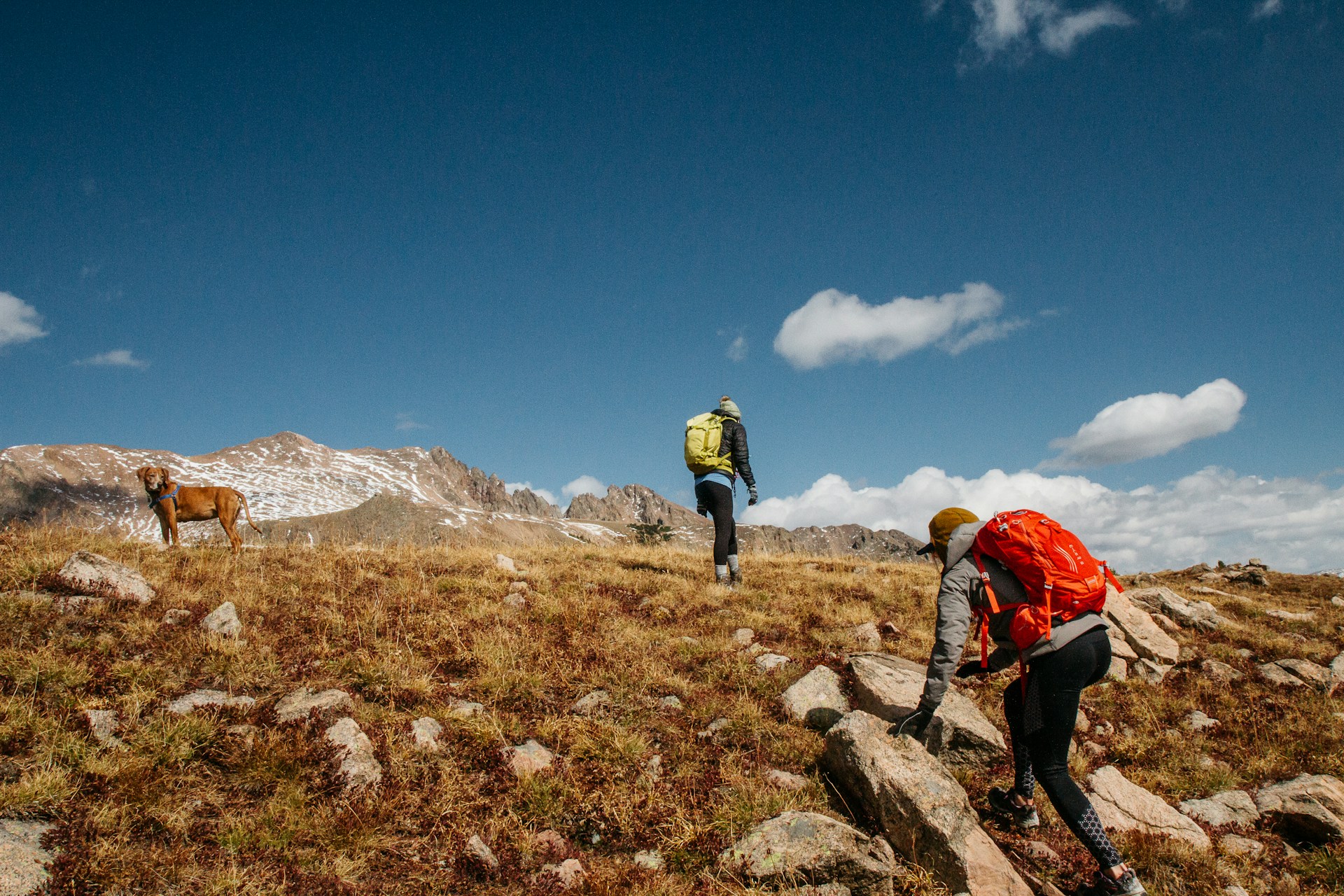
When you’re extra fit and have loads of hiking experience, you may attempt a very strenuous level hike. These are longer than 8 miles, steep and may include scrambling over rocks, crossing streams and navigating challenging terrain.
Trail example and tip:
- Mount Rainier National Park, Washington: The Camp Muir Trail is an 8-mile out-and-back hike with an elevation of about 4,640 feet, leading to a high-altitude camp on Mount Rainier.
- Consider acclimation to altitudes: The change in altitude may affect your balance and energy levels. Ensure you remain safe by hiking with a friend or group. For even more intense trails, you may need to spend 1-3 days acclimatizing before the trail.
Stepping Up Your Hiking Challenges
As you progress to more difficult trails, proper preparation becomes crucial. Here are some steps to help you get ready for greater elevations and distances.
Physical Conditioning
Boost your physique with cardiovascular exercises like running, cycling and swimming to develop endurance and muscle strength, such as scrambling over rocks or climbing when the trail calls for it. Include focused strength training that targets the leg muscles, core stability and upper body strength to carry a backpack over rugged terrain.

Gear Check
The further from home you venture, the more you have to prepare for any eventuality. Ensuring you take the correct gear on your hike can help you manage injuries and survive if disaster strikes. Invest in quality footwear and hiking socks that keep your feet dry and supported and give you a good grip on slippery surfaces.
Your clothing choice should include moisture-wicking and weather-appropriate options. Temperatures may change quickly, which is why layering is vital to maintaining steady body temperature regulation.
Backpack essentials include
- navigation tools such as a map and compass
- extra water — the average is 44 ounces daily — for unexpected delays on the trail
- high-energy snacks
- a first-aid kit
- weather protection
Trail Research
Always check in with the local ranger station or Park Services regarding the condition of the trail before heading out. If the area has recently had loads of rain, it can lead to the trail condition changing. This can influence the difficulty scale and safety. Study the trail’s length, note mile markers or guides along the way, the type of terrain and the expected weather conditions on your hike date.
You should also check if you need any permits or if any regulations apply while on the trail. Some trails may be closed for maintenance, and it’s a safety consideration if you hike without informing a local ranger station that you are in the area.
Many parks require you to file your route plan and information with the local ranger before departing. You should also take some form of communication with you, such as a mobile phone or satellite phone.
3 Best Trail Hiking Apps for Hiking Scales
Finally, if you’re serious about hiking, you may want to invest in a hiking app that monitors your hike while you walk. It provides useful information about popular trails and provides valuable metrics to assess your hiking fitness and progress. These three apps are perfect for any level hiker and as long as you have some reception in the wilderness. You can use them to help you navigate and get a 3D picture of what your route looks like with elevation gain and distance factored in.
- All Trails: This free hiking app has offline capabilities, which can help you out in a pinch, and it’s super easy to use.
- Recreation.gov: This app is more for planning trips than on the actual hike, but it includes access to valuable information about U.S. national park trails, events and discounts.
- Cairn: For safety considerations, the GPS guidance on the app is perfect as it informs your friends and family if you are overdue from a hike, tracks you on the trail and provides notes on where to find cell coverage on various trails.
Trail Time
By understanding the hiking difficulty scale and adequately preparing, you can safely enjoy the diverse and breathtaking trails that the U.S. has to offer. Happy trails!