As an Amazon Associate, Modded gets commissions for purchases made through links in this post.
When you’re adventuring in the great outdoors, understanding how to deal with bear encounters is essential for your safety. Knowing how to react upon meeting these creatures can transform a potentially dangerous situation into a memorable experience you can talk about around the campfire. The two main types of bears you might cross paths with are the often smaller and more adaptable black bear and the grizzly bear, a larger and more territorial species.
How to survive a bear encounter depends on recognizing each type of bear, its distinctive behaviors and the best practices to follow immediately thereafter.
Know What Bear You’re Facing
Identifying the type of bear you’re encountering is crucial for a safe reaction. In North America, the two main bear species are the grizzly bear and the black bear, each requiring different responses. Depending on your location, knowing about other bear types also adds value — misjudging a bear can lead to serious consequences.
The Grizzly Bear
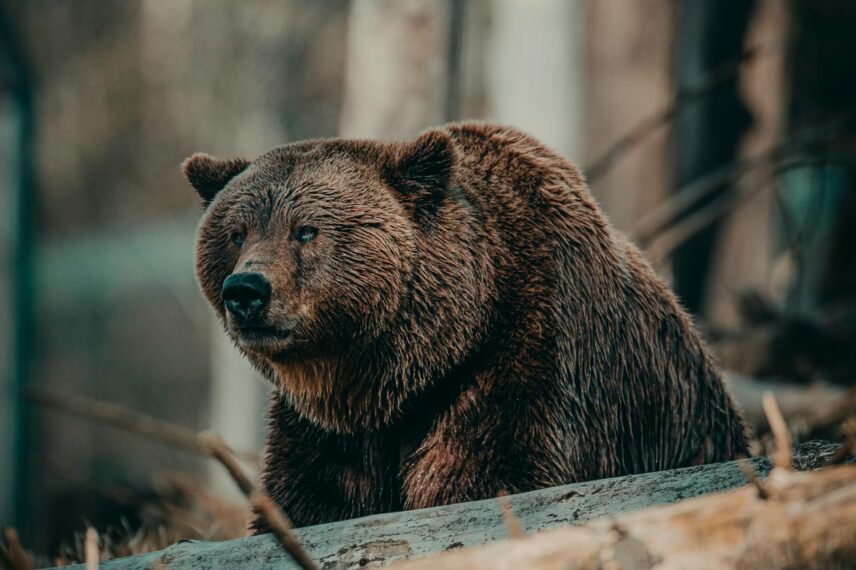
Also known as brown bears, grizzly bears primarily inhabit North America, particularly in regions such as the lower-48 states, central Mexico, Alaska, the Rocky Mountains and parts of Canada, thriving in diverse habitats, including forests, alpine meadows and coastal areas. Known for their strength and aggression, grizzlies are omnivorous and often found near water sources, where they forage for food.
- Weight range: 250 to 600 pounds
- Colors: Brown, blonde, or black (fading to a lighter, creamy shade)
- Distinguishing feature: Prominent shoulder hump
- Face profile: Dished facial profile
- Claws: Long claws ideal for digging and foraging
The Black Bear
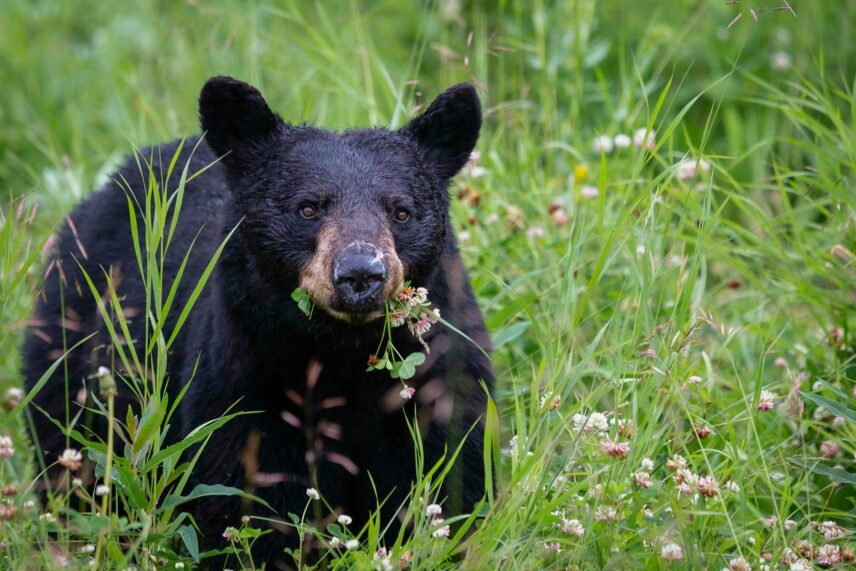
You’ll find black bears in much of North America, most commonly in areas like the eastern United States, western mountains and parts of Canada. They enjoy diverse habitats, including forests, swamps and mountainous regions. Black bears are also omnivorous and generally more timid than their grizzly relatives, often found scavenging for food in both woodlands and near human settlements.
- Weight range: 90 to 500 pounds
- Colors: Black, brown, cinnamon or blonde
- Distinguishing feature: Humpless shoulders
- Face profile: Straight “Roman” facial profile
- Claws: Short claws suited for climbing
If you’re adventuring in other parts of the world, also educate yourself on the other prominent bear species from the region you’re in. Polar bears are common in the Arctic regions of countries like Canada, Russia and Norway. Although they’re positioned well away from most hikers or campers, they are apex predators in their environment and extremely dangerous to humans.
The Asiatic black bear, or moon bear, is one to look out for if you’re traveling through the Himalayas, the Middle East, Southeast Asia or Eastern Asia. They are known to attack humans, with at least 13 related fatalities in Japan since April 2025.
Last but not least, the sloth bear inhabits the forests and grasslands of the Indian subcontinent and has a reputation as one of the world’s scariest animals due to its extreme defensiveness and aggression toward humans. So if you’re adventuring through India, Nepal or Pakistan, keep your eyes wide open.
The Universal Rules of Bear Encounters
Encountering a bear will always get your heart racing. Knowing what to do if it happens can be the difference between the situation escalating and ensuring your immediate safety. Regardless of the bear species, these universally accepted actions can play a critical part in helping you navigate the situation effectively. Here’s what to do if you see a bear:
- Stay calm: Don’t panic — keeping a calm demeanor is crucial.
- Never run: Running away will trigger most predators’ chase instincts.
- Avoid eye contact: By staring a bear down, you’re issuing a challenge.
- Make your presence known: Speak in a calm, human voice to give off a non-threatening impression.
- Immediately pick up small children: Enhance a child’s safety by clearly playing a parental role.
How to Survive a Grizzly Bear Encounter
When you’re face-to-face with a grizzly bear, quickly assess whether its behavior is defensive or predatory. Grizzlies seek to protect their cubs or food sources above all else, and knowing their demeanor will influence how you should respond.
If the Grizzly is Not Aggressive
Speak softly in a normal human voice while backing away slowly. Avoid making any sudden movements that could startle the bear, allowing it the chance to leave peacefully.
If the Grizzly Charges or Attacks
Resist any urge to fight back initially. Instead, play dead by lying flat on your stomach, protecting your neck and head with your arms and hands. Simultaneously, spread your legs wide to make it harder for the bear to flip you over. Remain still and silent until you’re sure the bear has left the area, as moving too soon could provoke another attack. If the bear chooses to continue an attack, do whatever you can to resist.
How to Survive a Black Bear Encounter
Typically timid and non-confrontational, a black bear approaching you will likely be less harrowing than a grizzly encounter. However, knowing how to react is as important. That bear might be in hyperphagia before hibernating and ready to eat almost anything. Doing the following can ensure your safety in a black bear encounter:
If the Bear is Curious or Hasn’t Noticed You
Back away slowly while talking in a low, calm voice. Make a wide detour to leave the area, as giving the bear the impression you’re cornering it may provoke a defensive response.
If the Bear Keeps Approaching or Acts Defensively
Stand your ground. Make yourself appear as large as possible by raising your arms or holding your jacket above your head. Shout, clap and be as loud as possible to intimidate the bear. If it attacks — which is rare — fight back aggressively using rocks, sticks, fists, or your pack, targeting its face and nose. If you have bear spray — always a good addition if you’re primitive camping — give the bear a good dose. More often than not, it will retreat.
What to Do if You See a Bear Cub Alone
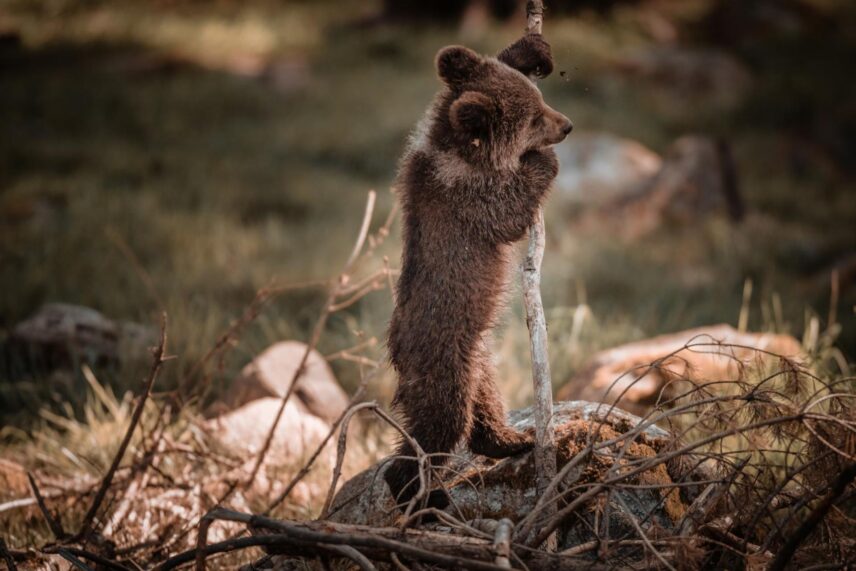
Should you encounter a bear cub during your adventures, it can be tempting to spend some time observing it. Rather than giving in to doing so, take the sight as a warning, as wherever there’s a cub, the mother will always be close by. The last thing you need is to appear as a threat to a mother bear’s cub, so observe the following rules:
- Never approach the cub or get between a mother and her cubs.
- Resist the urge to attempt to feed or photograph any cubs up close.
- Immediately back away from a cub slowly and calmly, keeping your eyes on the area to watch for the mother’s appearance.
Always remember to prioritize your safety when dealing with protective mother bears and their cubs.
Staying Safe — A Reminder for Outdoor Enthusiasts
Staying safe during bear encounters will hinge on your preparation and understanding of the bears’ behavior. Always be aware of your surroundings, know the types of bears you’ll encounter, and, first and foremost, follow the universal rules for handling bear sightings. If you respect wildlife by maintaining a safe distance and never approaching a bear or its cubs, the bears will usually respect your space in return.
Educating yourself leads to a safer outdoor experience, ensuring both you and the bears can coexist in harmony. Be safe and stay safe among these magnificent creatures.