As an Amazon Associate, Modded gets commissions for purchases made through links in this post.
What’s the difference between a front- and mid-engine car, and which is best for your needs? The answer varies based on who you ask, as everyone is different. Some people want a daily driver they can take to work. Others want a rugged vessel for off-road adventures.
When it comes to placement, no single layout is better than others. Still, you can learn more about front- vs. mid-engine cars and which is best for your needs.
Front-Engine Cars
When researching front-engine vs. mid-engine layout, the latter is the most common in today’s vehicles by a large margin. You’ll find all the vital components under the hood. Front-engine cars are more common because they allow for more room behind the front wheels — an ideal spot for storing mechanisms. As a result, these cars have flexibility when it comes to adding features.
Most cars with a front engine have front-wheel drive (FWD), like the Toyota Camry. With the wheels under the weight of the engine, FWD vehicles see improved traction in snow.
Others, like the Ford Mustang, have a front-engine and rear-wheel drive (RWD). Front-engine vehicles with RWD have a more balanced weight distribution than those with FWD, which is optimal for racing.
Most all-wheel-drive (AWD) vehicles, like the Subaru Outback, also have engines in the front. Like RWD, AWD offers improved traction control and handling in difficult terrain and adverse weather.
Pros and Cons of Front Engine Cars
You’ll discover many pros and cons of front-engine cars. Some advantages include:
- Enhanced functionality: The ample space in the middle and back of these vehicles is sensible for drivers who want to carry a lot of cargo or drive around several passengers. Front-engine vehicle owners have access to an ideal balance of technology and space.
- Drive layout options: Front-wheel drive, rear-wheel drive and all-wheel drive are available on front-engine vehicles. You can find whatever you need, whether it’s a standard driving experience, a race car or an off-roader.
- Ease of use: Front-engine cars feature excellent ease of use due to moderate operating characteristics and ideal balance.
These vehicles also exhibit some disadvantages, such as:
- Understeering: Cars with front engines are prone to oversteering due to the weight of the car moving back when accelerating. Sometimes, drivers have to over-correct in the direction they want.
- Slow acceleration: Front-engine cars typically offer gradual acceleration, also due to the weight shift. Acceleration is especially vital when it comes to racing. Racers want a balanced weight where the wheels grip the road.
Mid Engine Cars
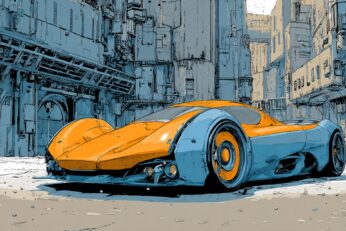
Vehicles with a mid-engine are far less common than front-engines. In this layout, the motor sits between the front and rear axles. Mid-engines typically sit closer to the front of the vehicle than the back. Most cars with this layout have the set-up directly behind the seats.
An engine between the two axles provides an even distribution of weight. You’ll typically find this engine layout in sports cars.
Pros and Cons of Mid-Engine Car
You’ll also find pros and cons of mid-engine cars. You can expect advantages to include:
- Excellent handling: Mid-engine cars are balanced better than their counterparts due to the layout. The motor sits between the two sets of wheels. As a result, they can take corners faster and more effortlessly.
- Rapid acceleration: Mid-engine cars don’t experience much of a weight shift when accelerating. As the engine sits near the wheels, the weight gives more traction during acceleration. This added traction allows for a rapid take-off.
Chevy’s new mid-engine Corvette, for example, is trying to tempt working-class buyers with a starting price of $60,000. For decades, the model used the front-engine layout, even as many sports car manufacturers made the switch. Experts believe the Corvette’s low price could push others to cost-effective innovation.
Even with these performance advantages, mid-engine cars have a few drawbacks, such as:
- Spacial limitations: Most mid-engine cars have less space than similarly-sized front-engine cars. You’ll typically find one row of seats and minimal storage — not ideal for long hauls with the family.
- Potential to spin out: While handling better than other cars, near-perfect balance can lead to problems if you lose control. The center of gravity in a mid-engine car makes it harder to get out of a spin.
Front and Mid-Engine Cars — Which Is Best?
When it comes to front and mid-engine cars, which is best? The answer depends on why you’re driving.
Do you need a vehicle that will get from Point A to Point B, even with cargo or adverse weather? If so, opt for a mid-engine layout. One of 2019’s best models includes the Mazda 3, a compact car that promotes a blend of driving dynamics, style, reliability and safety. Another top pick is the Mini Hardtop, a fun-to-drive vehicle with an upcoming all-electric model.
Are you all about high performance? Perhaps you enjoy racing or showing off on the streets. No matter your desire — such as a twin-turbocharged V6 or a 50-horsepower electric motor — choose a car with a mid-engine set-up.
A rare find is the rear-engine setup. In Europe, you can only find three rear-engine vehicles for sale — the Renault Twingo, the Smart and the Porsche 911.
Unless your wallet is overflowing, you’ll likely have to decide between a front- and mid-engine car. One option is not superior to the other. Instead, they both offer a variety of benefits. Research which layout best fits your need before you make your next purchase.