As an Amazon Associate, Modded gets commissions for purchases made through links in this post.
There are two reasons why people cover license plates in photos. They either want to protect their privacy or avoid incriminating themselves. So many people do it nowadays, from those selling their cars and those looking to purchase to car enthusiasts who see snapshots of cars online all day long.
While it might feel like the right thing to do, especially given our society’s emphasis on protecting our personal information, it might actually be less necessary than you think. If you’re debating whether to cover your license plates in photos, here’s a deep dive on the subject so you can choose the safest and most secure approach for your car.
Why Do People Censor Their License Plates?

Here are the common reasons why people hide their license plates:
- Vandalism: Posting the license plate makes your car much more identifiable, and if someone has a bone to pick with you and spots your car in public, they may just take out their frustrations on it.
- Theft: Thieves see rare and coveted car models as opportunities to make money, and with your license plate, they now know that the car is associated with you.
- Identity theft: Strangers who want to steal your identity might start with your vehicle registration plate. You register your vehicle with a license plate, the car title and other important documents.
- Doxxing: People can use your license plate as a jumping point to dox or publicly publish your private information with malicious intent.
Some owners might have had a bad experience, while others are just practicing precaution. If your main issue is car theft, use car security devices like wheel clamps, ignition disablers, steering wheel locks and GPS trackers.
Why Do People Cover Their License Plates on Facebook Marketplace?
It’s a different ball game for people selling their cars. Many people cover their license plates on Facebook Marketplace and Craigslist as a precaution against digital fraud and unwanted tracking. Many worry that displaying a visible plate number allows scammers to take screenshots of listing photos, create fake clone listings or attempt to cross-reference personal details such as home addresses. The instinct is to remove sensitive and private information from public peer-to-peer marketplaces.
According to an FTC Data Spotlight released in April 2026, consumers reported over $2.1 billion lost to social media scams in 2025. It was an eightfold increase from the $261 million reported in 2020. Furthermore, Facebook was identified as the most-reported platform for fraud, exceeding the combined losses from text and email scams. While a license plate alone rarely gives people instant access to your full identity, obscuring it provides sellers an easy layer of peace of mind in high-traffic online spaces.
On the flip side, if you’re a buyer, it might make you feel more assured when buying a car from a photo with a license plate number. After all, around 25% of car fraud victims began with social media. When you do view the car in real life, make sure to get an accident history report, check the car’s interior, examine the parts under the hood and go for a test-drive for a seamless experience in buying a used car.
How Do People Cover License Plates?
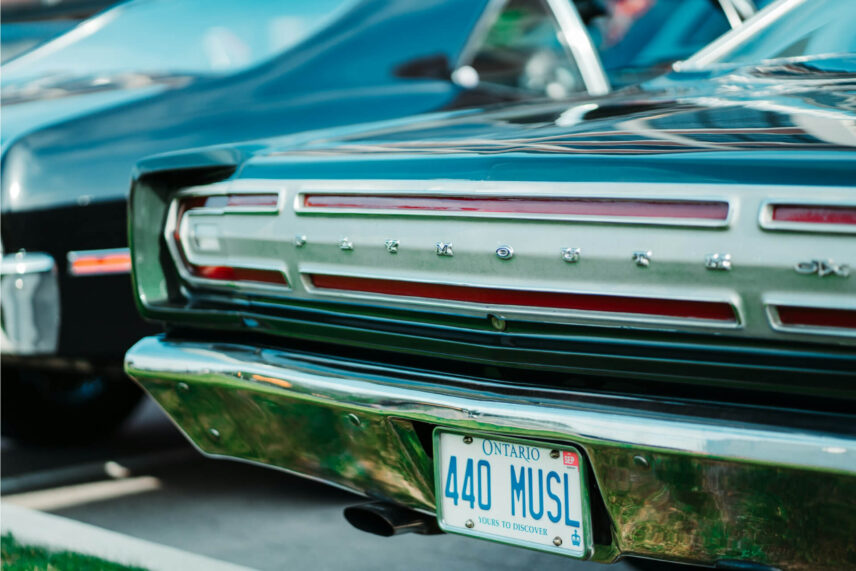
Sellers often cover a car’s license plate, especially on public platforms like Facebook Marketplace and Craigslist. The most common method is sticking their hand or finger in front of the camera to cover the license plate, but there are other creative entries.
For instance, a few drivers add a towel, tape or a fake plate as a cover. Some resort to blurring the license plate or adding an emoji over that section of the photo. You can even use a Batman-like license plate cover. This product lets you remotely activate a screen that hides the plate’s number and letter identifiers, though it may be illegal in some states.
The same practices are also used by those who like to post pictures of their cars on social media. It’s especially relevant for people who own expensive cars or who have put great effort into enhancing their vehicles. Sharing their personal information through their license plate can raise a couple of unwanted concerns.
Should I Hide My License Plate in Pictures?
Given the risks, it makes sense to cover up any personal information that might be visible in your pictures. This includes your license plate number, right? Well, not exactly.
While this choice might seem like a good idea at first, it actually isn’t necessary. Think about it this way — if you saw a photo of a car and its license plate and wanted to find the specific car or person who owned it, would you be able to? The answer is — for the most part — no! This is actually because of the Driver’s Privacy Protection Act, dating back to 1994.
This act essentially makes it illegal for motor vehicle departments to disclose any personal information they’ve gathered. This means you won’t be able to find someone’s name from their license plate number that easily.
Even if you can view personal information in your capacity as a high-level official, the DPPA still limits the use of motor vehicle records. Even the release of information requires explicit permission from the vehicle owner.
Just How Much Does Revealing Your License Plate Matter?
Now that we’ve established the protections in place for drivers and their personal information, it’s time to raise an important point. Remember that you and your license plate are still associated with each other whenever you’re out in public and driving your car.
While, of course, people who see you driving don’t necessarily know who you are or understand the connection between your car and your presence, they can still see you and read your license plate number if they want to. If nothing bad has happened from that, it stands to reason your car will be okay on the internet. It’s highly unlikely that posting a photo of your car on your private Facebook page for 500 friends will lead you to a crisis.
Why Would Someone Take a Picture of Your License Plate?
People photograph license plates for many legitimate and precautionary reasons. The first one is a prospective buyer taking a photo of a vehicle’s plate before completing a purchase to check state title databases, run vehicle history reports and confirm the seller’s identity. If you are preparing to evaluate a secondhand vehicle, check the engine carefully before committing.
Another reason might be property owners, towing services and drivers involved in minor parking issues and accidents. The photos serve as documentation of incidents and preserve evidence for legal or insurance claims.
It’s not illegal to post someone else’s license plate in the United States. After all, they are displayed in public view where there is no legal expectation of privacy. Photographing or posting a picture of a license plate online is typically legal unless the image is used to violate privacy laws, commit harassment or identity theft.
When Should You Not Cover Your License Plate?

Popular channels like Regular Car Reviews don’t bother to cover up license plate numbers, and they’re experts on the matter with a large following. That being said, some people might feel safer if they protect as much of their information as possible. For example, if you’re genuinely a celebrity, a YouTube star or a social media personality with lots of followers, it might be in your best interest to cover up your license if it makes you feel more comfortable.
Are License Plate Covers Illegal in My State?
It’s important to check the law in your local area to see whether your license plate covers are legal or not. Most states prohibit tinted, reflective or obscured license plate covers. For example, in Pennsylvania, it is unlawful to obscure a registration plate with a tinted cover. This is because the state employs a toll-by-plate system, and the cover can make it difficult to record license plate details. You may pay a fine of $100 when obstructing your license plate.
Remember that license plate cover that seems like it came straight out of Gotham City? Despite their popularity, these gadgets are illegal in Oregon, California, New York and other parts of the U.S. Plates must be clear and readable to both human eyes and automated camera sensors at all times. Tinted or smoked acrylic covers distort readability, while anti-glare coatings can block cameras, making them illegal in most jurisdictions.
Aside from bypassing toll collection and automated cameras, certain variations of this gadget can also distract drivers. For instance, if the material reflects light and causes flashes, it may temporarily blind motorists. While regulations on license plate covers for use on the road can vary from state to state, putting them on for photographs is harmless enough. Just make sure to remove them before you pull out of the garage.
How to Avoid Penalties and Fines
There are a few things you can do to ensure you do not receive penalties and fines due to your license plate:
- Keep plates entirely uncovered: Avoid using tinted shields, mirrored films or thick plastic covers, even if marketed as clear protective layers.
- Avoid obscuring frame borders: Ensure decorative license plate frames do not cover state names, expiration stickers or plate numbers.
- Maintain cleanliness and lighting: Ensure your vehicle’s license plate light is working and keep the plate clean from heavy mud, snow or dirt accumulation to avoid secondary traffic stops.
The Rise of License Plate Readers and Digital Surveillance
Beyond online marketplace listings, modern drivers are increasingly conscious of how their vehicle details are tracked and stored in the physical world. Automated License Plate Readers (ALPR) and camera systems have expanded rapidly across suburban roads, highways and commercial neighborhoods, capturing millions of vehicle movements daily. Systems such as Flock Safety log time-stamped photos of license plates, allowing law enforcement and private network operators to track vehicle location histories at scale.
In Denver, for instance, local police can store this data in their systems for up to 30 days. This widespread collection has reshaped public expectations of privacy, leading some motorists to seek out plate shields, physical covers or stealth sprays to prevent passive automated tracking. While privacy advocates raise legitimate concerns about data retention and location profiling, attempting to block ALPR systems with physical obstacles often backfires, creating immediate legal liability for drivers on public roadways.
More Questions About Covering Your Plates
Here are the most frequently asked questions about why people censor their license plates in online photos.
Why Do People Cover Their License Plates in Pictures?
People cover their license plates in pictures to make it difficult for strangers to associate the car with them. Many fear that those people would commit vandalism, theft or identity fraud. There’s also the matter of having your private information doxxed.
That said, people don’t need to cover their license plates even in photographs. There are laws in place that would protect you from such actions. However, if you feel more comfortable that way, that’s totally valid as well.
Why Would Someone Take a Picture of Your License Plate?
One reason someone may photograph your license plate is to file a complaint against your vehicle. It’s typically possible if you were involved in an accident or, at the very least, committed reckless driving. Law enforcement would require evidence and license plate information when investigating a traffic violation.
Aside from this, there are very few things someone can do with a picture of your license plate. In fact, there may be instances where people may have no malicious intent at all. They could just be appreciating your car or your custom-made or vintage license plate.
This attention could work in your favor at times. For instance, if you’re selling your car and you have your contact information in the back window, they can easily connect with you.
Why Should You Not Post Your License Plate Online?
Some people believe that it’s bad to post your license plate on social media or anywhere online, as it can increase the likelihood of identity theft or doxing. One possible idea is that a criminal uses a car similar to yours and uses your number plate, so you can take the fall if things ever go sideways. While that likelihood is low, many people still think it’s better to be safe than sorry.
It’s still your call whether to post your license plate. It would make sense to share information if you’re selling your car. You can take precautions such as limiting the reach of your social media post or providing alternative verification.
Is It Illegal to Post a Picture of Someone’s License Plate?
It’s actually legal to post a picture of someone’s license plate, as it doesn’t cross any regulations. However, the situation can be more complex when the picture is posted with malicious intent, such as harassment or identity theft. You can seek legal advice if someone is making up stories about you.
If you’re considering posting a picture of someone’s license plate, discuss the matter with the car owner first. Alternatively, you can opt out of sharing anything online to avoid the impending legal mess.
Cover Up or Leave It Be?
Really, as a regular person, you’ll likely never have to worry about your information being found or stolen through your license plate number. While you should do whatever makes you feel most comfortable, make sure to still check the regulations in your area. Try to relax and enjoy your vehicle without worrying about little things.
Originally posted May 14, 2021 – Updated September 25, 2026