As an Amazon Associate, Modded gets commissions for purchases made through links in this post.
If you’ve ever looked up beginner skiing advice, you’ve heard the same thing on repeat: make a pizza to slow down, switch to fries to go faster. It works — for about an hour. After that, most beginners get stuck. The wedge gets wider, turns feel forced and confidence stalls.
There’s a better approach. Instead of treating “pizza” as your foundation, treat it as a temporary training wheel. The real goal is better balance, edge awareness and using parallel skis from the start. The right mindset enhances your progress, control and how much fun your first ski days become.
This guide gives you a smarter beginner strategy that respects the athletic side of skiing without making it complicated.
Prepare Like a Pro Before Seeing Snow
Skiing looks casual from the chairlift. On the snow, it’s a full-body sport that started as a means of transportation from thousands of years ago. The more intention you bring before the trip, the smoother your learning curve will be.
Get Ski-Ready With a Fitness Approach
You don’t need a gym overhaul, but skiing uses muscles most daily routines ignore, so hit the exercise mat and work on your soon-to-be-used muscles. Quads take the load. Your core keeps you upright, and your ankles and hips provide balance with constant micro adjustments. Pick your favorite ski-appropriate music track that features slow to medium beats to help you work on rhythm and perseverance, even though you probably just want to be on the slopes already.
Focus on a short, repeatable routine for six to eight weeks to fatigue less and learn more on the snow:
- Squats and lunges to handle leg pressure
- Planks to stabilize your upper body
- Side-to-side skater jumps to prepare for lateral movement
Choose Your Proving Ground With the Right Resort
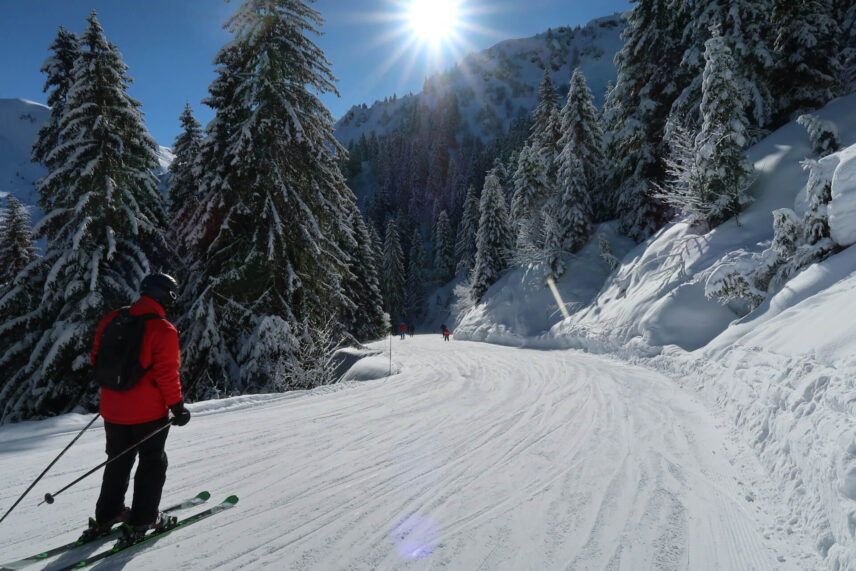
Big-name resorts look impressive, but they can overwhelm first-timers. Look for hills with wide beginner runs, dedicated learning zones and strong ski school reviews.
Smaller, local mountains often shine here. Fewer crowds mean more space to focus, fewer distractions and less pressure to “keep up.” Even climbing spots like Mount Everest can have more than 600 climbers during peak season, so hit your ski slope during off-peak and go where it’s quieter to learn.
Gear Up With the Right Rentals and Best Buys
Rent skis, boots and a helmet for your first few trips. Ski design matters less than fit at this point, especially boots. A snug boot gives you control and keeps your feet from fighting the ski.
Your first few buys should be comfort items that are personal and not really rentable. Choose a solid base layer with thermals and thin, high-quality ski socks, preferably in wool, not cotton. A waterproof jacket and pants with enough room to move in are must-haves. Warm gloves or mittens will ensure you can grip the poles easily.
Your First Day and Mastering FUNdamentals
The fastest learners don’t rush downhill. They control speed through balance, not fear. That’s where your beginner strategy is born and thrives. Cultivate it with wise decisions and helpful habits.
Move Like a Pro With Lessons
A lesson isn’t remedial. It’s about developing efficient movement, and that takes guidance. An instructor sees posture, weight distribution and habits you can’t feel yet, helping you adopt positive movement for progress. One morning lesson can save days of frustration. Remember to tell your instructor your goal is control and progression, not just surviving the slope.
Strategize for Parallel Proficiency
Here’s the shift — aim to keep your skis mostly parallel or next to each other with equal distances between the front tips and the back ones. Do this even at slow speeds. Instead of pushing into a big pizza, you use subtle pressure changes to guide turns.
You’re not abandoning the wedge completely. Instead, you’re shrinking it. Think of a narrow stance in which the skis momentarily angle, then come back together.
Key sensations to focus on include the pressure on the downhill ski, turning your eyes and shoulders where you want to go for added focus and moving your hands forward with an open chest and athletic stance. This builds habits that scale naturally as terrain changes, whether you’re on a bunny slope or hitting steep alpine sides in Whistler, Canada.
Go Solo With Drills
After your lessons, resist the mountain’s call, as you’re not ready for solo roaming yet. Stay on the bunny slope a bit longer and repeat controlled drills. Start with straight glides to feel and form your balance. Add side-slipping to understand the skis’ edge grip. Finish with wide, C-shaped turns that end across the hill. Remember, each run should have a purpose.
When you finally get your basics down and start ripping up the slopes with intention, you could even consider going to a major resort like Grand Teton National Park near Jackson Hole, which features more advanced slopes with elevations of 7,500 to 14,500 feet. Enjoy seasonal skijoring, where you get pulled by an animal, such as a horse, dogs and even an elk.
5 Foundational Ski Moves to Perfect as a Beginner
The best beginner ski moves aren’t fancy hills or jumps. Instead, it’s basic movements that help you stick the slopes and enjoy your time on the mountain.
1. The Power Stance
Bend equally at the hips, ankles and knees with the weight slightly forward.
2. Walk With One Ski
To start, practice controlling your skiing with one ski on and the other off. This lets you get over the initial slippery feeling and find your balance through movement. Repeat on both sides.
3. Parallel Turns
Turning controls speed, which is why you should practice shifting your weight from foot to foot, letting the unweighted ski line up with each turn.
4. The Plough Stop
Slow down or stop by bringing your center of gravity down, bracing with your poles and turning the ski tips inward. Friction will slow you down and stop you.
5. The Fall
When skiing, you will probably fall at some point, so practice doing so safely. Don’t resist it, just let it happen, sit down on the slope and push the skis away from your body.
FAQ
How Long Does It Take to Learn to Ski?
Most people can comfortably ski green runs within a weekend when focusing on fundamentals. With consistent practice, blue runs often follow within the first season.
Is Skiing Dangerous?
Like any sport, skiing has risks. Staying within your ability, maintaining control and learning proper technique keep risk manageable.
What’s the Biggest Mistake Beginner Skiers Make?
Relying on the pizza wedge alone. It limits balance, delays your parallel control and creates habits that slow progress.
The Smarter Way to Learn
Pizza and fries aren’t wrong, but they can be complicated when you start. When you treat skiing as an athletic skill built on balance and panic-free movements, progress feels natural instead of forced.
Learn parallel movements early on and drill intentionally. Choose terrain that supports growth, and you’ll ski smoother, feel stronger and enjoy the mountain and fresh powder sooner than you expect.