As an Amazon Associate, Modded gets commissions for purchases made through links in this post.
A World Cup watch party is a chance to celebrate the countries on the pitch through food, music and, of course, drinks from around the world. The best part is you don’t need to be a professional bartender! Many classic drinks rely on just a few quality ingredients and a little history. Here are eight iconic choices representing some of the most popular countries that participated in the 2026 World Cup.
1. Spain: Tinto de Verano
Spain’s favorite warm-weather drink isn’t actually sangria. Locals often reach for Tinto de Verano, a refreshing combination of red wine and lemon soda. This classic Spanish summer drink has a history stretching back over 100 years. It was said to be created by Federico Vargas, a bar owner in Córdoba, Spain, who mixed red wine with a carbonated soft drink to beat the intense summer heat. The light, bubbly beverage was an instant hit and has been a popular choice ever since.
The drink remains a staple at cafés, terraces and summer gatherings across the country. Its appeal lies in its simplicity. Equal parts young Spanish red wine and lemon soda served over plenty of ice create a beverage that’s lighter than sangria and far easier to prepare for a crowd.
Add a lemon wheel and you’re done. It pairs beautifully with tapas like olives, jamón and tortilla española, making it ideal if your World Cup spread leans Mediterranean.
2. Argentina: Fernet con Coca
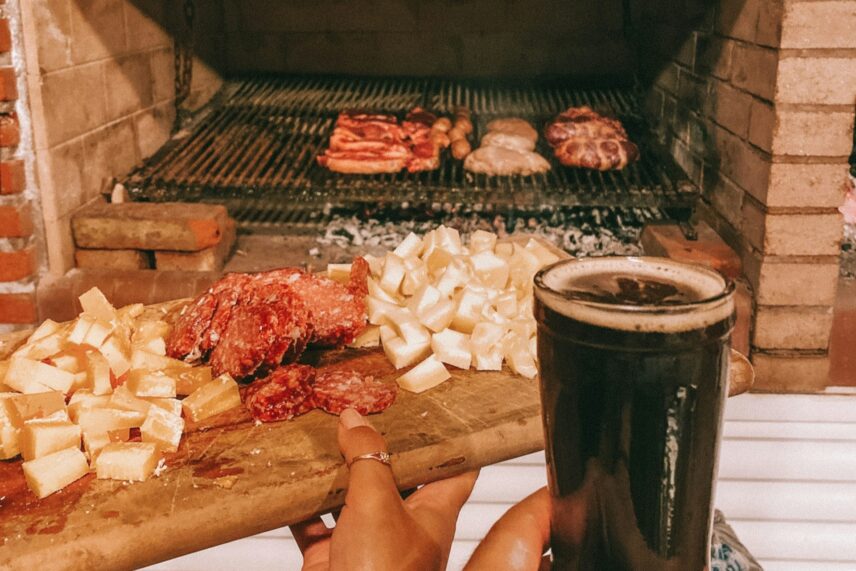
Few drinks feel more authentic than a Fernet con Coca. The history of Fernet con Coca began in 1870 when the Italian spirits company Societa Fratelli Branca dispatched a young employee to Buenos Aires. His mission was to cultivate a market for the company’s amaro in Argentina, which at the time was home to a rapidly expanding Italian immigrant population.
Today, Fernet has become one of Argentina’s defining social beverages. The cocktail couldn’t be simpler. Fill a tall glass with ice, pour roughly one part Fernet to three parts cola and garnish with an orange slice if you want a citrus aroma.
The herbal bitterness balances the soda’s sweetness, making it surprisingly refreshing during a long afternoon of football. If your guests have never tried it, they’ll discover why this combination has become synonymous with Argentine celebrations.
3. England: Pimm’s Cup
Nothing says an English summer quite like a Pimm’s Cup. Although closely associated with Wimbledon and garden parties, this refreshing cocktail works just as well while watching football with friends. Pimm’s No. 1 forms the foundation of the drink. Pimm’s liqueur was first created in the early 1800s by James Pimm, the owner of a London tavern. He marketed a “house cup” as a digestive aid to his customers. This signature tonic eventually evolved into the commercially produced Pimm’s No. 1.
The brand later released other numbered versions, each using a different base spirit but the same secret blend of herbs. As the liqueur gained international popularity, it transformed into the fruity cocktail we recognize today. Different regions adapted the recipe to their own tastes, like New Orleans version, which uses lemonade and 7UP. Despite its global reach, the modern Pimm’s Cup is most enthusiastically celebrated in Great Britain, its place of origin.
Mix Pimm’s with lemonade over ice, then load the glass with cucumber, strawberries, orange slices and fresh mint. The result is light, fruity and easy to sip through extra time. Since it’s relatively low in alcohol compared to many cocktails, it’s also an excellent choice for afternoon matches.
4. France: Kir Royale
This classic French apéritif combines Champagne with crème de cassis, a blackcurrant liqueur, creating a drink that’s both sophisticated and remarkably easy to make. While the exact inventor of the Kir Royale remains uncertain, it evolved from the original Kir, a mixture of white Burgundy wine and crème de cassis popularized by Felix Kir, a Catholic priest, French Resistance member and later the mayor of Dijon during and after World War II.
The original Kir emerged during the war when red Burgundy wines became scarce, prompting the use of local white Aligoté wine mixed with cassis as a symbol of resilience. The Champagne version later became the more festive Kir Royale.
To make one, pour about ½ ounce of crème de cassis into a Champagne flute and slowly top it with chilled Champagne or another dry sparkling wine. There’s no need to stir, as the bubbles naturally blend the ingredients. Garnish with a fresh blackberry or raspberry for an extra touch of color.
Although not particularly French in origin, another popular drink is the French 75, which is named after the Canon de 75 modèle 1897, a rapid-firing field artillery gun used by the French in World War I. It has a distinctive character, with a flavor profile that is both slightly bitter and slightly sweet.
5. Norway: Fjellbekk
If you want to showcase a distinctly Norwegian cocktail, serve a Fjellbekk. It translates to “mountain stream” and was named after Norway’s crystal-clear alpine waterways. This refreshing highball originally included blue curacao as the main spirit, but nowadays it is common to use aquavit, a traditional Norwegian drink.
Most people believe that the cocktail originated in the 1960s. It has long been considered a Norwegian classic, blending aquavit with vodka, citrus and lemon soda for a crisp, easy-drinking refreshment. While there are several variations, the drink has become one of Norway’s most recognizable cocktails abroad.
A Fjellbekk combines aquavit, vodka, fresh lime juice and lemon soda over ice. Garnish it with a lime wheel and serve it in a highball glass. The bright citrus and herbal notes make it an ideal choice for a World Cup watch party, especially alongside smoked salmon, shrimp or other Scandinavian-inspired snacks. If you’re constantly hosting parties or meetups, a cocktail-making kit is an excellent idea to prepare this cocktail and all the drinks you’d like to try without having to buy every mixing tool separately.
6. Mexico: Margarita
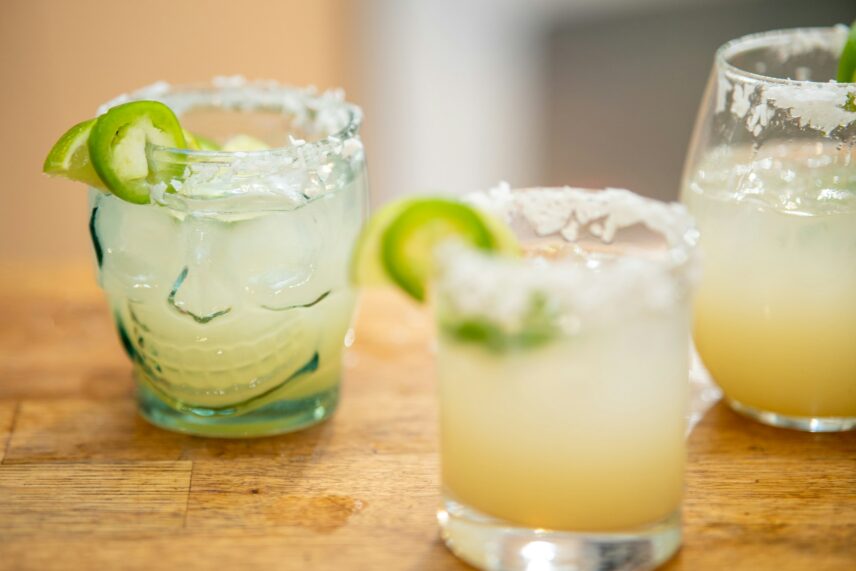
No roundup of drinks from around the world would be complete without Mexico’s legendary Margarita. Although several stories compete to explain its origin and none of them are proven, it is generally agreed that the cocktail emerged along the U.S.-Mexico border during the 1940s before becoming one of the world’s most popular cocktails.
The classic recipe remains refreshingly straightforward — tequila, fresh lime juice and orange liqueur shaken with ice before being served in a salt-rimmed glass. Skip the overly sweet bottled mixes and use fresh citrus instead.
If you want to try something different, the Spicy Mint Avocado Margarita may be just what you’re looking for. This unique cocktail recipe delivers a full-bodied flavor with a refreshing kick of heat by highlighting special ingredients like creamy avocado and spicy jalapeño. Whether you serve a traditional Margarita or one with a twist, this cocktail instantly creates a festive atmosphere worthy of any knockout-round celebration.
7. United States: Old Fashioned
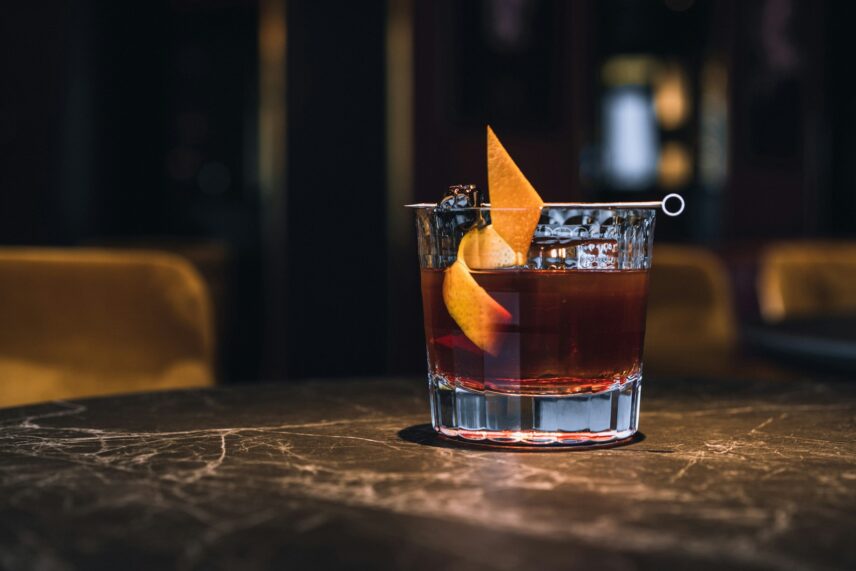
The Old Fashioned represents American cocktail culture at its finest. This cocktail’s fundamental concept — a drink made with a spirit, a sweetener, and bitters — originated in England. This tradition began after apothecary Richard Stoughton created the first aromatic bitters around 1690. By the mid-1700s, his bitters were a common feature in bars across Britain and its colonies, where people typically mixed it with brandy, gin and sweet wine.
Later, in the late 1700s, the practice of mixing bitters with whiskey became common in America, possibly influenced by the country’s whiskey-favoring first president. This led to the creation of the “Whiskey Cocktail,” which was served straight-up without ice and grew increasingly popular in the early 1800s.
For your watch party, stir bourbon with bitters and a sugar cube over ice, then garnish with an orange peel. The drink’s balance of sweetness, spice and oak works especially well during evening matches or alongside grilled burgers and barbecue. It also demonstrates how sometimes the simplest recipes become enduring classics.
8. Canada: Caesar
Many people outside Canada have never tried a Caesar, yet it may be the country’s most beloved cocktail and it is considered the national cocktail. It even has its own holiday. Every May, National Caesar Day is observed on the Thursday just before the Victoria Day long weekend.
Invented in Calgary in 1969 by restaurant manager Walter Chell, the drink combines vodka, Clamato juice, hot sauce and Worcestershire sauce in a celery salt-rimmed glass.
Its savory profile makes it surprisingly versatile during a World Cup brunch or lunchtime kickoff. Garnish with celery, pickled beans or even a shrimp skewer if you want something more elaborate. It’s bold, flavorful and guaranteed to spark conversation among guests unfamiliar with Canada’s national favorite.
Build Your Own International Beverage Menu
The beauty of serving drinks from around the world is that each one tells a story beyond what’s happening on the field. Your guests can experience Argentine football culture with Fernet con Coca, toast a French victory with a Kir Royale, or celebrate Mexico with fresh Margaritas. Every glass becomes another way to appreciate the traditions that make the World Cup the world’s biggest sporting event. Keep your menu balanced with lighter options like Tinto de Verano and Pimm’s Cup alongside richer choices like the Old Fashioned and Caesar.
Add country flags, regional snacks and themed playlists, and your gathering will feel like an international celebration from the opening whistle until the final trophy presentation.