As an Amazon Associate, Modded gets commissions for purchases made through links in this post.
With spooky season in full swing, your job hunt might be due for a twist you didn’t see coming. Grave digger jobs are real, legitimate work most men have never seriously considered. The role involves a lot more than the Halloween-costume stereotype of a guy with a shovel. Here’s what the job actually entails, what it pays, where to look and how to break in.
What Does a Grave Digger Actually Do All Day?
The job is more varied and skilled than most people assume. A cemetery grave digger’s responsibilities go well beyond standing in a hole with a spade. You’re measuring and marking burial plots to precise specifications, operating a backhoe to excavate earth, lining graves with protective materials and placing caskets onto lowering devices during services. Between burials, you’re maintaining the grounds through mowing, pruning, headstone cleaning and pathway upkeep.
It’s a blend of manual labor, equipment operation and quiet respect for the families involved. Unlike the gamepad-inventory horror of ZombiU, where one mistake means death, real grave digging doesn’t involve monsters coming back. Just hard, honest work that requires focus and care.
The role demands physical stamina but also the maturity to handle sensitive moments with discretion. You might spend a Tuesday morning running a backhoe and that same afternoon standing respectfully at a distance during a veteran’s burial. The job asks you to shift gears between technical tasks and solemn presence, often multiple times in a single day.
Is Grave Digging Dangerous or Hard on the Body?
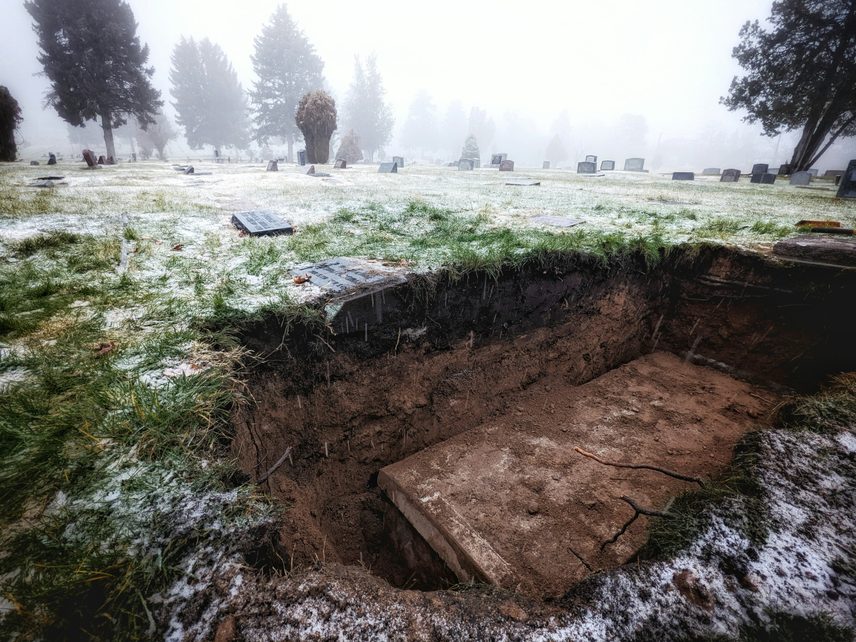
This is physical labor, though increasingly mechanized compared to decades past. The biomechanical toll is real and worth understanding before you commit. A 2025 ergonomic study of 18 male gravediggers with an average age of 49 found that shoulder pain was most prevalent, followed by issues in the knees, lower back and elbows.
The same research concluded that all evaluated gravedigging activities scored “high” or “very high” biomechanical risk, with the highest strain concentrated in the trunk, shoulders and neck. Your body takes the brunt of repetitive digging, lifting and bending.
Even with backhoes handling the bulk excavation, you’re still climbing in and out of graves, shoveling corners the machine can’t reach and maneuvering heavy equipment across uneven terrain. There’s also a smaller but real collapse risk tied to excavation work.
Gravediggers are technically categorized as grounds maintenance workers under the same broad occupational umbrella as several jobs on more dangerous lists, though this isn’t the most hazardous profession out there.
No zombie attacks, but your shoulders might file a complaint after a few years on the job.
Can the Job Take an Emotional Toll?
Yes, very much so. Research in the journal Post-Medieval Archaeology noted that grave diggers perform important emotional labor in their interactions with the dead and their families. You become the unsung last living person to interact with the coffin before it’s lowered into the earth. That carries psychological weight, whether you’re prepared for it or not.
Contrary to the “desensitized gravedigger” stereotype, the research concluded that cemetery workers are not as immune to being around death as commonly assumed. In fact, a phenomenological study of cemetery workers found recurring negative emotional features among participants, including depression, anxiety and fear.
The study noted that dealing with death is described as “a continued battle,” with workers coping through humor, support from colleagues and spirituality. The researchers suggested that cemetery workers may benefit from psychological support or intervention. This is real, difficult human work.
What Does a Grave Digger Actually Make?
After covering the physical and emotional demands, here’s what the job pays. According to real-time job posting data, the average gravedigger salary in the United States is approximately $35,699 per year, which works out to about $17 per hour. Keep in mind that figure may shift slightly over time as the labor market changes. It’s not a path to wealth, but it’s steady work with a clear purpose.
Where Can You Look for Grave Digger Jobs?
Cemetery grave digger openings tend to show up through a few main employer categories:
- Private and municipal cemeteries: These are your bread-and-butter employers, ranging from small town operations to large urban memorial parks. They hire year-round and often recruit for multiple grave digger jobs.
- Funeral homes: Some funeral homes employ their own grave diggers to handle burials at affiliated cemeteries. You might wear multiple hats here, assisting with other funeral services beyond digging.
- National veterans’ cemeteries: The National Cemetery Administration describes its Cemetery Caretaker role as “the backbone” of the workforce, maintaining more than 150 national cemeteries as shrines honoring veterans. These positions often come with federal benefits.
- Green and natural burial grounds: This is a newer, growing category. Natural burial sites skip embalming and metal caskets in favor of biodegradable materials. If you’re drawn to environmentally conscious work, this niche might appeal to you.
Don’t limit yourself to job boards. Direct outreach to local cemeteries and funeral homes can be more effective, especially in smaller communities where positions get filled by word of mouth before they ever hit the internet.
How to Become a Grave Digger
Unlike many trades, becoming a grave digger doesn’t require a long list of credentials. No particular formal qualifications are required to become a cemetery worker in most cases, though some employers may ask for basic secondary education. Physical readiness matters most. You need to handle repetitive heavy lifting, long hours outdoors in all weather, and the stamina to operate equipment safely.
That said, horticultural or landscaping coursework can provide useful skills. You’ll learn how to maintain green spaces, use tools safely and operate machinery like mini diggers. Hands-on experience in landscaping, gardening or running a backhoe is considered valuable by many hiring managers. If you’ve spent a summer mowing commercial properties or a few seasons working grounds maintenance at a golf course, that’s relevant experience worth mentioning.
Your best bet is direct outreach to local cemeteries and funeral homes. Call or visit in person and ask if they’re hiring or expect openings soon. Be upfront about wanting to do the work respectfully. This profession demands maturity and discretion, and employers want to know you understand that.
October might feel like the right time thematically to make your move, but cemetery hiring happens year-round. Don’t wait for a full moon or a particularly foggy morning. Just reach out, express your interest and be ready to start when they need you.
What If Grave Digging Isn’t Quite Your Thing?

Not everyone’s cut out for this work, and that’s fine. Here are a few equally offbeat alternatives if you like the “darker side of life” but this specific role doesn’t fit:
- Paranormal guide: This deliciously spooky role can pay around $60 per hour leading ghost tours through historic graveyards, haunted buildings and sites with eerie backstories. You get to lean into the spooky storytelling without the physical toll.
- Storm chaser: If intense outdoor experiences appeal to you, storm chasing offers a super-intense career path tracking severe weather systems. It’s physically demanding, unpredictable and requires quick thinking under pressure.
- Mortuary assistant: Working behind the scenes at a funeral home, you’d help prepare bodies for burial or cremation, assist with embalming and support funeral directors during services. It’s another role that demands respect for the deceased and their families.
- Crime scene cleaner: This job involves sanitizing spaces after traumatic events, including deaths, accidents and violent crimes. It pays well, requires strong stomach tolerance and offers steady demand.
- Taxidermist: If you’re comfortable working with the dead but prefer animals to people, taxidermy lets you preserve wildlife for museums, hunters and educational displays. It’s meticulous, artistic work with a macabre edge.
Ready to Dig Into a New Career?
Grave digger jobs physically demanding but with surprisingly accessible entry points. You don’t need years of training or a mountain of credentials. Just physical readiness, maturity and the willingness to show up and do hard work respectfully. If you’re hunting for something different this spooky season, this might be worth a second look. Reach out to local cemeteries, ask about openings and see where the conversation leads.