As an Amazon Associate, Modded gets commissions for purchases made through links in this post.
The business-casual dress code for men is among the most confusing in the workplace. You know you’re not supposed to show up looking like you’re going to a friend’s house. You’re also not expected to look like you’re auditioning for a corner office in the 50’s. The good news is that business casual is easier to understand once you consider it a middle ground between polished, structured clothing and the stiffness of a full suit.
The tricky part is knowing where the boundaries are. That’s where the details such as fit, fabric, footwear and even your industry start to matter.
Are Jeans Business Casual?

Yes, jeans can be business casual, but only if your workplace allows them and you choose the right pair. The safest formula is dark-wash denim with zero distressing, fading or rips. The best jeans silhouette for the office is a tailored straight-leg fit. In order to look professional, make sure you dress the rest of your outfit up with a blazer, Oxford shirt, leather loafers, belt and watch. The goal is to make the denim the most casual element of the outfit rather than letting the entire look drift into casual territory.
Jeans are much easier to get away with in a modern tech, creative or media workplace than in finance or law. If your office requires more professional outfits, chinos or dress pants are still the safer bet. When you’re new to an office, take a few days to observe what everyone else is wearing before making denim part of your rotation.
Easy Business Casual Examples You Can Rely on

Here are a few business casual examples to make your mornings easier.
The Chino and Classic Button Down Combo
Pair a well-fitted Oxford or classic button-down shirt with tailored chinos and leather loafers, derbies or Oxfords. Navy, olive, gray and other muted tones are great choices for the chinos because they’re versatile without looking boring.
For the shirt, white and light blue are practically impossible to mess up. A subtle stripe or an understated pattern can add personality to your officewear. This combination is particularly useful when you’re unsure how formal your office really is.
Dark Denim With a Tailored Sport Coat
For some offices, jeans are considered as business casual. To elevate the bottomwear, choose a clean, dark pair of denim. Add a crisp button-down and finish the outfit with a structured sport coat or textured blazer. Brown leather loafers or derbies complete the look.
The jacket works because it introduces structure and immediately pulls the outfit toward the business side of business casual. Rather than trying to make jeans look like dress pants, you’re balancing their casual character with more sophisticated pieces.
For the jacket itself, avoid anything that looks overly corporate or like part of a mismatched suit. Textured, unstructured fabrics, such as heavier cotton or linen, tend to work particularly well for this relaxed professional aesthetic.
The Quarter Zip and Loafer Formula
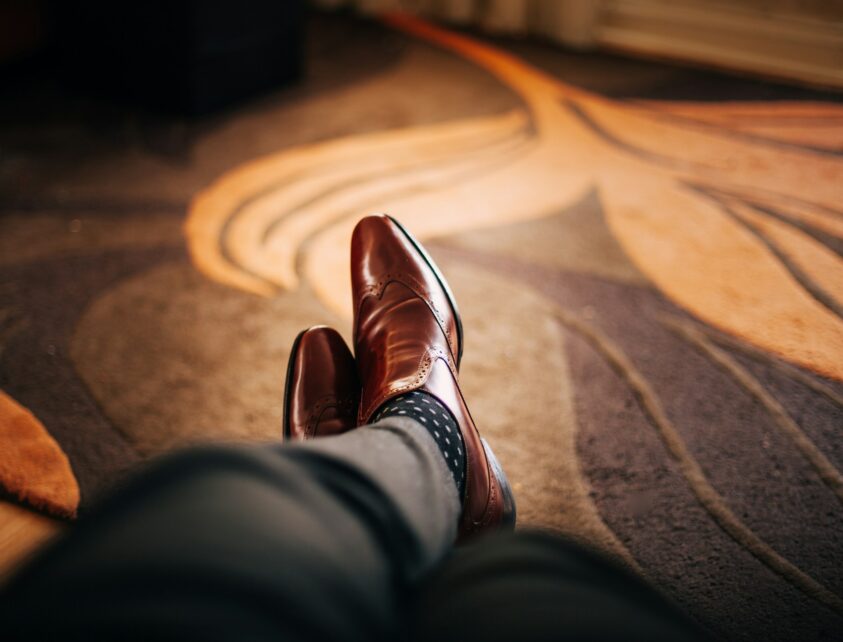
A quarter-zip is a good example of a business-casual piece that leans more toward the casual side. Choose a fine-knit quarter zip in a neutral color such as navy, charcoal, gray or camel. Then, you can pair it with tailored trousers and leather loafers.
The key is the fabric. A fine, refined knit looks intentional, while a bulky fleece quarter zip looks like you’re preparing for a weekend hike. This formula is especially useful in offices where business casual has evolved toward comfort without completely abandoning professionalism.
Mastering Business Casual Footwear
The business casual dress code for men usually emphasizes shoes. Get them right and even relatively relaxed clothing looks polished. Avoid wearing very casual footwear, such as socks with sandals. Sneakers can work, but think of them as a rare piece of officewear rather than the default. If your office culture allows them, choose a minimalist leather pair that is exceptionally clean, understated and free of obvious athletic branding.
The best choices are leather Oxfords, derbies, monk straps and loafers. These give you a professional foundation for business-casual calls without forcing you into the formality of a full business suit.
Adapting Your Office Wardrobe for the Seasons
Business casual shouldn’t mean sweating through a button-down in July or piling three bulky layers on top of each other in January. The trick is adjusting your fabrics while keeping the same underlying level of polish.
For summer, turn to breathable materials such as linen, lightweight cotton, cotton-linen blends and lightweight wool. Lightweight chinos and loafers can look polished without feeling overly formal. Summer is also a good time to use lighter shades such as stone, beige, light gray, muted olive and softer blues.
Winter gives you more opportunities to layer. Heavier wool trousers, merino knits, Oxford shirts and textured sport coats add warmth while maintaining structure. Keep the silhouette clean, the fabrics intentional and the overall outfit appropriate for your workplace.
Finishing Touches That Elevate Your Look
A great business casual outfit can still fall flat if the rest of your presentation looks neglected. Your clothes might be perfectly tailored, but an overgrown haircut, scuffed shoes or a wrinkled shirt can undo the effect surprisingly quickly.
Keep your hair maintained, your facial hair intentional and your skin reasonably cared for. Simply upgrading your grooming routine can make the same clothes look considerably more polished.
Accessories should follow the same philosophy. A simple leather belt, an understated watch and quality bag are usually enough. Your belt should generally complement your shoes, while your watch should enhance the outfit rather than dominate it. Keep logos and flashy accessories to a minimum.
Good posture, eye contact, a relaxed demeanor and the ability to speak confidently can do more for your professional image than another expensive jacket ever will. Developing a confident presence is ultimately the best accessory you can add to any outfit.
Own Your Professional Style
The business casual dress code for men isn’t complicated. You can start with fundamentals such as a well-fitting collared shirt or refined knit, tailored chinos and polished shoes. From there, you can experiment with sport coats, dark denim, loafers and seasonal fabrics as your workplace allows.