As an Amazon Associate, Modded gets commissions for purchases made through links in this post.
You’ve probably heard the warnings that cellphone radiation might be frying your brain. Maybe you’ve even seen someone joke about tin foil hats. Beneath the conspiracy theories and clickbait, there’s actually a legitimate scientific debate happening. New research is challenging decades of consensus about whether your phone poses real health risks. The evidence is more complex than most people realize.
What Is Cellphone Radiation Anyway?

Most people hear radiation and immediately picture a nuclear disaster, but your phone’s radiation operates on an entirely different level. You don’t need to plan for doomsday survival just because you made a phone call.
When people talk about cellphone radiation, they’re referring to radiofrequency (RF) electromagnetic fields (EMF). Your phone emits these invisible waves to communicate with cell towers.
This radiation falls into the non-ionizing category, fundamentally different from ionizing radiation like X-rays. Non-ionizing radiation doesn’t carry enough energy to detach electrons from atoms, so it cannot directly damage your DNA.
The Old Consensus — It’s All About Heat
For decades, the only recognized biological effect of non-ionizing radiation was thermal. Scientists understood that RF-EMF could heat tissue, similar to how a microwave oven works.
However, because this radiation doesn’t directly break chemical bonds or damage DNA, the scientific consensus held that there was no mechanism for it to cause serious harm like cancer. Cellphones don’t produce enough heat to cook bodily tissue, so regulatory agencies concluded they were safe.
This is why most major institutions still maintain that cellphone radiation poses no significant health risk.
When The Red Flags Started Waving
The comfortable consensus began showing cracks when new evidence suggested the “it’s just heat” argument might be incomplete. The pivotal moment came in 2018 with a major government study that seriously challenged the thermal-only framework, even though it examined older 2G and 3G technology.
The National Toxicology Program’s study concluded that high exposure to RF radiation was associated with heart tumors in male rats. The results were significant enough to warrant the “clear evidence” designation, which is as close as cautious government scientists get to raising an alarm.
The study rattled the scientific community because it demonstrated biological effects that shouldn’t exist if heat were the only mechanism at work.
A New Focus on Non-Thermal Effects
The NTP findings sparked renewed interest in whether cellphone radiation could harm the body through mechanisms beyond tissue heating. Researchers began investigating whether RF-EMF might trigger biological processes that could lead to disease, even without directly damaging DNA or raising tissue temperature. This shift opened entirely new lines of inquiry.
Exploring The Latest Research on Cellphone Radiation Effects
Modern research is uncovering specific non-thermal mechanisms that could explain how cellphone radiation effects manifest in biological systems. These are measurable changes happening at the cellular level, not theoretical concerns.
The Link To Oxidative Stress
Oxidative stress occurs when the body lacks sufficient antioxidants to neutralize harmful free radicals. Over time, it can cause damage to cells and tissues. Multiple studies now suggest a connection between RF radiation exposure and oxidative stress. A major 2021 review concluded that most animal studies and many cell studies showed increased oxidative stress following exposure to RF-EMF.
The implications are significant because oxidative stress is linked to health problems ranging from accelerated aging to chronic diseases. If RF radiation consistently triggers this response, the thermal-only safety framework looks increasingly inadequate.
Evidence of Disrupted Cell Division
The newest research gets even more specific about how smartphone radiation might cause harm without directly breaking DNA. A 2024 human intervention study found that mobile phone radiation can disrupt cell division and cause cell death in ways that weren’t previously understood.
These disruptions could trigger secondary issues, such as chronic inflammation, which can lead to serious illness. The research suggests that the danger lies in a cascade of biological effects that accumulate over time, rather than in immediate DNA damage.
What About The Bigger Wireless Picture?
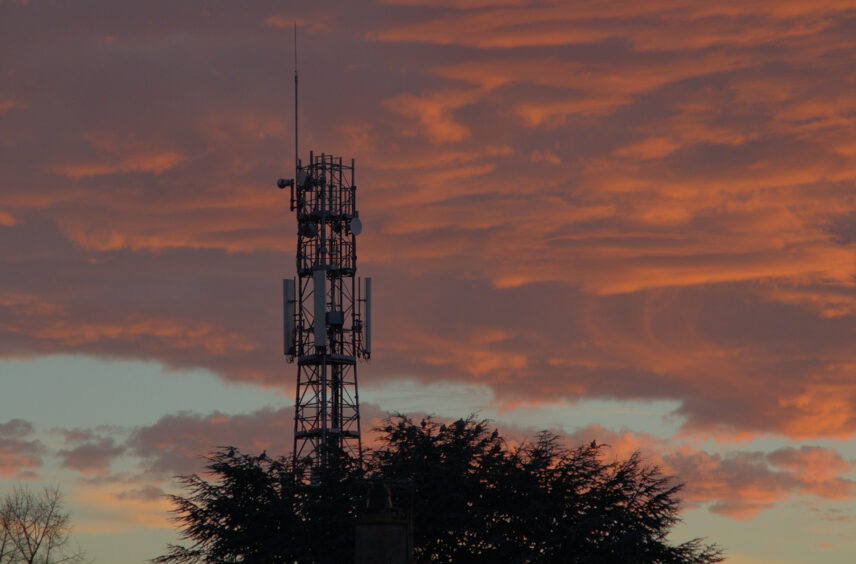
Individual phone use is just one piece of the puzzle. Many people live and work in environments saturated with wireless signals from cell towers, Wi-Fi routers and other RF-emitting infrastructure.
Living Near Cellphone Towers
The question of ambient exposure from cell towers has generated considerable research, and the findings are concerning. A 2022 review examining populations living near cell phone base stations found that over 73% of studies worldwide reported serious health effects, including increased cancer risk.
Importantly, the studies reviewed were not only human-based. They included research into the effects on nearby animal and tree populations, ruling out psychosomatic explanations for the evidence of health concerns.
The consistency across geographic regions and study methodologies suggests this isn’t just statistical noise.
Connecting the Dots to 5G
The rollout of 5G technology has intensified the debate because it requires more infrastructure and operates on different frequencies. A comprehensive 2025 review article highlights that numerous studies have found strong links between wireless technologies and serious biological effects, including cancer, oxidative stress and endocrine disruption.
The concerns extend beyond individual phones to the cumulative exposure from an increasingly wireless world.
Where The Debate Stands Today
Cellphone radiation isn’t a settled issue relegated to fringe websites. The scientific and regulatory establishment is actively reconsidering long-held positions.
The federal government is launching a new study specifically to investigate these health risks. Meanwhile, some government websites have quietly removed language that previously stated cellphone radiation is safe.
The timing is notable, given that the current Secretary of Health, Robert F. Kennedy Jr., has expressed controversial views on health matters. There may be political elements at play alongside genuine scientific concern.
The Challenge of Proving Real-World Harm
While new concerns are being raised, the main counter-argument is also strong. This maintains that observing a biological effect in a lab doesn’t automatically prove it causes disease in real-world conditions.
Scientists can measure oxidative stress or disrupted cell division in controlled studies, but translating those findings to actual disease rates in human populations requires more evidence. The gap between plausible theory and real-world evidence can be challenging, even for researchers working in good faith.
This uncertainty is why the debate continues despite mounting biological evidence.
What This Means for You

Here’s some grounding perspective. While the science on radiation remains unsettled, there’s a proven danger associated with cellphones that kills people every day. Federal data shows that 14% of fatal car accidents involve cell phone use. The clearest threat from your phone might be the distraction it creates.
If solid, real-world evidence of radiation harm ever emerges, it’s likely that smartphone accessories will also be developed to help mitigate the issue. With phones and wireless tech now so inextricably embedded in our daily lives, it’s unlikely that we will abandon them.
The Bottom Line on Your Daily Scrolling
The science around cellphone radiation is evolving and far from settled. What was once dismissed as impossible now has growing evidence of non-thermal biological effects. Oxidative stress, disrupted cell division and other mechanisms suggest there may be more to this story than regulators initially thought. The evidence warrants attention, but it doesn’t warrant panic. Stay informed, follow the research and remember that being knowledgeable beats being alarmist every time new evidence arises.