As an Amazon Associate, Modded gets commissions for purchases made through links in this post.
Your morning coffee might be made the same way every day, but that doesn’t mean it has to be. There are various brewing techniques out there that can produce cups with completely different flavors, textures and aromas. If your usual technique is starting to feel a little predictable and boring, below are six ways to make coffee that can make your next cup a lot more interesting.
1. Skip the Filter With Kopi Tubruk
If you like the idea of a great cup of joe without gadgets, timers or complicated instructions, kopi tubruk might become your new favorite. This Indonesian classic is about as simple as it gets. In a country that produces both arabica and robusta beans and contributes 5% of the world’s coffee exports, this remains one of the most common ways to make coffee.
To prepare it, add a heaping tablespoon of very finely ground coffee to a mug. If you take sugar, add it now. Then pour freshly boiled water over the grounds, give everything a stir and let it sit for three to five minutes. During that time, the grounds naturally settle to the bottom of the cup.
There’s no filter involved, which means more of the coffee’s natural oils and body end up in your drink. You’ll get a bold, rich and wonderfully unfussy cup to fuel your energy. Just sip carefully and leave the layer of coffee “mud” at the bottom untouched.
2. Take Your Time With a Vietnamese Phin

Vietnamese coffee isn’t exactly known for being subtle. It’s so strong and bold that it probably makes your usual morning cup seem a little shy by comparison. Part of that comes from the beans. Vietnamese coffee is traditionally made with robusta, which tends to have a stronger flavor and more caffeine than arabica. The rest comes down to the brewing technique using a phin.
A phin is a small metal coffee maker that sits directly on top of your cup. You can use it by adding about two tablespoons of ground coffee, placing the press disc over the grounds and pouring in hot water. Pop on the lid and wait as the coffee slowly drips into the cup below.
The slow pace is the whole point. Because the water spends more time with the coffee and there’s no paper filter to absorb oils, the finished drink develops a fuller body and deeper flavor. Plus, it’s a great excuse to find serenity in your morning ritual.
You can enjoy it black, sweeten it with sugar or honey, or go the traditional route with sweetened condensed milk. Served over ice, it becomes a refreshing pick-me-up that’s completely different from your everyday brew.
3. Go Old School With Turkish Coffee
Turkish coffee proves that some traditions stick around for centuries because they simply work. Dating back to the Ottoman Empire, this brewing style is so culturally significant that Turkish coffee culture was added to UNESCO’s Intangible Cultural Heritage list in 2013.
The process starts with coffee ground into an exceptionally fine powder. Add water and a heaping tablespoon of coffee to a small pot called a cezve. If you like it sweet, add sugar too. Stir everything together once, then leave it alone. As the mixture heats, a thick foam forms on the surface.
When the foam rises, carefully transfer some to the serving cup, then briefly return the cezve to the heat. Then, pour the coffee gently into the cup. The grounds remain in the drink and settle naturally at the bottom as you sip.
4. Quench Your Thirst With Japanese Iced Coffee
Cold brew has become a favorite among coffee drinkers, with more than half of Americans counting themselves as fans. But if you don’t want to wait hours for your refreshing drink to steep, Japanese iced coffee offers a faster route to a seriously refreshing cup.
The method is very simple. All you have to do is brew hot coffee directly over ice. That’s basically it. The trick is adjusting the ratio so the melting ice doesn’t leave you with a watered-down drink. Start by filling a carafe or pitcher with ice, then brew a stronger-than-usual batch of coffee over it using your favorite pour-over setup. A quick bloom of about 30 seconds before continuing the pour helps bring out more flavor.
Brewing with hot water extracts more flavor and aroma from the grounds. On the other hand, the ice helps preserve those bright notes before they have a chance to fade. That means you can enjoy a crisp and complex glass of iced beverage.
5. Try a Siphon Brewer
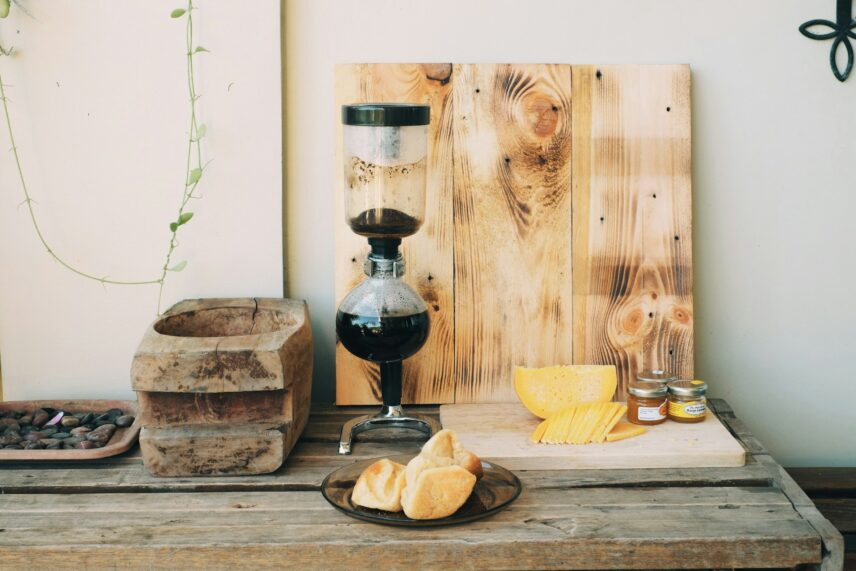
A siphon brewer is certainly among the most entertaining coffee brewing techniques out there. Sitting somewhere between coffee maker and science experiment, it turns your kitchen counter into a front-row seat for a little physics lesson.
The setup uses two chambers. Water goes into the bottom flask, and the grounds sit in the upper chamber. As the water heats up, pressure pushes it upward through a glass tube, where it mixes with the coffee. After a short steep, removing the heat creates a vacuum that pulls the brewed coffee back down through a filter and leaves the grounds behind.
Among all the coffee brewing techniques on this list, this one probably feels the most like a hobby. The reward is a remarkably clean and aromatic cup that highlights flavors you might miss with other methods.
6. Start Your Morning the South Indian Way
South Indian filter coffee, often called filter kaapi, has been a breakfast-table staple across the region for generations. Rich, smooth and usually topped with a light froth, the process starts with a traditional metal filter with two chambers.
You can add ground coffee to the upper section, press it lightly with the included disc, then pour in boiling water. Cover it and let gravity take over. Within the next 20 to 30 minutes, the water slowly passes through the ground and collects below as a concentrated decoction.
Once the brewing is complete, pour some of the decoction into a cup and add hot milk. The exact ratio is up to you. If you prefer a stronger drink, use more coffee concentrate. For something creamier, add more milk. Sugar is entirely optional. The finishing touch is the froth. Pour it back and forth between two cups from a slight height a few times. This aerates the drink and creates the signature foam on top.
Grounds for Exploration
The beauty of coffee is that the same beans can taste dramatically different depending on how you brew them. Next time you’re making a cup, try stepping outside your usual routine and experimenting with one of these coffee-brewing techniques. Your new favorite flavors might be waiting in a method you’ve never tried before.