As an Amazon Associate, Modded gets commissions for purchases made through links in this post.
The idea of a flying car has long lived somewhere between science fiction and engineering ambition. But in recent years, companies have started turning that dream into something tangible and surprisingly close to reality. One of the most talked-about examples is the XPENG AeroHT flying car, officially called the Land Aircraft Carrier.
Developed by Chinese electric vehicle (EV) maker XPENG through its aerospace division, the AeroHT, this futuristic vehicle blends a road-going electric van with a detachable flying machine. It’s not just a concept anymore, either. Production and deliveries are already being planned within the next couple of years, signaling a major shift in how we think about transportation.
What Is the XPENG Land Aircraft Carrier?
The XPENG AeroHT flying car is a modular vehicle that combines two machines, enabling it to hit the road and soar to the skies.
At its core, it’s essentially a six-wheeled electric van that carries a compact electric aircraft in its rear compartment. When needed, the aircraft is ready for deployment and can fly independently.
Unlike traditional flying car concepts that try to merge wings and wheels into a single structure, XPENG AeroHT takes a more practical approach. By separating the driving and flying components, the system avoids many of the engineering challenges faced by roadable aircraft builders, such as Terrafugia, that focus on hybrid designs.
The result is something closer to a mobile launch platform than a conventional car. Hence, the name Land Aircraft Carrier.
How the XPENG AeroHT Flying Car Works
Here are the two primary modules making up the XPENG Land Aircraft Carrier.
Ground Module — The Carrier
The ground component is a large, three-axle electric vehicle designed for both urban and off-road driving. It measures 5.5 meters long, or about 18 feet, which is the size of a standard parking space and features a futuristic, boxy design. Its main roles include:
- Transporting passengers like a regular vehicle.
- Housing the flying module.
- Charging the aircraft while driving or parked.
XPENG has even described it as a kind of mobile supercharging station, ensuring the aircraft is always ready for flight.
Air Module — The Aircraft
The second half of the system is a two-seater electric vertical takeoff and landing (eVTOL) aircraft. This drone-like vehicle:
- Folds compactly into the rear of the carrier.
- Deploys automatically when needed.
- Takes off vertically without a runway.
- Can operate with both manual and autonomous controls.
Once airborne, it functions like a personal aircraft designed for short-range, low-altitude travel.
Why XPENG Developed a Flying Car

The XPENG AeroHT project isn’t just about novelty. It addresses real-world transportation challenges.
One of the biggest motivations is traffic congestion, a worsening problem in countries with growing urban populations. In the United States, gridlock affects the commutes of two-thirds of Americans, a trend that has remained mostly unimpeded over the past decades.
As cities become more crowded, traditional road infrastructure struggles to keep up. Flying cars aim to open a new dimension of travel — low-altitude airspace. These vehicles could help relieve strain on existing city transport networks by using underused near-ground airspace. XPENG’s approach also targets:
- Emergency response in search and rescue missions
- Remote travel to hard-to-reach areas
- Recreational flying for consumers
In other words, this isn’t just a car, but it’s a new category of mobility.
Key Features of the XPENG AeroHT Flying Car
The XPENG Land Aircraft Carrier is unlike any other automotive creation. Here’s what makes it such an engineering feat.
1. Modular Design
The biggest innovation is the separation of land and air systems. Each of its components lends itself to optimization for function without compromise.
2. Vertical Takeoff Capability
The aircraft’s eVTOL technology eliminates the need for a runway. This design makes it far more practical for everyday use compared to traditional planes.
3. Autonomous Flight Options
XPENG is developing simplified flight controls, including one-touch takeoff and landing, to make flying accessible to even nonpilots.
4. Extended Range System
Unlike ordinary extended-range EVs with onboard gas generators, the ground vehicle itself serves as the power source. The mothership enables multiple flights on a single trip and prolongs the system’s usability.
5. Futuristic Utility Design
With six wheels and a rugged build, the versatility carrier can handle any terrain, from urban thoroughfares to off-road trails.
How Much Does the XPENG Flying Car Cost?
Pundits expect the XPENG Land Aircraft Carrier’s cost to range from $200,000 to $300,000, putting it firmly in the luxury category. This price tag is highly competitive relative to private helicopters. The target market includes wealthy early adopters, tech enthusiasts, adventure travelers and emergency service operators.
When and Where Will It Be Available First?

The XPENG AeroHT has set an ambitious but realistic timeline for its flying car. Preorders are already underway, with thousands of reservations. The Chinese automaker aims to deliver in 2027. In fact, reports suggest the company has already received thousands of orders and is building production facilities capable of manufacturing up to 10,000 units annually.
Like many emerging technologies, the XPENG AeroHT flying car will launch in a limited market.
China, the world’s largest auto market, is the first region to receive the vehicle largely due to:
- Faster regulatory pathways
- Strong government support for new mobility tech
- Existing infrastructure for EV adoption
Global expansion may follow, but regulatory approval, especially for airspace use, will be a major hurdle.
Challenges Facing the XPENG AeroHT
Despite its promise, the XPENG flying car still faces significant obstacles:
- Regulations: Flying vehicles are aircraft not covered by previous regulations, so XPENG and other manufacturers must abide by novel rules that may be more complex than established automotive laws. Certification processes are still ongoing.
- Infrastructure: Even with vertical takeoff, users will likely need designated flying zones or low-altitude corridors.
- Safety concerns: Companies are already working with partners to develop safety systems for flying cars.
- Public adoption: There’s still skepticism about whether consumers will trust and adopt flying vehicles at scale.
Is the XPENG AeroHT Flying Car Actually Practical?
The XPENG Land Aircraft Carrier doesn’t aim to revolutionize your daily commute, at least not yet. Instead, it’s more of a hybrid lifestyle and utility vehicle. Practical use cases include:
- Weekend travel to remote destinations
- Avoiding traffic on specific routes
- Emergency transport in hard-to-reach areas
For everyday city driving, a regular EV is still more practical. Then again, that could change as infrastructure evolves.
The Future of XPENG AeroHT and Flying Cars
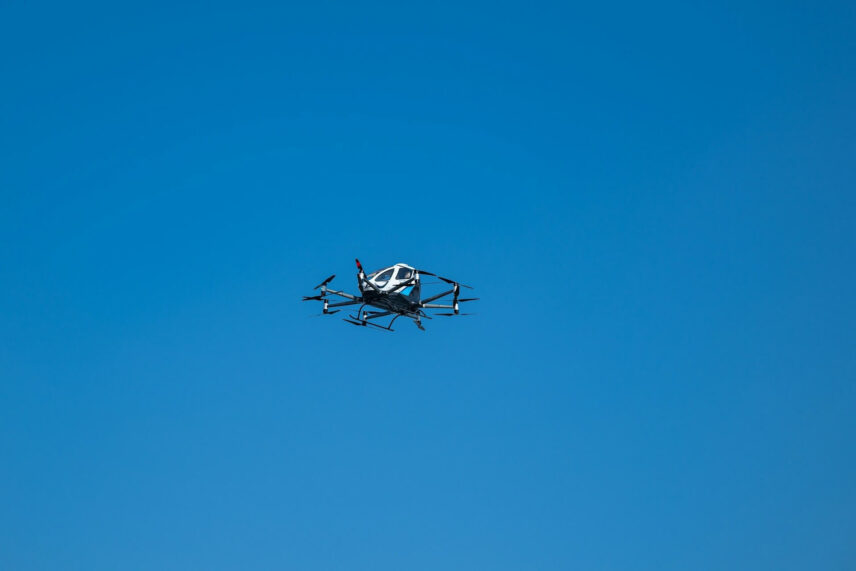
XPENG has competition in the flying car race, but its modular approach sets it apart.
By avoiding the “one vehicle does everything” trap, the company has created a system that’s more flexible, easier to engineer and potentially safer.
If successful, this could pave the way for urban air mobility networks, flying car rental services and integration with smart city systems. The timeline for flying cars is no longer decades away. With production already on the horizon, it’s happening now.
XPENG Is Ushering in the Age of Low-Altitude Mobility
The XPENG Land Aircraft Carrier represents one of the most realistic attempts yet to bring flying cars into everyday life. It’s not perfect, and it’s certainly not cheap. Nevertheless, it’s real, functional and closer to production than most people expected.