As an Amazon Associate, Modded gets commissions for purchases made through links in this post.
Hollywood has changed dramatically over the decades, but some films never lose their appeal. The Golden Age of Hollywood gave you unforgettable performances, sharp writing and stories that continue to inspire today’s biggest directors. If you’ve never explored classics because you assumed they’d feel dated, you might be surprised. These eight films remain gripping, entertaining and surprisingly modern. They’re essential viewing for any guy who wants to understand where great cinema began.
When Was the Golden Age of Hollywood?
The Golden Age of Hollywood generally refers to the period from the 1930s through the early 1960s, when the studio system was at its peak. Major studios such as MGM, 20th Century Fox, Paramount and Warner Bros controlled nearly every aspect of filmmaking, from casting actors to distributing films.
During this period, Hollywood produced hundreds of movies each year and introduced some of cinema’s biggest stars, including Humphrey Bogart, James Stewart, Cary Grant, Katharine Hepburn and Elizabeth Taylor.
The era also molded many of the genres audiences still love today, such as westerns, musicals and film noir. As television grew in popularity during the 1950s, filmmakers responded with bigger production and more ambitious storytelling. This helped create many of the classics that continue to influence directors like Martin Scorsese, Christopher Nolan and Steven Spielberg.
Top 8 Timeless Classics Worth Adding to Your Watchlist
Below are eight films that deserve a spot in your watchlist.
1. 12 Angry Men
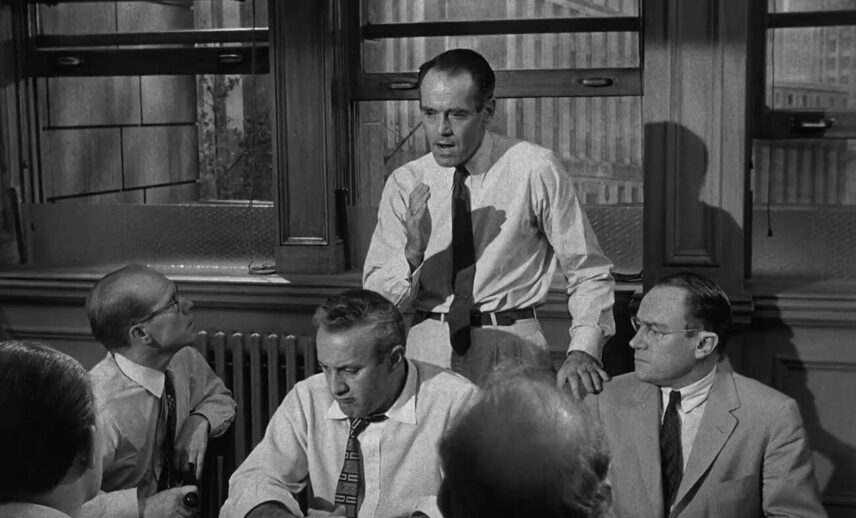
Released near the end of Hollywood’s Golden Age, 12 Angry Men proves you don’t need elaborate sets or nonstop action to stay completely invested. Almost the entire film takes place inside a jury room, where 12 jurors must decide whether a young man is guilty of murder.
At first, nearly everyone is ready to convict. Then one juror, played by Henry Fonda, asks the group to slow down and look at the evidence more carefully. What follows is a gripping discussion that gradually changes minds and reveals each juror’s personality and biases.
Directed by Sidney Lumet in his feature-film debut, the movie has since become one of the most celebrated courtroom dramas ever made. It holds a rare 100% critics’ score on Rotten Tomatoes and has been praised by the American Bar Association for its portrayal of the justice system. If you appreciate smart writing and stories that make you think, this is an easy recommendation.
2. Casablanca
Some classics earn their reputation over time. Casablanca earned it almost immediately and has never let go. Set during World War II, the film follows American nightclub owner Rick Blaine, whose life is turned upside down when a former love unexpectedly walks back into it.
While the romance is unforgettable, it’s more than a love story. You’ll find difficult choices, moral conflict and questions about doing what’s right when the stakes couldn’t be higher. The screenplay is full of memorable dialogue, with Humphrey Bogart and Ingrid Bergman delivering performances that still feel natural even today.
Despite being made in 1942, Casablanca clearly isn’t trapped in its era. Its themes of sacrifice, hope and courage remain just as relevant today. That’s why it’s one of the defining films from the Golden Age of Hollywood.
3. Citizen Kane
The American Film Institute ranked Citizen Kane as the greatest American film of all time for a reason. The story follows a reporter trying to find the meaning behind newspaper tycoon Charles Foster Kane’s mysterious last word: “Rosebud.” As the investigation unfolds, so does a fascinating portrait of ambition, power and loneliness.
The film introduced storytelling and camera techniques that were years ahead of their time. What’s more impressive is that Orson Welles was only 25 when he directed, produced, co-wrote and starred in it.
Although it struggled at the box office after newspaper magnate William Randolph Hearst reportedly tried to suppress it because he believed the character was based on him, its reputation only grew stronger. Whether you end up agreeing is another story, but it’s hard to deny its influence.
4. The Maltese Falcon

If you love the gritty atmosphere of The Dark Knight trilogy by Christopher Nolan or the moody visuals of Blade Runner 2049 by Ridley Scott, you’ve already seen the lasting influence of film noir. One of the movies that helped define the genre was The Maltese Falcon.
Humphrey Bogart stars as private detective Sam Spade, who accepts a seemingly simple case before getting tangled in a web of lies, murder and a priceless falcon statuette. The story moves quickly, with clever twists and suspicious characters that keep you guessing until the very end.
Directed by John Huston, The Maltese Falcon became the blueprint for countless detective and crime films. It earned three Academy Award nominations, holds a remarkable 99% critics’ score on Rotten Tomatoes and ranks among the American Film Institute’s greatest American films. More than 80 years later, it’s still sharp and stylish.
5. The Bridge on the River Kwai
If you think this is just another war movie, think again. The Bridge on the River Kwai is as much about pride, leadership and obsession as it is about World War II. The story centers on British prisoners of war ordered to build a bridge for the Japanese army, even as an Allied team prepares to destroy it.
Instead of offering simple answers, the film asks difficult questions about duty and the cost of blind obedience. That moral complexity is one reason it continues to spark discussion decades after its release.
The film dominated the 1958 Academy Awards, winning seven Oscars, including Best Picture, Best Director and Best Actor for Alec Guinness. It also defeated 12 Angry Men in every category where both films were nominated, cementing its place as one of the epics of Hollywood’s Golden Age.
6. It’s a Wonderful Life
You don’t have to wait until Christmas to appreciate It’s a Wonderful Life. Beneath its festive setting is a heartfelt story about perseverance and the difference one person can make.
James Stewart gives a remarkable performance as George Bailey, a man struggling under the weight of responsibility and wondering if his life has made any difference. The film explores men’s mental health with surprising honesty, especially for a movie made in the 1940s.
Its journey to classic status wasn’t immediate, though. The film disappointed at the box office before television introduced it to new generations of viewers. Today, it’s regarded as one of Hollywood’s most cherished films and remains a touching reminder that even ordinary lives can have an extraordinary impact.
7. Ben-Hur
Few movies can match the sheer scale of Ben-Hur. This epic follows Judah Ben-Hur, a Jewish prince who loses everything after betrayal and embarks on a journey filled with hardship, revenge and redemption.
The production pushed the limits of filmmaking at the time. More than 2,500 horses, over 200 camels and around 10,000 extras helped create a world that still feels astonishingly grand. Its legendary nine-minute chariot race remains one of the most thrilling action scenes ever put on screen.
Audiences embraced the film, and it was the highest-grossing release of 1959. It even won a record 11 Academy Awards, including Best Picture and Best Actor. With Hollywood revisiting familiar stories through remakes and reboots, it was only a matter of time before Ben-Hur received a remake of its own in 2016.
8. Rear Window

Curiosity has never been more suspenseful than it is in Rear Window. James Stewart plays a photojournalist recovering from a broken leg who passes the time watching his neighbors from his apartment. A strange series of events soon convinces him that one of them has committed murder.
Alfred Hitchcock, often called the Master of Suspense, turns this simple premise into a gripping mystery. Every conversation, glance and unexplained movement fills you with tension and pulls you deeper into the story.
Most of the film takes place in a single apartment overlooking a courtyard, but it never feels limited. Grace Kelly brings effortless charm to the screen, and Hitchcock proves that a great thriller doesn’t need endless action to keep you on the edge of your seat.
The Final Reel
You don’t have to be a film buff to enjoy Golden Age classics. If you’ve only watched contemporary blockbusters, starting with the eight movies on this list is a great place for your classics exploration. Chances are, you’ll come away with a few new favorites.