As an Amazon Associate, Modded gets commissions for purchases made through links in this post.
Think about the last sports event you watched. Artificial intelligence plays a bigger role than you realize. AI is no longer a distant sci-fi concept but, in many ways, is the new MVP. It actively reshapes everything from on-field strategy to front-office decisions and how you watch from your couch at home. This revolution brings incredible, data-driven advantages that are changing sports at a breathtaking pace. Is every change for the better? Let’s explore some innovations altering the games you love.
1. The New Playmaker: Automated Content and Highlights
In a world of endless scrolling, you may not have time to wait for the 11 o’clock news to see the game-winning shot. AI is now the fastest playmaker in sports media, functioning as a tireless production assistant that never sleeps. Tech platforms now have AI that analyzes live broadcasts in real time, recognizing key moments. Whether a monster dunk, a grand slam or a blistering touchdown run, AI interprets visual data and audio cues, such as a roaring crowd or an excited announcer.
Once a highlight is identified, AI automatically clips it, creating instant videos and social media posts tailored for every platform, from TikTok to X and beyond. For fans, this means a personalized, never-ending stream of action delivered straight to their phones. The upside is undeniable speed and access. The potential downside? You lose the art of a perfectly crafted highlight reel, where a human editor builds a narrative and tells the game’s story. It’s the ultimate trade-off between instant gratification and the craft of expert storytelling.

2. The Digital Coach: Player Performance and Health
Forget clipboards and stopwatches — the modern coach’s most powerful tool is data, and AI is the master interpreter. Today’s athletes are walking data-factories, all fitted with wearable tech that includes sensors embedded in their jerseys, pads and even mouthguards. These capture thousands of biometric data points per second, tracking everything from heart rate and acceleration to body temperature and impact force. Simultaneously, advanced camera systems follow every movement on the field, creating a complete digital picture of the game.
However, data is just noise without interpretation, which is where the digital coach comes in. Sophisticated AI algorithms analyze mountains of information to provide actionable insights invisible to the naked eye. AI can flag when a player’s workload indicates a high risk of a non-contact injury, pinpoint a subtle inefficiency in a pitcher’s throwing motion and customize training regimens to optimize performance and recovery for each participant. It’s all about supercharging human coaches with a new level of analytical vision.
3. Scouting the Future
For decades, scouting was an art form, relying on expert human scouts’ seasoned “eye tests” to peruse the next superstar. While that intuition is still valuable, AI is transforming scouting into a science, creating a real-life, modern version of the MLB expansion era’s Moneyball on a global scale. Front offices now leverage powerful AI platforms to sift through mountains of data, providing a significant competitive edge in talent acquisition.
Instead of watching a handful of games, these AI systems analyze vast datasets, including performance metrics of thousands of players from virtually every professional and amateur league on the planet. AI isn’t programmed to find the “best” player, but the “right” player. Would AI have identified the potential of all of the MLB’s best hitters, however?
AI helps a team identify an athlete with a specific and perhaps unusual skill set that perfectly fits its system. Perhaps it’s a point guard with elite efficiency in the pick-and-roll or a striker who excels at pressuring defenders? Teams use AI scouting to uncover undervalued talent and build a roster with surgical precision, moving beyond human bias to find diamonds in the data-rough.
4. The All-Seeing Eye: Officiating and Rule Enforcement
Nothing ignites a sports debate faster than a blown call. In the eternal quest for fairness, leagues are increasingly turning to an “all-seeing eye” using AI-powered officiating. Technologies like the Hawk-Eye system in tennis and the Video Assistant Referee (VAR) in soccer can point out foul play and are designed to eliminate human error, offering millimeter-perfect precision on game-deciding plays. Was the ball in or out? Was the player offside?
AI promises an objective, indisputable answer, ensuring that the athletes decide the outcome rather than an official’s mistake. However, this pursuit of perfection is a double-edged sword. While AI delivers accuracy, it can disrupt the game’s flow, leading to lengthy reviews that kill a team’s momentum and frustrate fans. Furthermore, the technology itself sparks new controversies about its implementation, with debates now raging over whether a player’s armpit being offside violates the spirit of the rule.
Many purists argue that the “human element,” including an occasional bad call, is part of the inherent drama of sports. It begs the question about how much soul we’re willing to trade for the robotic precision of algorithmic fandom?
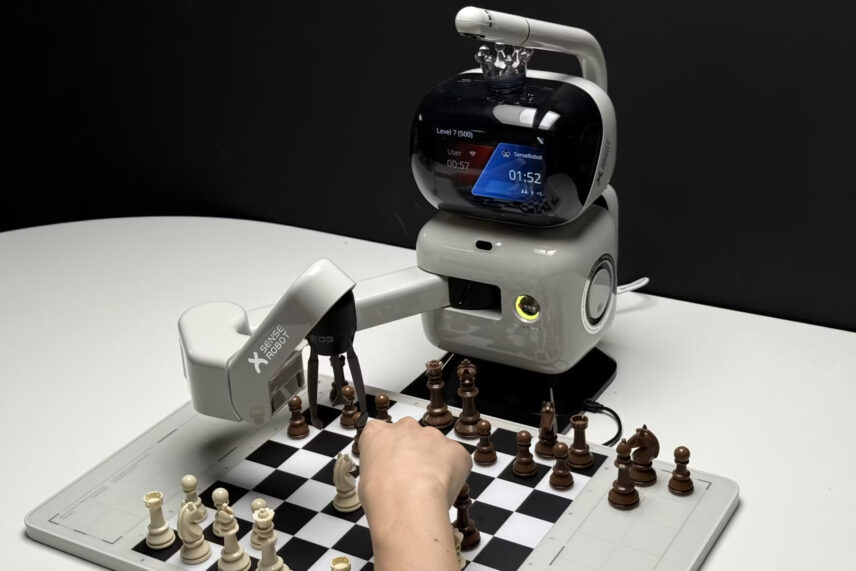
5. A Smarter Game: AI-Powered Strategy and Analytics
The modern sports rivalry isn’t played only on the field but is a high-stakes chess match fought with data, and AI being the ultimate grandmaster. Coaches are now armed with powerful predictive analytics platforms that go beyond what any human staff could accomplish. These systems act as a strategic super-brain, devouring thousands of hours of game footage to identify opponent tendencies in incredible detail. AI can pinpoint subtle patterns invisible to the human eye, calculating the statistical probability of what play an opponent will select in any given situation.
It doesn’t stop at the analysis. Teams use AI to run thousands of game simulations, testing different strategic approaches to find opposition weak spots before even stepping onto the field and wondering how your team’s defense stacks up against a new offensive formation. AI can run the scenario thousands of times in minutes to provide an answer. It isn’t just about watching film but represents a quantum leap in preparation, allowing teams to anticipate, adapt and strategize at a level of complexity that was previously unimaginable.
Is AI Good for the Game?
Is this AI revolution good for sports? The answer isn’t that simple. AI offers you the benefits of unparalleled insights, fairer officiating and a hyper-personalized fan experience. It also makes teams smarter and athletes stronger. Yet, its implementation raises complex questions about tradition, player privacy and the cherished human element of competition.
As this technology becomes more ingrained in the games we love, the ultimate question is for you to answer. How much of the traditional game’s ethos are you willing to trade for the modern benefits of AI’s algorithmic improvement?