As an Amazon Associate, Modded gets commissions for purchases made through links in this post.
First-person view (FPV) drone racing involves operating lightweight aircraft through three-dimensional obstacle courses using physical transmitters. Quadcopters, unmanned aerial vehicles with four rotors, are common, although some racers prefer tricopters or hexacopters.
Pilots usually start with bind-and-fly models, but stock drones rarely win races. Tuning flight controllers, swapping motors and propellers, upgrading factory video transmitters and antennas and removing excess racing frames are popular modifications operators do to gain a competitive edge.
If you want to venture into motorsport but don’t know how to begin, follow these seven influential FPV drone racing pilots.
1. Luke Bannister
Luke Bannister became one of drone racing’s earliest superstars after winning the inaugural World Drone Prix as a 15-year-old and took home $250,000 of the total prize purse. His smooth flying style and exceptional consistency helped establish professional drone racing as a legitimate spectator sport.
Rather than relying on flashy maneuvers, Bannister focuses on maintaining momentum through corners. His precise throttle management and clean racing lines remain excellent examples for beginners learning competitive FPV flying.
Throughout his professional career, Bannister primarily competed with custom racing quadcopters built specifically for league competition. These lightweight carbon-fiber machines prioritized speed, durability and identical specifications to ensure pilot skill rather than hardware advantages decided races.
2. Jordan Temkin
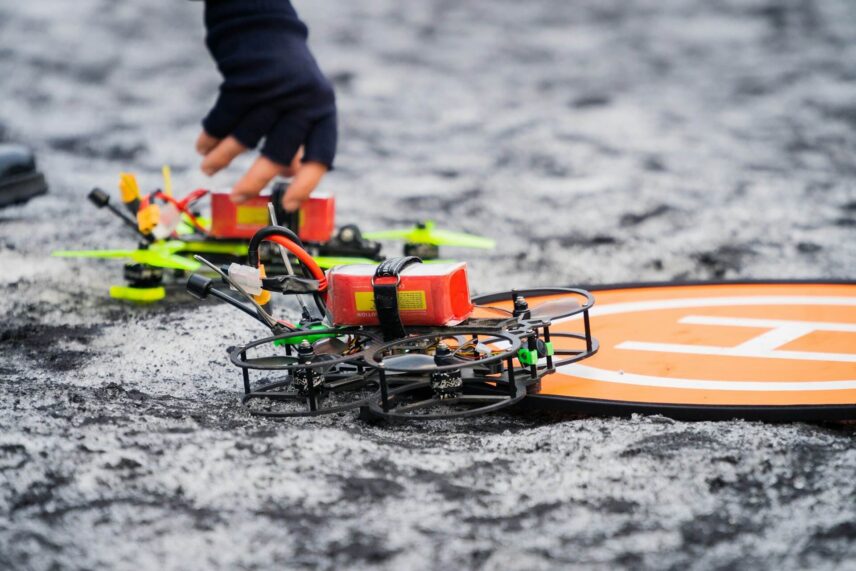
Nicknamed Jet, Jordan Temkin is one of the most recognizable personalities in the Drone Racing League (DRL). Beyond racing, he has helped educate thousands of aspiring pilots through tutorials, livestreams and public demonstrations.
Jet emphasizes consistency over reckless speed. Watching his races teaches beginners how patience often beats aggressive flying, especially on technical courses filled with sharp turns and elevation changes.
Like other DRL professionals, Jet races standardized league quadcopters during official events while also flying customized racing drones for freestyle practice and independent competitions. His builds typically feature lightweight carbon frames, powerful brushless motors and low-latency video systems.
3. MinChan Kim
MinChan Kim has become one of Asia’s most accomplished professional drone racers, earning multiple podium finishes in international competition. Beating an autonomous drone that failed to recover after clipping a gate was a major feather in his cap.
Kim is known for carrying remarkable speed through complex gate sequences while maintaining outstanding control. His rapid reactions and exceptional precision have made him a favorite among FPV enthusiasts worldwide. Beginners studying his race footage can learn how efficient cornering often matters more than maximum straight-line speed.
His competition quadcopters are carefully tuned for rapid acceleration and predictable handling. Balanced motor output, lightweight electronics and optimized propeller selection allow him to maintain confidence even on demanding race courses.
4. Alex Vanover
Alex Vanover has earned championships in both drone racing and radio-controlled aircraft competitions, making him one of the most versatile pilots in the hobby. His technical knowledge matches his flying ability, giving him an edge when optimizing equipment.
Vanover frequently shares insights into tuning flight controllers, adjusting proportional, integral and derivative settings and improving aircraft reliability. These educational contributions have helped many beginners progress beyond the basics of FPV drone racing.
His preferred quadcopters feature premium racing components capable of extremely responsive handling. Careful tuning enables his drones to remain stable during rapid acceleration while maintaining the agility needed for tight race courses.
5. Paul Nurkkala
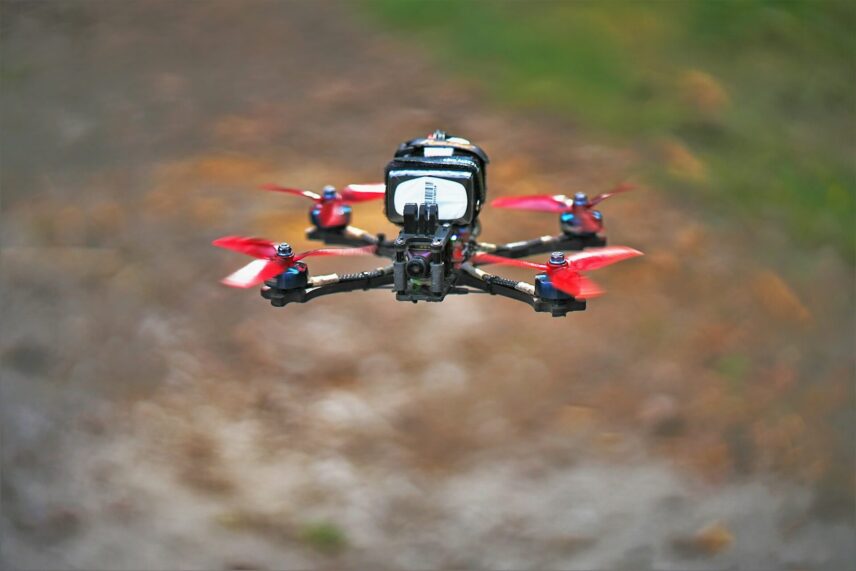
Known simply as Nurk FPV, Paul Nurkkala has earned respect through both competitive racing and cinematic freestyle flying. His ability to combine speed with creativity has made him one of the drone community’s most influential personalities.
Although many recognize him for freestyle videos, Nurk’s racing background gives him exceptional throttle control and precision. His content demonstrates skills that directly transfer to competitive drone racing.
Nurk frequently flies custom-built racing and freestyle quadcopters equipped with modern digital FPV systems, durable carbon fiber frames, and high-performance brushless motors. His equipment choices emphasize reliability alongside raw speed.
6. Steele Davis
Steele Davis, who goes by Mr Steele, is widely considered one of the pioneers of modern FPV flight. While better known for freestyle than organized competition, his influence on drone technology and pilot training has shaped countless racers entering the hobby.
His videos showcase extraordinary stick control and aircraft management in challenging environments. Many competitive pilots credit Steele’s tutorials with helping them improve precision, confidence, and smooth flying techniques.
Steele helped develop several racing and freestyle components, including frames and motors engineered for demanding FPV use. His custom quadcopters balance power, durability and predictable handling across various flying styles.
7. Thomas Bitmatta
Thomas Bitmatta, better known as BMS Thomas, has been one of the world’s most successful FPV drone racers for over a decade. A multiple-time international champion, he has represented Australia in prestigious competitions and earned a reputation for combining raw speed with remarkable consistency.
BMS Thomas is admired for his precise racing lines and efficient flying style. Rather than relying on risky maneuvers, he focuses on maintaining momentum through every gate and corner. Beginners studying his race footage can learn the importance of smooth control and disciplined decision-making under pressure.
Due to his philosophy of flying reactively, his racing quadcopters are purpose-built for maximum responsiveness. It features lightweight carbon-fiber frames, brushless motors with high velocity constant, durable electronic speed controllers and carefully tuned flight controllers. Like many elite pilots, Bitmatta continually refines his setup to match different race courses, demonstrating that thoughtful tuning is just as important as pilot skill.
Getting Started With a Drone Racing Simulator
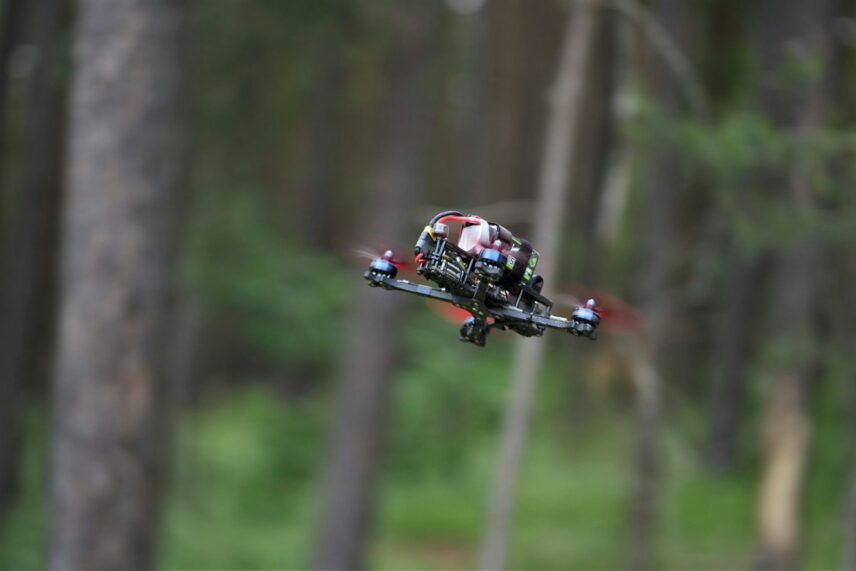
Many aspiring pilots buy an expensive drone racing kit and practice in their backyards, boardwalks and national forests. Although recreational operators can fly in legal areas, serious competitors spend time with a drone racing simulator.
Sim racing is more than just a growing gaming genre, as it actually lets you practice muscle memory, gate navigation, emergency recovery and throttle control without risking costly crashes.
To acquire proper foundational skills, you should:
- Complete the sim’s tutorials to learn the basics correctly.
- Use a radio control transmitter instead of a keypad or a console gamepad to develop better muscle memory.
- Focus on a specific drill per session rather than aimlessly flying through obstacles, as intentional repetition is more effective than random play in developing any skill, such as pickleball, shooting and self-defense.
- Fly your drone in awkward situations to practice recovery effectively, get used to the feeling and avoid panicking when you find yourself in similar scenarios in competitions.
Many professional racers recommend hundreds of simulator laps before entering real competitions. The skills developed virtually transfer surprisingly well to actual FPV drone racing, making simulators one of the smartest investments for newcomers. As you can with car racing simulators, you can set up one at home and sharpen your instincts as a pilot.
Learn FPV Drone Racing From the Best Pilots
FPV drone racing may be a low-risk motorsport, but it still requires skill and experience to excel in. Although all successful racers have their own brand of operating aircraft, you should stand on the shoulders of giants to reach greater heights than those who came before you.