As an Amazon Associate, Modded gets commissions for purchases made through links in this post.
Climbing is a sport that challenges both the body and mind. Routes are measured using different grading systems to help climbers understand difficulty. Bouldering and roped climbing each have their own unique grading approaches. These scales provide guidance but are not perfect measures. Environmental factors, technique and personal experience can all affect how a route feels. Understanding how climbing grade conversion works can make your climbing safer and more enjoyable.
Measuring Climbing Grades Are Measured Worldwide
Climbing is a sport in which participants scale vertical walls, whether natural rock formations or artificial climbing walls. It emphasizes strength, technique and problem-solving and was originally developed as off-season training for mountaineers. This exciting and adventurous sport also requires the right gear to reach new heights. The climbing difficulty scale is measured using established grading systems, which vary worldwide.
In Europe, the most widely used bouldering grading system is the Fontainebleau or “Font Scale.” Like the French Sport system, the Font Scale uses a combination of numbers and letters, ranging from 1A to 9C, but the two systems do not correspond directly. For instance, a challenging beginner boulder graded 6A on the Font Scale roughly equates to 6c+ in the French Sport system. The same 6A Font Scale boulder can also be approximately converted to V3 on the V-Scale used in North America.
Routes are initially graded by the first climber, with consensus forming as others repeat the climb. The MoonBoard — a standardized climbing wall — further supports this by maintaining consistent size, angles and handhold placements worldwide.
Understanding the Difference Between Roped and Bouldering Climbing
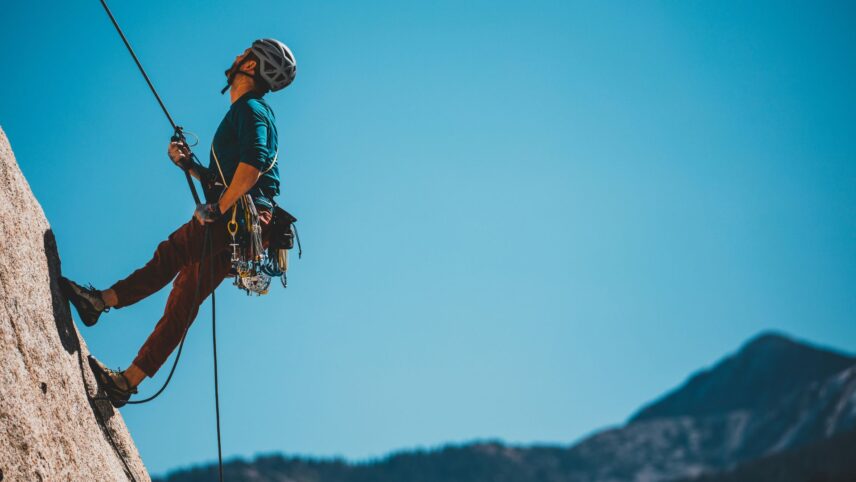
Roped climbing — which includes sport and traditional (trad) routes — emphasizes endurance, sustained effort and managing your rope and gear over longer climbs. Success depends on strength, pacing, technique and route-reading skills. Popular systems for rating these climbs include the Yosemite Decimal System (YDS) in the U.S. and the French grading system in Europe, which help climbers understand a route’s overall challenge.
Bouldering is a climbing discipline without ropes. Climbers typically scale walls under 4 meters high, with safety provided by foam pads on the ground. Unlike trad or sport climbing, bouldering grades focus solely on the technical difficulty of the moves. In the United States and North America, the Vermin “V-Scale” is commonly used. This scale ranges from VB (easiest) to V16 (most challenging). To give more precision, plus and minus signs are sometimes added to the V rating.
Reading International Climbing Grade Conversion
Understanding climbing grades across different systems can feel like learning a new language. To make it easier, here’s a straightforward conversion chart that compares the most common roped climbing and bouldering grades worldwide.
Each column represents a different grading system. Each row shows roughly equivalent grades across those systems.
For example, for a midrange difficulty:
Find the French grade 6a. and look across that same row to see its equivalent in other systems:
- Yosemite (USA): 5.10b
- Australian: 19
- UIAA (International): VI+
- UK: 5b
You’ll notice a separate section on the right for Bouldering Grades. This is because bouldering — climbing shorter routes without ropes — has its own distinct grading systems. The two most common are:
- Hueco/V Scale (USA): Starts with VB (beginner), then V0, V1, V2 and so on. Higher numbers are harder.
- Font/Bleau (Europe): Uses a system similar to the French roped climbing grades, but for bouldering.
So, if you’re a boulderer and you climb a V4 in the Hueco system, this chart tells you it’s roughly equivalent to a 6B in the Font/Bleau system.
If you have a thirst for adventure and love the outdoors, beginner-friendly mountains offer manageable trails, rewarding views and enough challenge to build confidence. Additionally, popular climbing destinations around the world are becoming increasingly crowded, creating safety concerns and changing how climbers plan their trips.
Viral incidents, rising visitor numbers and environmental damage highlight the risks of overcrowding on famous peaks like Mount Everest and Mount Fuji. As more people head outdoors, you may need to adjust when, where and how you climb to avoid congestion and stay safe.

Understanding Climbing Grade Conversion is Not Exact
You can think of climbing grade conversion as a route’s report card. They signal how demanding the moves are, what strength, flexibility or technique you’ll need and help climbers share a common language for planning and safety. Grades also help you choose routes that fit your level and track progress over time.
That said, grades are subjective. Height, reach, climbing style and even local consensus can shape how a route feels. If you are going ice climbing, the grade system can help determine to weather conditions. A grade offers a useful snapshot of the challenge ahead, but it’s a guideline, not a promise. It’s worth remembering that there is no perfect grading system.
Climbing is a very personal experience and what may feel difficult for one person can seem easier to another. It depends on factors like height, body weight, muscle strength, core stability, technique and experience. Grading can therefore be considered a subjective assessment. It may give us some insight into the challenge, but it’s normal if your own experience doesn’t always match the grade.
Additionally, keep in mind that indoor gym grades can vary from outdoor routes. Environmental factors such as rock type, temperature, humidity, wetness, wind or even cold fingers can all influence how a climb feels. So, a 7a route in the gym may feel quite different on a crag. Taking these factors into account can help you better understand the grades and adjust your expectations. Climbing grades are useful tools, but they are not absolute. Ultimately, it’s your own experience on the wall that matters most.
While there are many comparison tables and grade converters, there can still be significant variation. A French 6c may not feel exactly like a UIAA 8 and even if a climber can handle a 7a boulder, that doesn’t necessarily mean you could manage a 9+ sport climbing route. This is because each discipline emphasizes different skills. Ultimately, experience on the wall often gives the most accurate sense of challenge.
Preparing for Your Next Climbing Trip
When you’re visiting a new climbing area, you may want to start a couple of grades below your usual limit. This can help you get a feel for the rock, local grading and conditions without feeling rushed. Talking to locals can also be really helpful — climbers at the crag may offer tips, suggestions or “beta” that can make your day easier and more enjoyable.
You can also consider using apps or local guidebooks to plan your climbs. These resources may give useful route information, but it’s best to use them alongside your own observations and advice from other climbers. Taking a flexible, observant approach can help you adapt to the area’s style and features. Remember to take your time, listen to your body and enjoy the experience. Small adjustments and local knowledge can make a big difference in how much fun and success you have on your climbs.
Approaching Your Climbing Journey
Climbing grades are useful tools, but they are not absolute. Your personal experience often matters more than the number on a route. Differences between gyms, outdoor crags and climbing styles can change how a climb feels. Learning to read and interpret grades can help you challenge yourself safely. Focus on enjoying the process, improving steadily and exploring new routes. Climbing is about adventure, growth and community, instead of numbers.