As an Amazon Associate, Modded gets commissions for purchases made through links in this post.
If you’re the kind of guy who appreciates horror that lingers long after the credits roll, Robert Eggers should already be on your radar. His films aren’t about cheap jump scares or predictable plots. Instead, they lean into psychological dread, historical authenticity and an almost obsessive attention to detail that turns every frame into something unsettling.
Whether you’re new to his work or want to revisit it with a deeper perspective, these Robert Eggers movies below are the best place to start.
1. The Witch (2015): Pure Dread in Its Rawest Form
If you haven’t seen The Witch, start here. Set in 1630s New England, the film follows a Puritan family unraveling under the weight of paranoia, religious extremism and something far more sinister lurking in the woods.
What makes this film hit hard is how grounded it feels. The horror doesn’t just come from supernatural elements, but also from the breakdown of trust within the family. You watch suspicion spread like a disease, and that psychological tension becomes just as terrifying as anything supernatural.
To get more out of this film, watch it in a quiet setting, ideally at night, and let the atmosphere do its work. Pay attention to the dialogue and symbolism. You’ll notice how Eggers uses religion as a weapon that shapes every character’s fear.
2. The Lighthouse (2019): Madness, Isolation and Masculinity
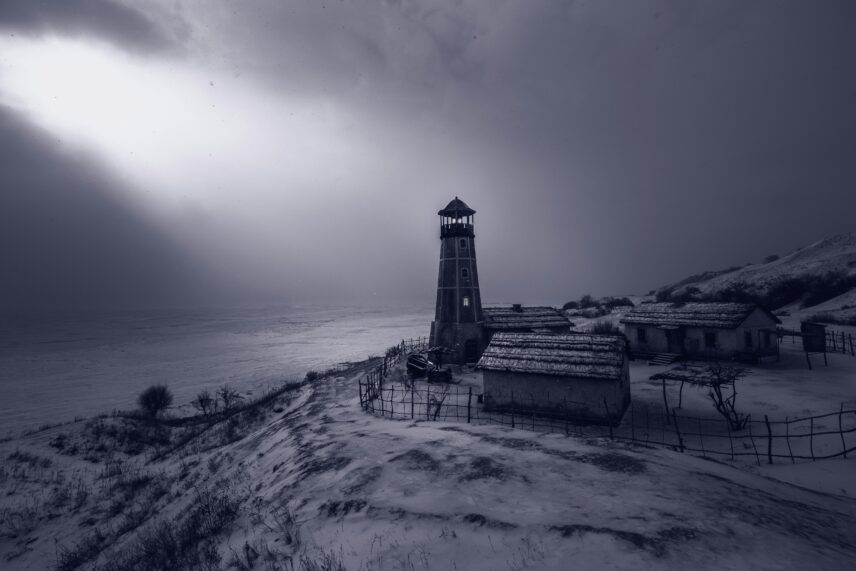
The Lighthouse is where Eggers gets even more experimental. Shot in black and white with a nearly square aspect ratio, the film follows two lighthouse keepers as they slowly lose their grip on reality.
This is less a traditional horror movie and more a descent into madness. Themes of isolation, toxic masculinity and power dynamics dominate the story, making it incredibly interesting for men to reflect on how they’re socially pressured to behave and culturally trained to have certain thoughts and attitudes. If you’ve ever been in a high-pressure environment with no escape, you’ll recognize the movie’s tension immediately. Dialogue feels theatrical yet raw, and the film constantly blurs the line between reality and hallucination.
To fully appreciate The Lighthouse, you need to embrace the ambiguity. Don’t try to solve it on your first watch. Let it be strange. Let it be uncomfortable. That’s where its power lies.
3. The Northman (2022): Revenge Meets Mythological Horror
While The Northman leans more into action, it still carries the sense of dread of Robert Eggers movies. This Viking revenge story blends brutal realism with Norse mythology, creating a film that feels both epic and deeply unsettling.
The violence here is raw, physical and often uncomfortable to watch. Eggers uses it to reinforce the harshness of the world his characters inhabit. You’re not meant to feel heroic excitement, but the weight of every decision.
What sets this film apart is its merging of myth with reality. Visions and prophecies are presented in a way that makes you question whether they’re supernatural or psychological. That ambiguity keeps you engaged on a deeper level.
4. Nosferatu (2024): Classic Horror Reimagined With Precision
Eggers’ Nosferatu brings one of the most iconic horror movies back to life, but in a way that feels unmistakably his. Rather than modernizing the material with flashy techniques, he leans into gothic atmosphere, practical effects and historical texture, creating a film that feels both old-world and intensely immersive. After movies that softened the idea of vampires with romance and even fanfic-style stories like Twilight, this Nosferatu retelling is a reminder of the true dark nature of these iconic creatures.
The Guardian describes the film as a respectful homage that retains the core story while adding Eggers’ signature visual precision and stylized performances. What stands out most is the atmosphere. It leans heavily on shadow, silence and unease, echoing the techniques that made the original so influential. At the same time, it introduces a slightly heightened, almost theatrical tone that blends horror with moments of dark absurdity.
If you watch this one, focus on how restraint drives the fear. Eggers doesn’t rush to scare you. He lets tension build slowly, trusting that mood and detail will do the heavy lifting. That’s what makes this version of Nosferatu feel like a carefully constructed descent into a gothic nightmare.
The Upcoming Eggers Project You Should Be Paying Attention to
Gothic films have made a comeback recently with movies like Frankenstein, Nosferatu and Sinners, and upcoming movies such as The Bride! reinforce this trend. Looking ahead, Eggers continues to double down on his commitment to historically grounded horror. His next film, Werwulf, set for release in December 2026, is expected to explore werewolf folklore through the same meticulous lens he’s applied to witches, Vikings and vampires.
If his past work is any indication, Werwulf won’t follow typical creature-feature formulas. Expect a focus on atmosphere, cultural context and psychological tension rather than straightforward monster thrills. That’s what makes Eggers worth watching closely. He reinterprets the horror genre through history and human behavior.
What Makes Robert Eggers Different From Typical Horror Directors
Eggers seeks to achieve historical accuracy to precisely recreate the past. His commitment to authenticity shows in everything from the dialogue to the production design. This level of realism pulls you deeper into the fear. Instead of distancing you with fantasy, it makes everything feel plausible.
Another defining trait is his pacing. Classics such as Hitchcock’s Psycho have perfectly shown how slow-burning can play a huge role in creating horror. Eggers doesn’t rush. He builds tension slowly, forcing you to pay attention to subtle shifts in behavior, sound and atmosphere. That patience pays off in a way modern horror often skips.
Something that also makes him stand out is his respect for your intelligence as a viewer. He doesn’t over-explain. He trusts you to sit with ambiguity, discomfort and symbolism. If you’re looking for horror that challenges you as much as it chills you, his filmography delivers in a way few modern directors can match.
Why Eggers Represents the Future of Horror
Horror is evolving, and Eggers is one of the directors pushing it forward. He is not trying to appeal to everyone, which it’s exactly why his films resonate so strongly with those who connect with them. If you want horror that respects your intelligence, rewards your attention and leaves you thinking about it days later, Robert Eggers’ filmography is essential viewing.