As an Amazon Associate, Modded gets commissions for purchases made through links in this post.
Featured image credit: Kawaski
If you’ve ever wanted to blast across rugged terrain in something that feels like a cross between a stealth jet, a dune buggy and a Mars rover, say hello to the Kawasaki CORLEO. This isn’t a motorcycle. It’s not a side-by-side either. It’s a whole new breed of off-road beast — electric, joystick-controlled and built to handle terrain that would send a quad bike into early retirement.
What Is the Kawasaki CORLEO?
The CORLEO is Kawasaki’s most unexpected launch in years — a low-slung, recumbent-style, four-wheeled electric mobility vehicle that seems tailor-made for off-road explorers, adrenaline junkies and — bonus points — folks with limited mobility who still want to tear up the trail.
Instead of a steering wheel, you’re handed a joystick-like handlebar, much like the Star Wars speeder bikes. It’s not just a clever spacey gimmick — the design gives you precise control over the vehicle’s direction and speed while freeing up the rest of your body. There’s no clutch, gears or roaring engine under your thighs — just smooth electric torque and quiet confidence, all operated off your body weight positioning.
The top speed and range? Kawasaki’s a bit coy with exact figures, but early buzz suggests enough juice to power through a full afternoon of adventure, given the 150cc hydrogen engine powering the design. The design is reminiscent of a mechanical horse, with four arms, each equipped with a split “hoof” to spread weight. Each arm moves independently, creating stable movement across pretty rugged terrain. The rider sits as if on a recumbent bike, steering the machine by shifting their weight.

Image credit: Kawaski
The CORLEO’s Debut
The CORLEO rolled onto the scene at the 2025 Expo Show in Osaka, Kansai, Japan, where it is tucked between flashy concept bikes and robotic exoskeletons. However, unlike those other sci-fi showpieces, the CORLEO looked ready to ride out of the booth and straight onto the trail.
Its presence wasn’t just about shock value. Kawasaki used the show to signal a clear pivot — it is no longer just the brand of screaming green sportbikes. It’s leaning into electric mobility, and doing it with more imagination than anyone expected.
Critics and industry experts alike have expressed wide opinions, and it could be a “game-changer for adaptive riders.” While the CORLEO may resemble a grown-up version of the Power Wheels you always wanted as a kid, designers are confident it will satisfy your desires and “Impulse to Move” across all terrain. With all the hype, it’s got people talking.
Why the CORLEO Matters for the Future of Off-Road Transport
Most electric off-roaders look like they were made for a golf course or a sci-fi movie with a bloated effects budget. The CORLEO? It’s different. It actually makes sense. The CORLEO isn’t just a ride — it’s a signal that the next generation of off-road machines will be inclusive, modular and much more fun to pilot.
Here’s why it matters:
- Electric torque where it counts: You get instant power to the arms with no delay. That’s a big deal when you’re crawling over rocks or weaving between trees.
- No emissions, less noise: You can explore remote trails without sounding like an air raid siren. It’s better for nature and kinder on your ears.
- Broader access: This thing isn’t just for extreme sports dudes. Its low step-in height and joystick control make it friendly to people with mobility challenges, aging riders or anyone who prefers brains over brawn.
Standout Features That Set the CORLEO Apart
Electric Efficiency
Expect no fumes, oil changes or drama. The CORLEO operates with a hydrogen powerplant that generates electricity, offering clean rides and low maintenance. You won’t miss the gas station stops or carburetor tantrums.
Low-Slung Stability
The recumbent design lowers the center of gravity, making it nearly impossible to tip over unless you’re actively trying. It’s perfect for rocky, uneven trails or dune-side banking.
Handlebar Navigation
Forget steering wheels and throttle pedals. The handlebars put complete control in your hands — forward, backward and turn on a dime — by just switching your weight between your hands and feet in the stirrups. Think super fast video game responsiveness, but in real life.
Adjustable Comfort
The seat reclines, the control is cushy and the stirrups adjust to fit your frame. It’s an example of comfort-first design, not afterthought ergonomics.
Universal Usability
The CORLEO isn’t just inclusive — it’s intelligently inclusive. Whether you’ve got knee issues or you’re just sick of swinging your leg over a tall ATV, this design works for you.
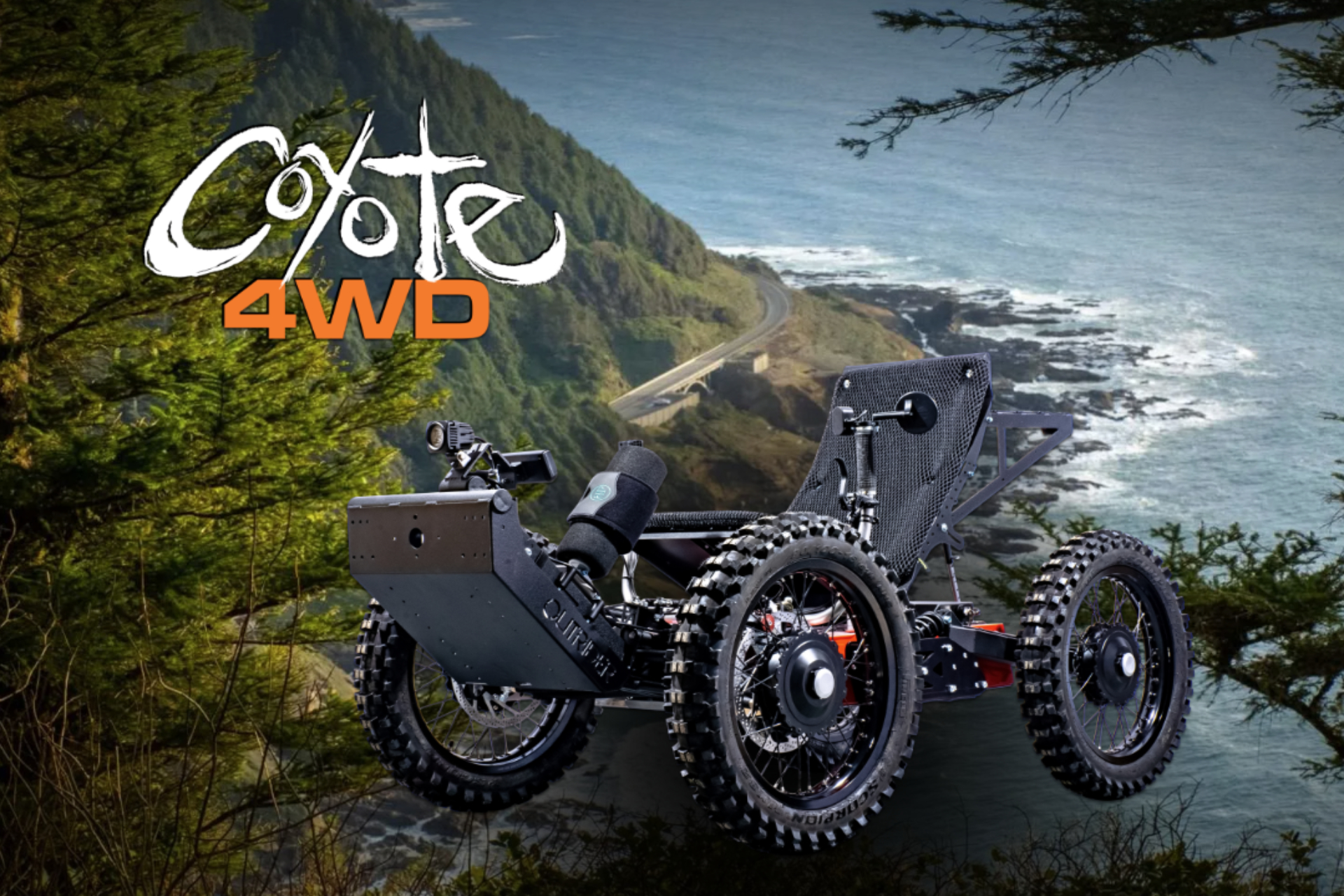
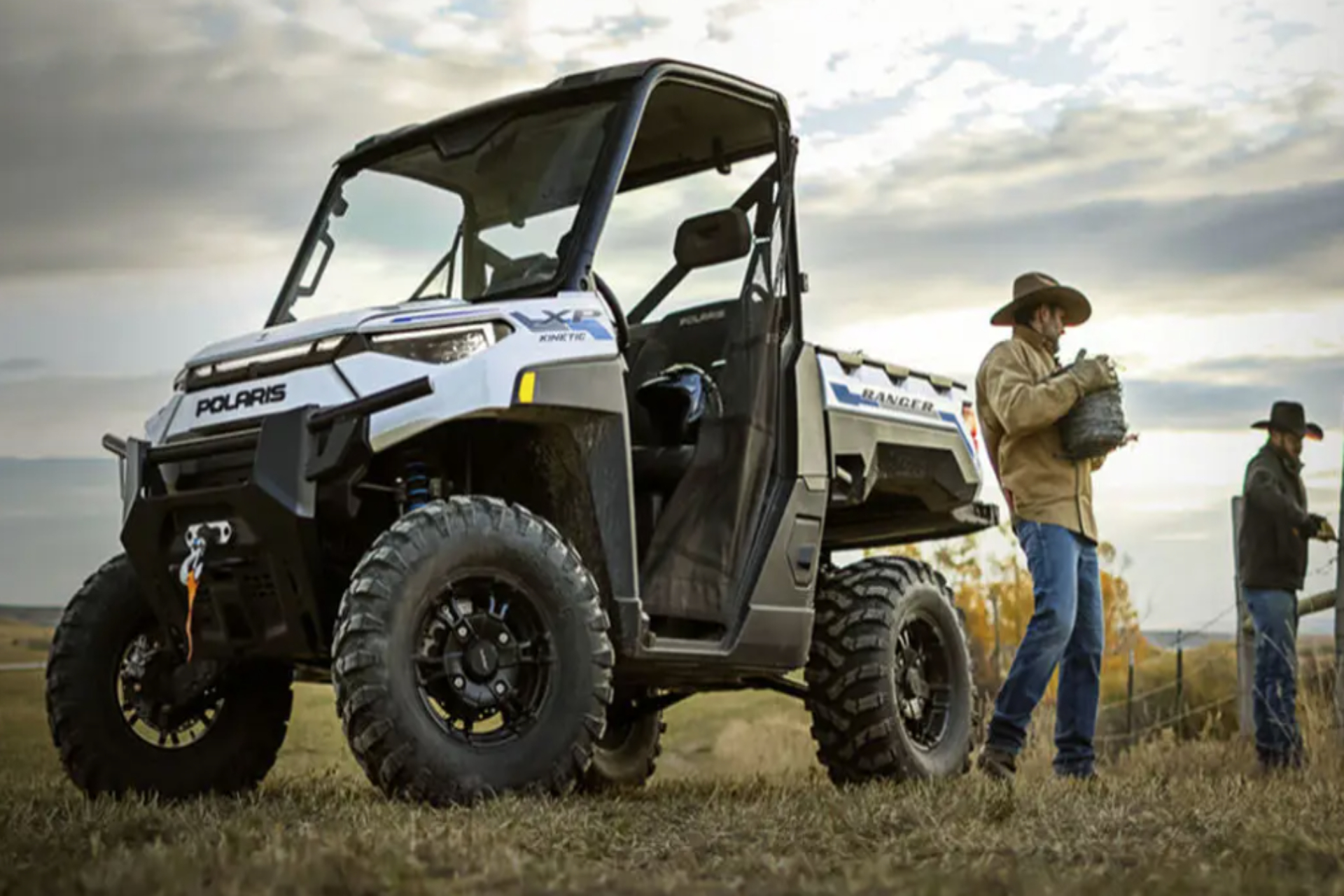
Image credits: Coyote 4WD and Polaris Ranger XP Kinetic
How the CORLEO Compares to Its Competitors
Kawasaki isn’t the only brand rethinking all-terrain fun. Here’s how the CORLEO stacks up to a few other forward-looking rides:
| Feature | Kawasaki CORLEO | Polaris Ranger XP Kinetic | Outrider Coyote |
| Power Source | Hydrogen-powered | Fully electric | Fully electric adaptive ride |
| Terrain | Off-road, trails, light climbing | Heavy-duty off-road | Trails, hills, adaptive |
| Control | Handle bars | Steering wheel and throttle | Twin joysticks |
| Power and speed | 150 cubic centimeters hydrogen engine | 110 horse power battery drive train | 17 miles per hour battery drive train |
| All-Terrain Accessibility | Very high | Moderate | High |
| Seating | Recumbent | Side-by-side | Reclining or upright |
Polaris is still king of heavy-duty trailblazers, but it’s built for bulk. The Outrider Coyote nails adaptive riding, but with a narrower audience. The CORLEO splits the difference — universal design, sporty feel and genuine trail cred.
Kawasaki’s Strategic Shift Toward Electric and Inclusive Mobility
Kawasaki has publicly committed to domestic carbon neutrality by 2035, and the CORLEO fits right into that playbook. But there’s more to it than sustainability metrics.
This vehicle shows that Kawasaki is no longer content to build faster motorcycles — the company wants to redefine what “riding” and movement even means. And for once, “inclusive” doesn’t mean “boring.” The CORLEO proves you can create an accessible machine that’s also a thrill to ride.
It’s not just playing catch-up — it’s setting a new path entirely.
What’s Next for the CORLEO
Kawasaki hasn’t confirmed a release date yet, and speculations abound, but it could still be this year. Pricing? No solid figures yet but expect it to land in the same ballpark as premium e-bikes or side-by-sides — with its competition ranging between almost $40,000 for the Polaris and the Coyote racking in about $16,000, depending on customization builds.
You’ll likely be able to trick it out with:
- Cargo modules for hunting, fishing or camping
- Terrain-specific fittings or treads — perhaps even slippy ones for drifting your new CORLEO at the track
- Custom lighting or safety kits
It’s not just a vehicle — it’s a movement lifestyle, so you’ll be able to make it your own.
Why the Industry Is Watching This Concept Launch
The off-road world isn’t just about dirt and horsepower anymore. The next wave of vehicles is cleaner, quieter and more customizable — and brands that don’t get with the program risk being left in the dust.
The CORLEO is the first real contender that combines fun, function and flexibility. It’s not a toy, and it’s not just a disability-friendly scooter. This “mechanical horse” is a full rethink of an off-road ride without opting for maglev mobility, which is still a thing for the future when they figure out how to negate the need for tracks.
Other brands are already taking notes — and if they’re smart, they’ll stop focusing on brute power and start thinking about brains, balance and user-first design.
About the Kawasaki CORLEO
Is the CORLEO Street Legal?
Not yet. It’s designed for trails, open terrain and parks, not pavement. It will be more like an ATV than a daily driver.
Can the CORLEO Handle Steep Hills or Mud?
Yes, to a point. It’s not a rock-crawling monster, but the low center of gravity, wide stance and grippy hooves will reportedly give it surprising traction in tough terrain.
How Long Does the CORLEO Battery Last?
Exact specs are unconfirmed, but early reports suggest a 30–50 mile range with the hydrogen-powered engine’s battery pack. That’s enough for most outdoor adventures — just don’t forget your charger.
Is the CORLEO Designed for People With Disabilities?
Absolutely. The recumbent seat and handlebar control make it a solid option for adaptive riders or anyone who finds traditional off-road vehicles tricky to mount or steer.
Is the CORLEO Safe for Beginners?
Totally. The ride is stable, the speed is manageable, and the controls are simple. It’s a great entry point for anyone curious about off-road driving without wanting to go full motocross.
Discover the Kawasaki CORLEO
The Kawasaki CORLEO doesn’t care about categories. It’s not trying to be a motorcycle, ATV or electric scooter. It’s building its own lane — quiet, rugged and unbothered by the old-school rules of off-road design.
If you’re tired of traditional rides, bored by the usual four-wheelers or looking for something electric that doesn’t compromise on fun, the CORLEO might be your next adventure machine. Whether you’re deep in the backwoods or rolling through desert flats, you won’t just be exploring the terrain — you’ll be redefining it.